Do roofing companies offer financing? Most established ones do, but the majority never lend their own money: they run your application through a partner lender, collect payment up front, and you repay the bank for the next several years. That single distinction changes your rate, your approval odds, and who you call when a payment problem comes up.
Below is how both models work, what they really cost per month, and which outside options are worth pricing against a contractor's offer before you sign.
How Roofing Companies Offer Financing: Two Models
Behind nearly every "financing available" banner sit just two delivery models. Which one your contractor uses decides who approves you, who holds the debt, and who gets your payment every month.
Third-Party Lender Financing (The Common One)
This is the standard setup. The roofing company is an approved dealer inside a lending network. The lender makes the credit decision, funds the project, and services the loan. The contractor gets paid at completion and steps out of the relationship.
Homeowners are usually shown one of two promotions, and they are not the same product:
- True 0% APR promotion. No interest accrues during the promo window. Any balance left at the end starts accruing only from that date forward.
- Deferred interest, or "same as cash." Interest quietly accrues from day one and is billed retroactively if any balance remains when the promo ends.
The Consumer Financial Protection Bureau's rule of thumb is simple: look for the word "if." Wording like "no interest if paid in full in 12 months" signals a deferred interest offer , while a true zero percent promotion only starts charging interest on the remaining balance from the date the promotion ends . Read the CFPB's breakdown of promotional financing offers before you accept either one.
One thing almost nobody says out loud: lenders charge the contractor a dealer fee on every financed job, and it is usually baked into the price you are quoted. Longer promos and lower advertised rates carry the highest dealer fees, which is why a 0% offer can quietly cost more than a low-APR one.
In-House Financing (The Rare One)
In-house financing means the roofing company itself is the lender. You sign a payment agreement directly with the business and send payments to that business, not to a bank. It is genuinely uncommon, because the company carries the repayment risk on its own books.
The trade-offs are real. Approval tends to be looser, since a local contractor may weigh steady income more heavily than a score. Rates are often higher, terms shorter, and there is no lender competition pushing the price down.
Two questions before you sign any direct payment plan:
- Who services the agreement day to day, and where do payments go?
- What happens to your contract if the company closes, sells, or gets acquired?
A well-run contractor answers both in writing. Vague answers are your cue to shop elsewhere. You can confirm any Virginia contractor's license status and disciplinary history through the DPOR license lookup before money changes hands.
| In-house financing | Third-party financing | |
|---|---|---|
| Who approves you | The roofing company | The partner lender |
| Who holds the loan | The contractor | A bank or finance company |
| Typical approval speed | Same day, often informal | Minutes to a few days |
| Credit flexibility | Usually more flexible | Score-driven tiers |
| Rate transparency | Varies widely | Disclosed APR and terms |
| Secured by your home? | Usually no | Usually no |
| Who to call with a problem | The contractor | The lender's servicing team |
What Roof Financing Actually Costs Per Month
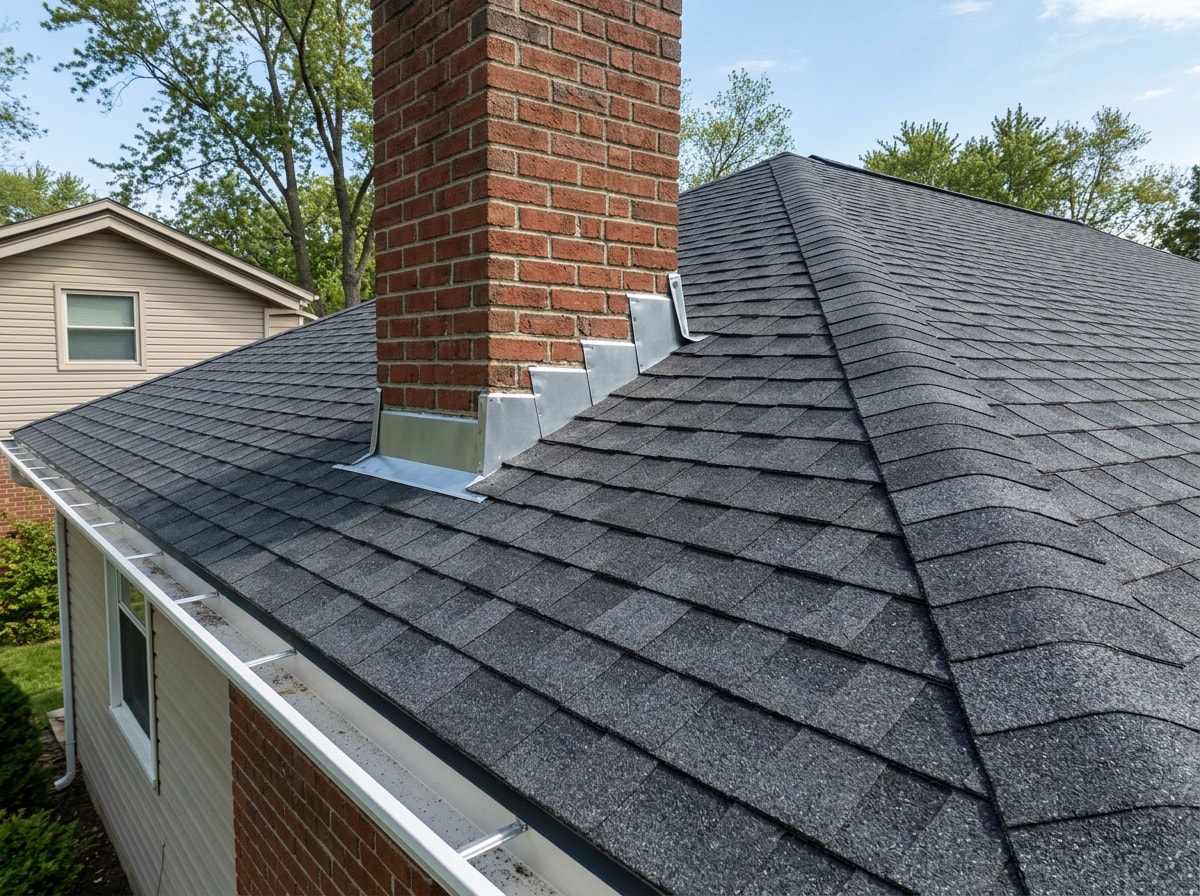
A full asphalt shingle replacement is a five-figure project for most homes, and monthly payment quotes are where homeowners get talked into the wrong term. Here is the math on a $15,000 financed roof so you can check any offer you are handed.
| Term and rate | Estimated monthly payment | Total repaid |
|---|---|---|
| 12 months, true 0% APR | About $1,250 | $15,000 |
| 60 months, 9.99% APR | About $319 | About $19,140 |
| 120 months, 9.99% APR | About $198 | About $23,760 |
| 120 months, 15.99% APR | About $251 | About $30,120 |
| 180 months, 9.99% APR | About $161 | About $29,000 |
Rates shown are for illustration, not an offer. Your APR depends on the lender, your credit tier, and the promo you select.
Notice what stretching from 5 years to 10 years does at the same rate: the payment drops about $121, and the total climbs roughly $4,600. Sales presentations lead with the left column. Decide with the right one.
Four variables drive the project price itself: total area in roofing squares (one square equals 100 square feet), material choice, pitch and complexity, and tear-off plus disposal of old layers. If budget is the constraint, compare material costs first in our guide to the cheapest roofing material by installed cost, then finance the smaller number.
Ask for two written bids on identical scope: one cash price, one financed price. In our experience quoting roof replacement across Fredericksburg and Stafford, the gap between those two numbers is the clearest measure of what a promo is really costing you.
Other Ways to Pay for a New Roof
Contractor-arranged financing is the most convenient option. It is not automatically the cheapest.
Home Equity Loans and HELOCs
A home equity loan gives you a lump sum at a fixed rate with predictable payments. A HELOC is a revolving line you draw from as work progresses, usually at a variable rate. Both borrow against your equity and both use your house as collateral.
That collateral is the entire story. Equity-backed borrowing typically carries the lowest rates available to homeowners, sometimes by several points. It also means missed payments can eventually put the house at risk.
Closing often takes several weeks. These fit homeowners with real equity, a firm scope, and no active leak forcing a decision this week. If water is already coming in, book emergency roof repair first and sort financing after the house is dry.
Personal Loans
A personal loan is unsecured, so no equity is required and your home is not pledged. Funding can land in a day or two. You pay for that speed with a higher rate.
Here is the step most homeowners skip: pre-qualify with a soft credit pull at two or three lenders before accepting your contractor's offer. A soft pull does not dent your score and it gives you a benchmark. Compare APR, which folds in origination fees, rather than monthly payments. A longer term always looks cheaper per month while costing more overall.
Credit Cards and Insurance Claims
A 0% intro-APR card can work for a smaller roof repair, but the post-promo rate is steep, so only use one if you can clear the balance inside the window.
And before financing anything after a storm, get a documented roof inspection. Sudden wind or hail damage is often a covered insurance loss, which can shrink the amount you need to finance down to your deductible.
Can You Get Roof Financing With Bad Credit?
Yes. A low score usually affects your terms, not whether financing exists at all. Strong credit may see single-digit rates, while weaker credit can push offers into the high teens or beyond. On a $15,000 roof, that gap is thousands of dollars.
Routes that stay open:
- Subprime home improvement lenders. Several national dealer networks approve well below prime scores.
- Income-based in-house plans. Some contractors weigh verified income over score.
- A co-signer with stronger credit, which can lift both approval odds and pricing.
- Equity-backed borrowing, if you have equity, since collateral offsets credit risk.
- Government-backed improvement loans. Under
HUD's Title I program, HUD insures private lenders against loss on property improvement loans that substantially protect or improve the basic livability or utility of the property , and the program has no income limits and no minimum credit score requirement, though lenders still review credit history . Details are on HUD's Title I insured programs page.
Two caveats on Title I: balances above $7,500 must be secured against the property, and there is no prepayment penalty .
This is educational information, not financial advice. Rates, eligibility, and program availability vary by state and lender, and some of these products put your home at risk.
How to Apply for Roof Financing
- Get a detailed written estimate first. Line-item scope, materials, tear-off, and warranty. You cannot compare loan offers without the real number.
- Pre-qualify with two outside lenders to establish a benchmark APR before the contractor presents his program.
- Apply through the contractor's program. Expect a soft or hard pull depending on the lender.
- Compare approved offers on total repayment cost, not the monthly figure.
- Read, then sign.
Before you sign, verify the total amount repaid, the exact promo end date, any prepayment penalty, whether the loan is secured against your home, and when the contractor gets paid. Never sign a document with blank fields, and never let a project deadline push you into terms you have not read.
Approval is frequently same-day for contractor-partnered programs. Start with a firm scope from a licensed roofing contractor and a free written estimate, then decide how to pay.
FAQ
What credit score do you need to finance a roof?
There is no universal minimum. Scores above 700 typically unlock the best rates and promotional offers, 640 to 699 generally qualifies at higher pricing, and below 600 narrows your options. Contractor-partnered programs often accept lower scores than bank personal loans do.
Can you finance a roof with bad credit?
Yes. Specialized lenders, income-based in-house plans, a co-signer, equity-backed borrowing, and HUD-insured improvement loans all remain available. Expect a higher rate, a shorter term, or a larger down payment.
Do roofers offer payment plans with no money down?
Many do. Zero-down offers are common with third-party lender programs, because the lender funds the job in full and the contractor is paid at completion. Zero down does not mean zero cost: check the APR, the term, and whether a dealer fee has been priced into the bid.
What is the average monthly payment for a new roof?
On a $15,000 financed roof, payments commonly land between about $160 and $320 a month depending on term and rate, with longer terms costing thousands more overall. Always ask for the total repayment figure alongside the monthly quote.
How long does roof financing approval take?
Contractor-partnered lenders frequently decide the same day, sometimes in minutes. Unsecured personal loans usually take one to five business days to approve and fund. Home equity loans and HELOCs commonly need two to six weeks to close.
Can you finance a roof repair, or only a full replacement?
Both. Repairs are financed all the time, though smaller amounts often make more sense on a 0% intro-APR card or a short promotional plan than on a 10-year installment loan.
Is it better to finance a roof or pay cash?
Neither wins automatically. Cash avoids interest and keeps total cost lowest. Financing preserves your emergency savings and stops you from postponing urgent work while water damage spreads. Compare the total financed cost against the likely cost of delay.
Does financing cover siding, gutters, or windows too?
Usually, yes. Most dealer programs will fund a full exterior scope, so siding replacement, gutters, and window replacement can often be bundled into one loan rather than financed separately.
Talk to a Licensed Contractor Before You Talk to a Lender
The loan is the easy part. The scope is what determines whether you borrow $9,000 or $19,000.
Shark Construction LLC is a licensed roofing, siding, window, and deck contractor serving Fredericksburg, Stafford, Spotsylvania, and surrounding Virginia communities. See completed work on our projects page, browse services on our homepage, or get a free estimate with a line-item scope you can take to any lender.