The cheapest roofing material is rolled roofing, at roughly $1.50 to $3.00 per square foot installed, but it lasts only 5 to 10 years. For a house someone actually lives in, 3-tab asphalt shingles are the cheapest practical roof. The distance between those two answers is worth thousands of dollars, and the ranking below shows exactly where it opens up.
What Is the Cheapest Roofing Material?
Rolled roofing wins on sticker price. It belongs on sheds, detached garages and low-slope outbuildings, not over a bedroom.
3-tab asphalt shingles are the cheapest material most homeowners should actually buy, at about $3.50 to $5.00 per square foot installed.
Every figure on this page is an installed cost per square foot. That means material plus labor, with tear-off called out separately where it applies.
Material-only pricing makes some roofs look about half as cheap as they really are. Labor and disposal are where a replacement budget usually goes sideways.
| Material | Installed cost per sq ft | Typical lifespan | Honest best use |
|---|---|---|---|
| Rolled roofing | $1.50 to $3.00 | 5 to 10 yrs | Sheds, garages, low-slope outbuildings |
| 3-tab asphalt shingles | $3.50 to $5.00 | 15 to 20 yrs | Tight budget, simple gable roof, short hold |
| Architectural shingles | $4.50 to $8.00 | 25 to 30 yrs | Most houses, best all-around value |
| Corrugated metal | $6.00 to $10.00 | 40 to 50+ yrs | Long ownership, hot or sunny climates |
| Wood shingles and shakes | $8.00 to $14.00 | 20 to 30 yrs | Buyers who specifically want the cedar look |
| Synthetic composite | $10.00 to $16.00 | 25 to 50 yrs | Slate or shake look without the weight |
If you are already holding bids, our roof replacement services page explains what a complete scope should include before you compare prices.
Cheapest Roofing Materials Ranked by Installed Cost
Regional labor rates, roof pitch and tear-off requirements move every one of these numbers, sometimes by 30% or more.
1. Rolled Roofing
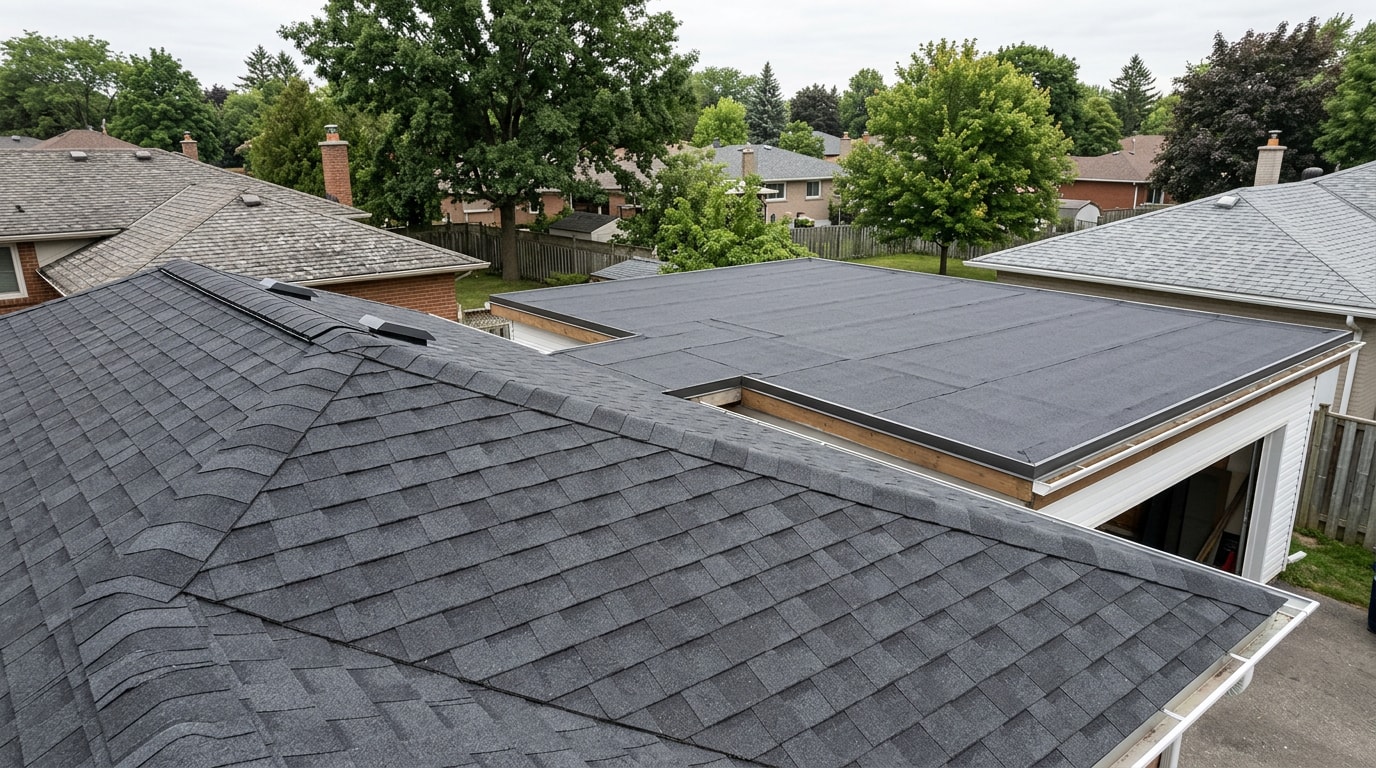
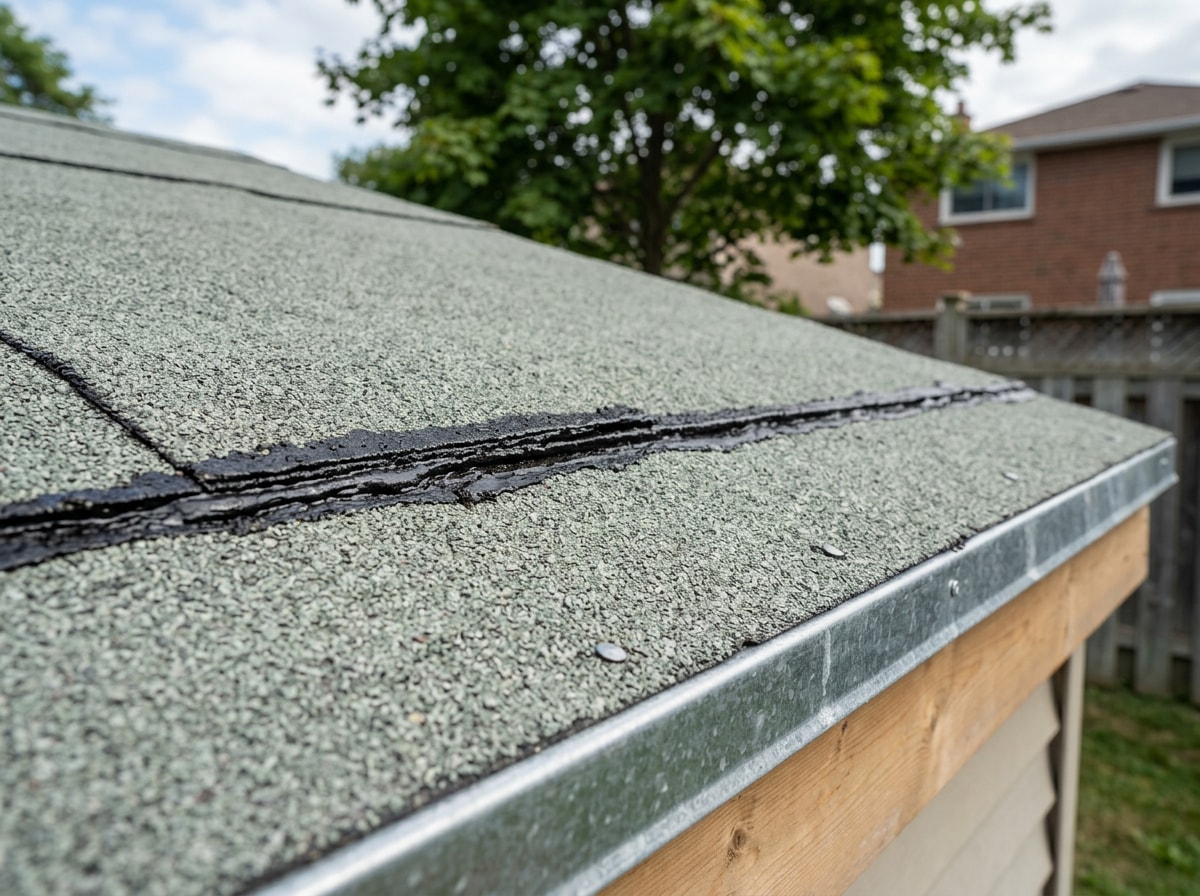
Rolled roofing runs about $1.50 to $3.00 per square foot installed, with a 5 to 10 year lifespan.
Material alone can drop near $0.50 per square foot in 100-square-foot rolls. That is why you see wildly different figures quoted online: one number includes labor and one does not.
It is fiberglass mat saturated with asphalt, unrolled flat across the deck, then fastened and sealed at the seams. Installation is fast and needs almost no skilled labor, which is where the savings come from.
It is not a whole-house roof. Seams fail, granules shed early, and the finish reads as temporary from the street.
Slope is a code issue, not a preference. Minimum slopes by roof-covering type are set in the International Residential Code roof assembly provisions, and roll products are permitted only on shallow pitches.
2. 3-Tab Asphalt Shingles
Expect roughly $5,950 to $8,500 installed on a 1,700-square-foot roof, or about $3.50 to $5.00 per square foot. Plan on 15 to 20 years in average conditions.
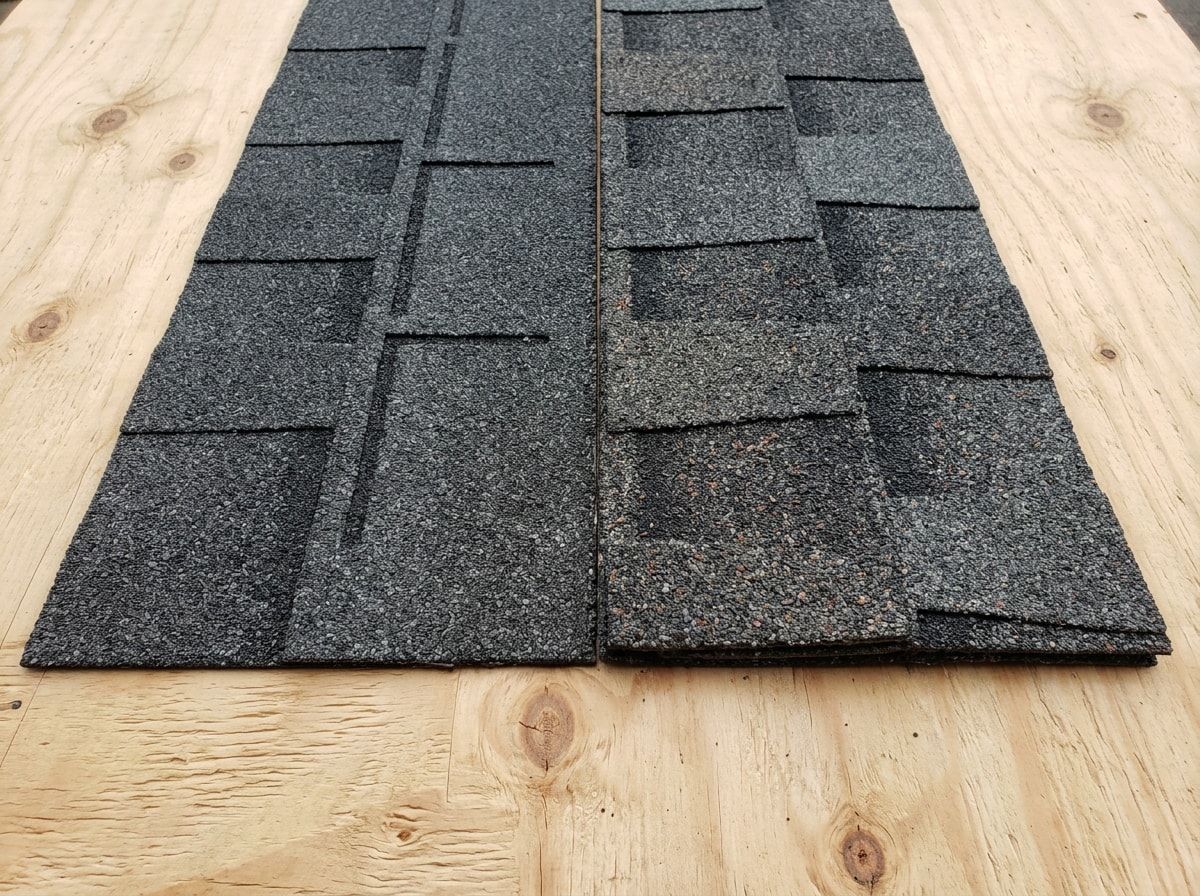
A 3-tab shingle is a single flat layer of asphalt-coated fiberglass cut into three tabs, so each course reads as uniform rectangles.
That single layer is exactly what you give up:
- Less mass to resist wind uplift
- Less thickness to absorb hail
- Faster granule loss under strong UV
- Shorter service life in hot climates and ice-dam regions
The honest use case is a tight budget, a simple gable roof with few penetrations, and a shorter ownership horizon.
3. Architectural (Dimensional) Asphalt Shingles
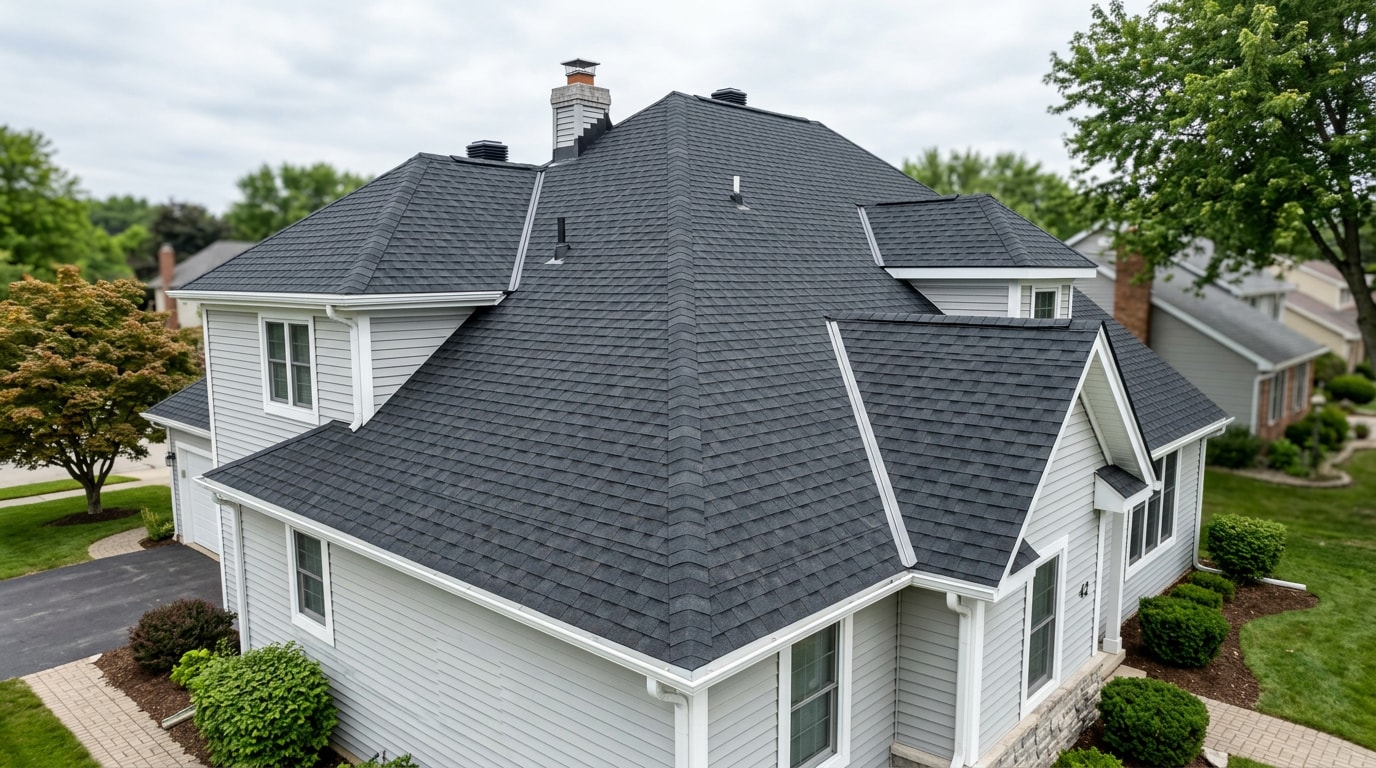
Architectural shingles cost roughly $6,800 to $12,750 installed on that same 1,700-square-foot roof. Most product lines carry a limited lifetime warranty and a 110+ mph wind rating.
They are built from two or more laminated layers. That creates the shadowed, shake-like look and roughly double the mass per square.
More mass means better wind and impact performance and slower weathering. A price step of maybe 15% to 25% over 3-tab buys close to twice the service life.
Two manufacturers' products at the same price point can still differ in wind warranty, algae resistance and nailing zone design. Compare spec sheets, not just totals. Our guide to the best roofing shingle breaks those differences down line by line.
4. Corrugated Metal Roofing
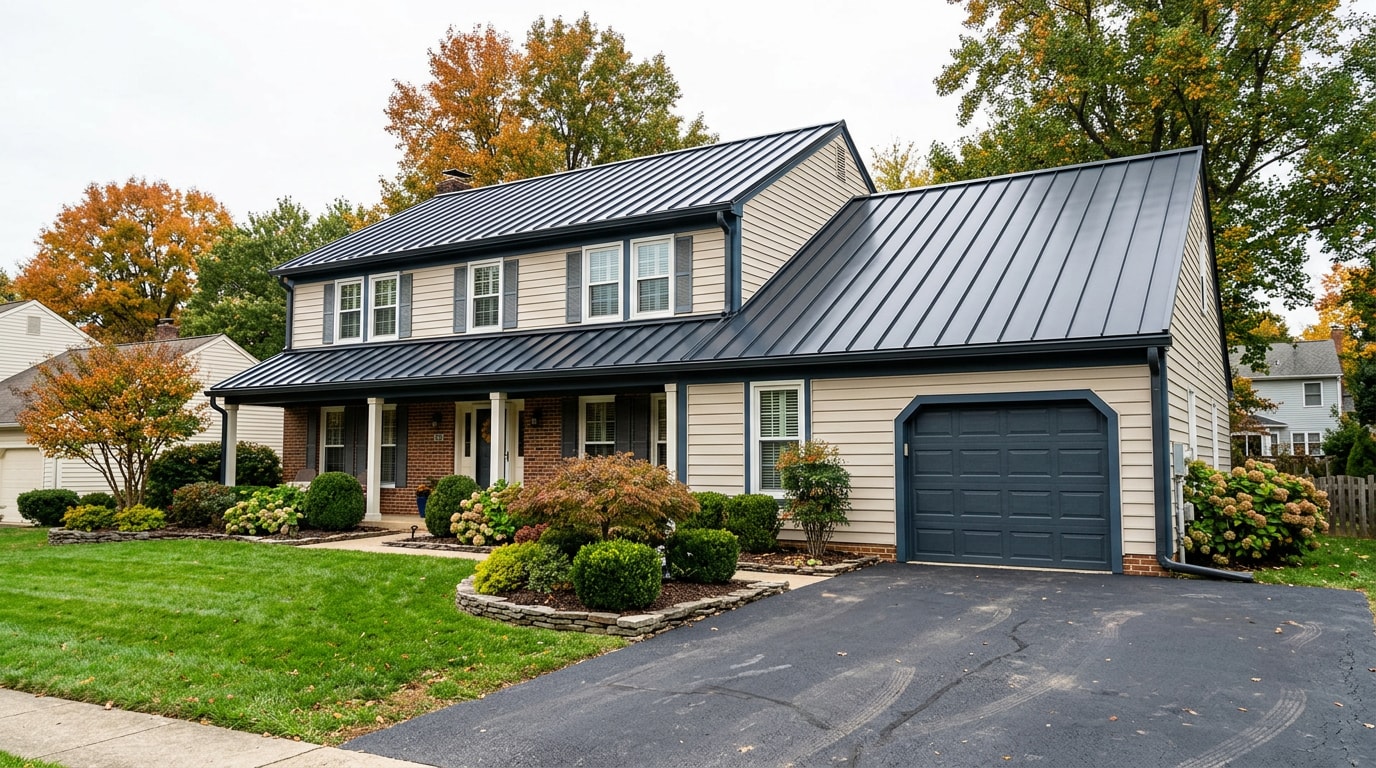
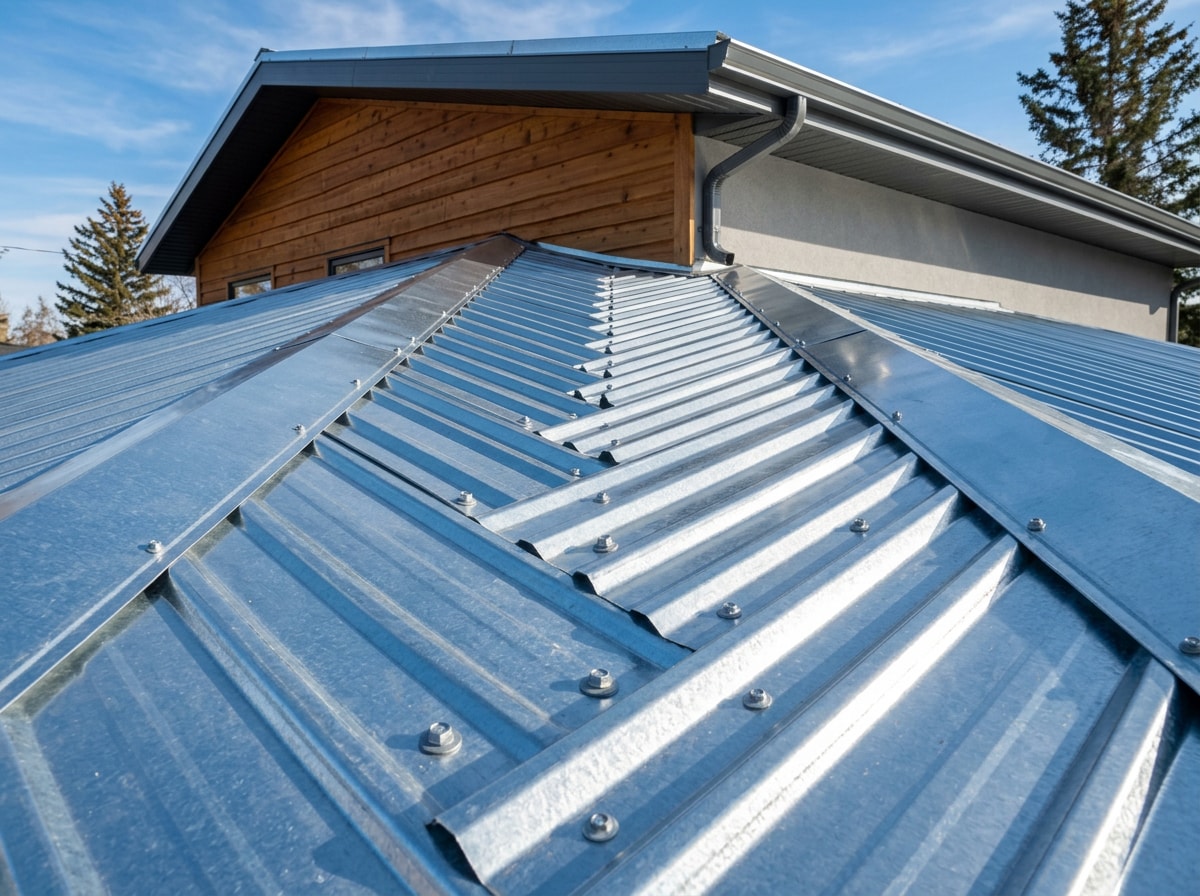
Budget metal roofing means exposed-fastener corrugated panels, not standing seam.
Installed cost lands around $10,200 to $17,000 on a typical roof, with 40 to 50+ years of service and warranties commonly running 25 to 50 years.
Most budget panels are galvanized steel or Galvalume, fastened through the face with gasketed screws. Those gaskets are the maintenance item, so plan a fastener check every decade or so.
Reflective metal also reduces cooling load in hot climates. The ENERGY STAR cool roof program explains which surface types qualify and where the savings are largest.
The downsides get glossed over too often. Panels are heavy, cut edges are sharp, the metal gets extremely hot in the sun, and stepping in the wrong place permanently bends a panel.
If you are pricing panels yourself, our breakdown of where to buy metal roofing near you covers supplier options and what each one charges for. Installation is a different question, and our roof installation team handles the panel work.
5. Wood Shingles and Shakes
Cedar runs roughly $8 to $14 per square foot installed, with up to about 30 years of life given consistent maintenance. Shakes take longer to lay than asphalt, so labor is a bigger share of the total.
It stops being a budget option once upkeep enters the math. Wood roofs need periodic cleaning and treatment, shingles crack under hail, and fire-retardant treatment helps without making the roof fireproof.
Some jurisdictions and insurers restrict wood roofing outright. Check before you fall in love with it.
6. Synthetic Composite Shingles
Composite is not cheapest upfront. It is far less expensive than the natural materials it imitates.
Natural slate runs $15 to $30 per square foot installed and weighs 8 to 10 pounds per square foot. That weight is heavy enough that many homes need framing work before slate can go on.
Synthetic slate delivers a close visual match at a fraction of the weight and roughly half the installed cost. On most houses it needs no structural reinforcement at all.
That avoided reinforcement is the hidden number. Structural upgrades can add thousands before a single tile is set, so composite sometimes beats the real material on total cost even when the per-square-foot figure looks mid-range.
Cheapest Upfront vs. Cheapest Over 40 Years
Sticker price answers the wrong question. Cost per year of protection answers the right one.
Here is the math on a 2,000-square-foot roof, using mid-range installed costs and adding $1,500 per tear-off and disposal on every replacement cycle after the first. That line item is the one nearly every cheap-roof comparison leaves out.
| Material | Installed (mid) | Lifespan | Cost per year over 40 yrs | Installs in 40 yrs |
|---|---|---|---|---|
| Rolled roofing | $4,500 | 5 to 10 yrs | about $713 | 5 |
| 3-tab shingles | $8,500 | 15 to 20 yrs | about $550 | 2 to 3 |
| Architectural shingles | $11,500 | about 30 yrs | about $400 | 1 to 2 |
| Wood shakes | $12,000 | 20 to 30 yrs | about $540 plus upkeep | 2 |
| Corrugated metal | $16,000 | 40 to 50 yrs | about $375 | 1 |
| Synthetic composite | $22,000 | 25 to 50 yrs | about $550 | 1 |
Worked example. A $4,500 rolled roof replaced every eight years costs $4,500 up front plus four more cycles at $6,000 with tear-off. That is about $28,500 over 40 years, or $713 a year.
A $16,000 corrugated metal roof over the same period runs $400 a year and never gets torn off.
Most published comparisons of this kind drop the disposal cost, and dropping it is what makes cheap materials look better than they are. Disposal is charged by weight and by dump run, and an asphalt tear-off is heavy.
Our own crews in Fredericksburg, VA and Stafford, VA see this pattern repeatedly: the second tear-off on a budget roof usually costs more than the material savings that justified it.
The break-even is the useful takeaway:
- Under about 12 years of ownership, 3-tab's lower upfront cost wins.
- Past 12 years, architectural shingles cost less per year.
- Past about 20 years, metal wins outright.
A homeowner selling in three years and one staying for thirty should leave this section with completely different answers.
What Drives Roofing Costs Beyond the Material
Two identical shingle roofs can quote thousands apart. These are the reasons.
- Structural load. Slate, clay and concrete may require framing reinforcement. Budget $2,000 to $5,000 extra. Metal and asphalt skip it.
- Slope and complexity. Valleys, dormers, skylights and steep pitch push installed cost well above a simple gable. Metal is especially labor-intensive on a cut-up roof.
- Climate. Ice dams chew through asphalt in cold regions, desert UV makes cheap shingles brittle, and high-wind zones call for wind- and impact-rated products.
- Labor market. Crew rates vary by metro, which is why the same spec prices differently across our roofing service areas.
- Permits and HOA rules. 3-tab and rolled roofing can fail HOA appearance standards, and corrugated panels are restricted in plenty of neighborhoods.
Verify HOA and code requirements before you buy anything. Paying for a do-over erases every dollar the cheap material saved.
The visible material is also only part of the system. Underlayment, flashing and ventilation add roughly $1 to $3 per square foot, and skimping there fails a roof faster than choosing a budget shingle ever will.
A pre-purchase roof inspection will tell you whether the deck underneath can even accept the material you are pricing.
What Is the Most Expensive Roofing Material?
Knowing the ceiling makes the floor readable.
Slate Shingles
Natural slate is the most expensive conventional roof, at roughly $15 to $30 per square foot installed. A slate roof can last 75 to 200 years, which means it outlives several owners.
Its real cost exceeds that per-square-foot figure. Decking requirements are stricter and framing often needs reinforcing to carry the load. It only pencils out if you plan to hold the house for decades.
Solar Glass Shingles
Solar shingles sit at the top of the price range. They are solar-panel technology shaped to look and function like roofing, generating electricity across the roof's life.
Full-roof installations are commonly quoted in the tens of thousands of dollars. Pricing and the incentives attached to it have shifted repeatedly, so get a current local quote rather than budgeting from a published average.
What Are the Downsides of Cheap Roofing Materials?
The mechanism is simple. A cheaper material means a shorter-lived roof, and replacing sooner means paying labor and disposal again.
Failure shows up in a predictable order:
- Granules shed early, exposing the asphalt mat.
- Algae streaking and mildew follow on shaded slopes.
- Tabs lift and tear in wind because there is less mass and less adhesive.
- Repair calls start, and each one carries a service minimum.
Those performance gaps are measurable. Impact resistance is graded Class 1 through Class 4 under UL 2218, and the Asphalt Roofing Manufacturers Association's test standards overview explains how the ratings are assigned and why insurers in hail states pay attention to them.
Cheap labor is a separate trap. A quote far below the others is usually cutting something you cannot see:
- A layover instead of a proper tear-off
- Felt where synthetic underlayment belongs
- Reused flashing at walls and chimneys
- No new drip edge or ridge ventilation
Ask for the scope in writing and compare line by line. If the roof you already have is failing early, roof repair is often the cheaper move while you plan the replacement.
How a Budget Roof Affects Resale Value
Roofing performs well in remodeling return studies, and a new roof consistently ranks near the top of the improvements agents suggest before listing. Figures shift from edition to edition, so treat any single percentage with caution.
What buyers respond to is condition and paperwork. A recent roof with a transferable warranty still in force removes an objection. Visible curling, patchwork or a material that reads as budget invites a price concession or an inspection holdback.
Tie that back to your ownership horizon. Selling in two years, a sound 3-tab roof with documentation may serve you fine. Staying longer, the resale argument and the cost-per-year argument point the same direction.
Ready to see real numbers for your roof? Get a free estimate and we will price two or three material tiers side by side, with tear-off and disposal broken out.
Frequently Asked Questions
What is the absolute cheapest roofing material?
Rolled roofing, at about $1.50 to $3.00 per square foot installed, with a 5 to 10 year life. For a house rather than a shed, 3-tab asphalt shingles are cheaper once you count the earlier redo and the second tear-off.
What is the cheapest roof to put on a house?
3-tab asphalt shingles, at roughly $3.50 to $5.00 per square foot installed. They are the lowest-cost covering that is code-compliant on a standard pitched roof and acceptable to most HOAs and insurers.
Is metal or shingle roofing cheaper?
Shingles are cheaper upfront. Corrugated metal typically costs 1.5 to 2 times more to install, then lands lower on cost per year because it lasts 40 to 50 years and avoids repeat tear-offs.
How much does a new roof cost on a 2,000-square-foot roof?
Budget roughly $7,000 to $10,000 for 3-tab, $9,000 to $16,000 for architectural shingles, and $12,000 to $20,000 for corrugated metal, installed. Steep pitch, multiple layers of tear-off and complex rooflines push these higher.
Can I put a new roof over the old one to save money?
Sometimes, and it is rarely the bargain it looks like. A layover skips tear-off labor but hides deck damage, traps heat that shortens shingle life, and shortens or voids many manufacturer warranties. Most codes cap a roof at two total layers.
What is the cheapest time of year to get a roof replaced?
Late winter and early spring usually price lowest, because demand drops after storm season and crews have open schedules. Waiting on an active leak costs more than the discount saves, which is what emergency roof repair is for.
How long does each roofing material actually last?
Budget asphalt 15 to 20 years, architectural shingles 25 to 30, metal 40 to 50, wood 20 to 30 with maintenance, composite 25 to 50, and slate 75 to 200. All assume average climate, a competent install and some upkeep.
Can I use cheap roofing materials on a high-end home?
Technically yes, usually a net loss. Entry-level shingles on an expensive house clash with appraisal comparables, can fail HOA rules, and signal deferred maintenance to buyers. A mid-tier architectural or composite product protects value better on a tight budget.
This guide was written by the roofing team at Shark Construction LLC, who install, tear off and price these systems every week across Virginia. See finished work on our projects page, or contact us to talk through the options on your roof.