Ask ten contractors what is the best commercial roofing material and you'll get ten confident, contradictory answers. The honest answer depends on your roof slope, your climate, what happens inside the building, and how long you plan to own it. This guide ranks the six systems that cover most commercial buildings on the one number almost nobody publishes: cost per square foot per year of service.
Quick Answer: Best Commercial Roofing Material by Situation
If you want the short version before the detail:
- Best all-around value on a low-slope roof: TPO
- Best in cold climates and on large, low-traffic roofs: EPDM
- Best where grease or chemical exhaust is present: PVC
- Best lowest upfront cost: modified bitumen
- Best for roofs with constant equipment traffic: built-up roofing (BUR)
- Best long-term asset on a sloped building: standing seam metal
No single membrane wins everywhere. A warehouse in Phoenix and a retail building in Minnesota need different answers. Start with your conditions, then match the material to them.
Commercial Roofing Materials Compared at a Glance
Here is the full comparison in one view. All costs are 2026 installed planning ranges per square foot, including labor and typical accessories.
| System | Installed cost/sq ft | Typical lifespan | Seam technology | Reflectivity | Maintenance | Best fit |
|---|---|---|---|---|---|---|
| TPO | $5.50 to $9.50 | 20 to 30 yrs | Heat-welded | High (white) | Low | Retail, warehouse, office |
| EPDM | $5.00 to $9.00 | 20 to 30 yrs | Tape / adhesive | Low (black) | Low to moderate | Cold climates, large roofs |
| PVC | $7.00 to $13.00 | 20 to 30+ yrs | Heat-welded | High | Low | Food service, industrial |
| Modified bitumen | $4.50 to $8.50 | 15 to 20 yrs | Torch / cold-applied | Moderate (cap sheet) | Moderate | Budget, high foot traffic |
| BUR | $5.50 to $9.50 | 15 to 30 yrs | Multi-ply overlap | Moderate (gravel) | Higher | Institutional, equipment-heavy |
| Metal | $9.00 to $18.00 | 40 to 60 yrs | Standing seam | High (coated) | Very low | Sloped, long-hold buildings |
Treat these as planning ranges, not quotes. Deck condition, insulation thickness, and penetration count move real numbers more than the membrane choice does.
The Number Most Guides Skip: Cost Per Square Foot Per Year
Comparing installed price alone is how building owners end up re-roofing twice in twenty years. Divide the midpoint installed cost by the midpoint lifespan and the ranking changes.
| System | Midpoint installed cost | Midpoint lifespan | Cost per sq ft per year |
|---|---|---|---|
| Metal | $13.50 | 50 yrs | $0.27 |
| EPDM | $7.00 | 25 yrs | $0.28 |
| TPO | $7.50 | 25 yrs | $0.30 |
| BUR | $7.50 | 22 yrs | $0.34 |
| PVC | $10.00 | 27 yrs | $0.37 |
| Modified bitumen | $6.50 | 17 yrs | $0.38 |
Metal costs roughly twice as much per square foot as modified bitumen and still comes out cheapest per year of service. These figures cover the covering only. They exclude annual maintenance, tear-off disposal on the second cycle, and the business disruption of a re-roof, all of which push the cheap-upfront options further behind.
The practical takeaway: if you plan to hold the building more than 15 years, run this math before you sign anything.
What to Evaluate Before You Choose
Six variables do most of the work in narrowing the field.
Roof slope and design. This is the hardest filter. A true low-slope roof eliminates shingles and most exposed-fastener metal immediately, because those systems depend on gravity to shed water. Slope also dictates drainage, which drives how much ponding the membrane has to tolerate.
Climate and weather exposure. Hail belts reward puncture resistance. Hot southern zones reward reflectivity. Freeze-thaw regions reward membranes that stay flexible well below freezing.
Budget versus lifecycle cost. The cheapest installed price and the cheapest roof are rarely the same product. Use the per-year table above.
Energy performance. Reflective surfaces reduce rooftop heat gain, and insulation thickness is often set by code anyway. Both affect HVAC load year after year.
Building use. Kitchen grease exhaust, solvent vapors, and heavy rooftop foot traffic each rule out certain membranes. A building with a dozen service techs walking it monthly needs a different surface than a sealed warehouse.
Code and warranty compliance. Roof assemblies have to meet local wind-uplift, fire, and insulation requirements, and those vary by jurisdiction and adoption cycle. In Virginia, for example, the 2021 Uniform Statewide Building Code took effect January 18, 2024 , so verify the current edition through the Virginia Department of Housing and Community Development and your local building department before specifying anything. Manufacturer warranties typically hinge on compliant installation.
The Six Commercial Roofing Systems in Detail
These fall into three families: single-ply membranes, multi-ply asphalt systems, and metal. Each section follows the same format so you can compare without translating between them.
TPO (Thermoplastic Polyolefin)
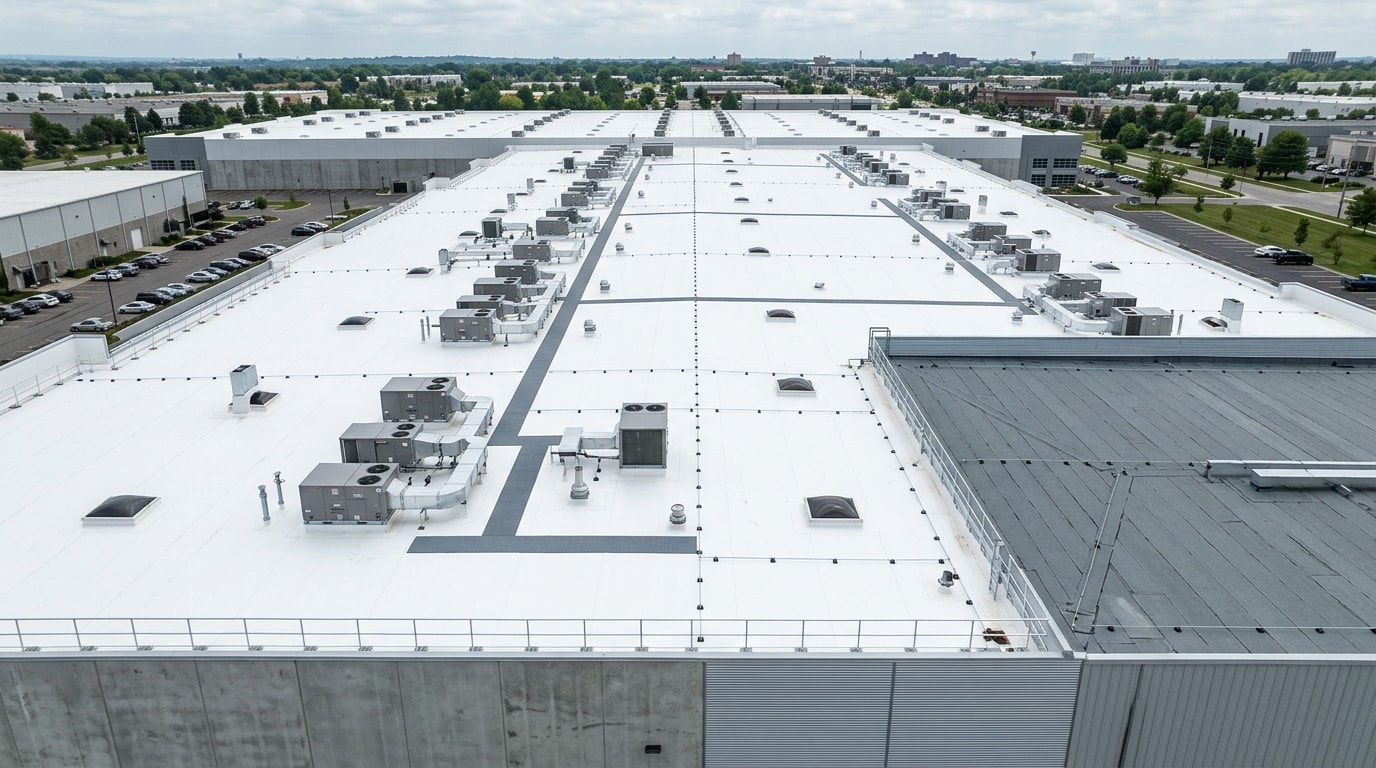
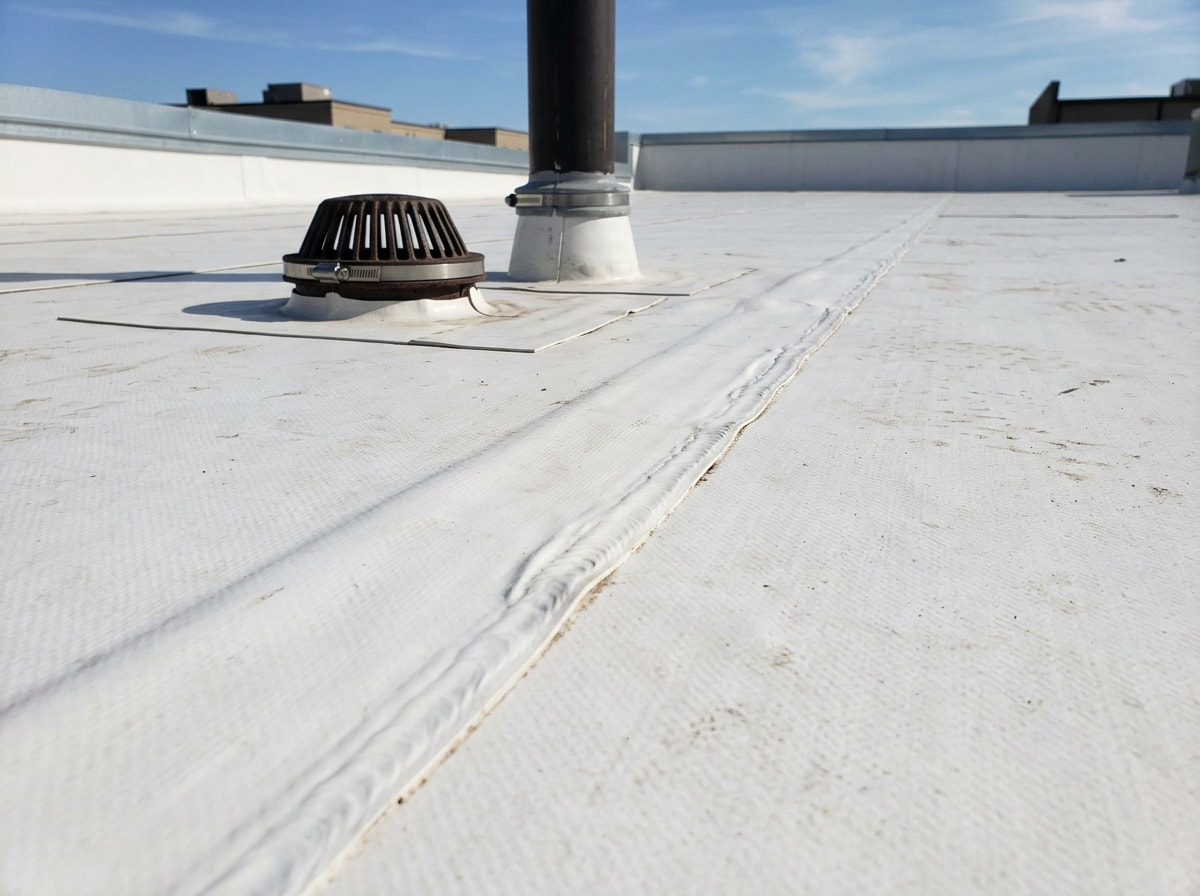
TPO is a single-ply membrane installed on low-slope roofs and joined with heat-welded seams that fuse sheets into a continuous surface. Its reflective white finish resists UV, punctures, and many chemicals, and the material is light enough to install over most existing decks.
The caveats are real. TPO formulations still vary between manufacturers, and seam quality depends almost entirely on the installer's welder settings and technique. A good TPO roof and a bad TPO roof can use identical material.
One thing to know before you shop reflectivity claims: the EPA sunset the ENERGY STAR Roof Products program on June 1, 2022 . Verified reflectance data now lives with the Cool Roof Rating Council, whose directory lists more than 3,000 products with both initial and three-year-aged values . Aged values are the ones that matter, because roofs rarely get washed.
Typical lifespan: 20 to 30 years. Installed cost: roughly $5.50 to $9.50 per square foot in 2026. Best fit: warehouses, retail centers, and offices in warm or mixed climates.
EPDM (Ethylene Propylene Diene Monomer)
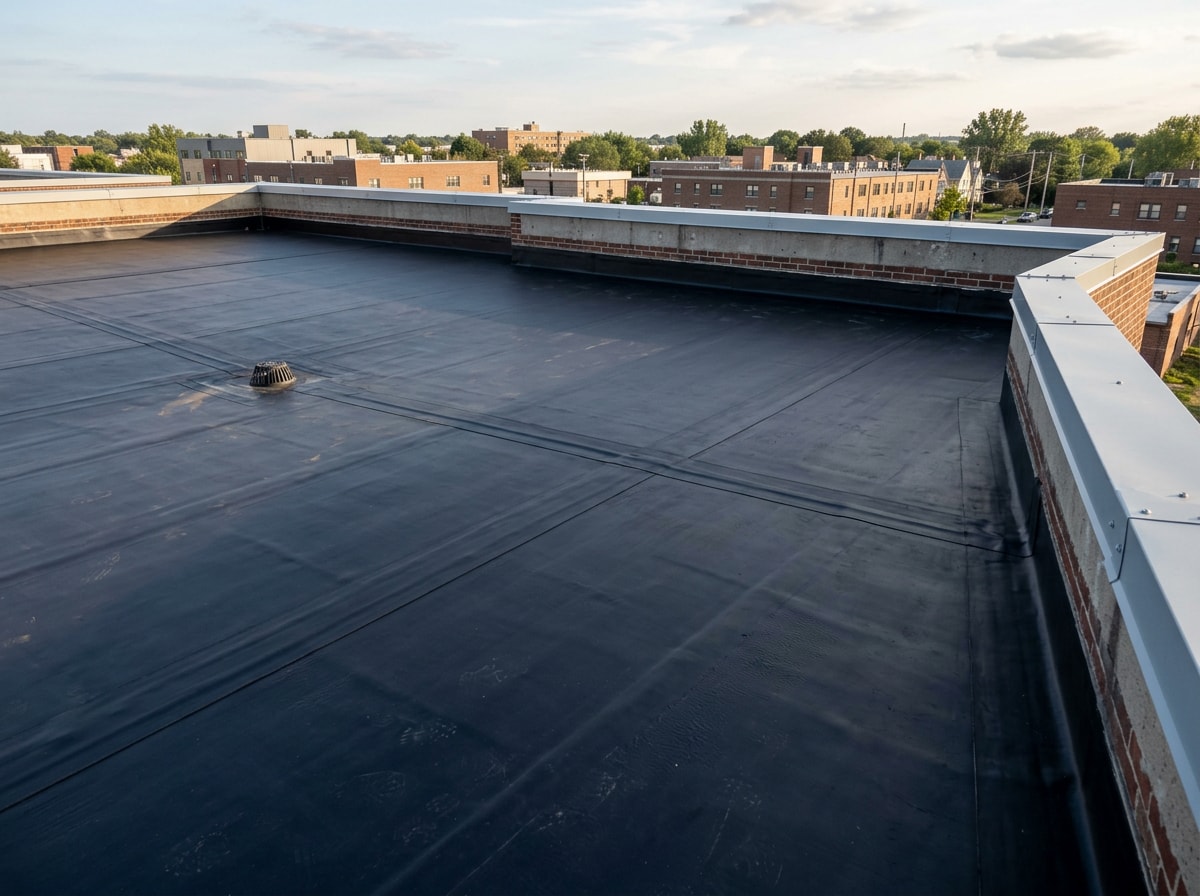
EPDM is a synthetic rubber membrane with a track record going back to the 1960s, the longest real-world data set of any single-ply. It stays flexible in deep cold, handles hail well, and comes in sheets wide enough to cut seam count dramatically on large roofs.
Standard EPDM is black and absorbs heat. White and reflective versions exist at a premium.
Seams are joined with tape or adhesive rather than heat welding, so long-term seam performance depends on surface prep. The membrane also punctures more easily than reinforced thermoplastics under regular foot traffic.
Attachment matters as much as the membrane itself:
- Fully adhered gives the cleanest wind performance and smoothest surface
- Mechanically fastened installs faster at lower cost
- Ballasted relies on stone weight and is the hardest to inspect
Each choice changes wind-uplift ratings and how easily the roof can be repaired later. NRCA's Roof Wind Designer tool is intended to help determine design wind loads for commonly encountered building types subject to code compliance .
Typical lifespan: 20 to 30 years. Installed cost: roughly $5.00 to $9.00 per square foot. Best fit: cold-climate buildings and large, low-traffic roofs.
PVC (Polyvinyl Chloride)
PVC is a thermoplastic membrane with heat-welded seams like TPO, but a different chemistry that gives it standout grease resistance and broad chemical resistance. It is also inherently fire resistant, highly reflective, and among the longest-lasting membranes available.
That chemical profile is the differentiator. Restaurants, food processing plants, laundries, and industrial buildings with solvent or oil-laden exhaust will degrade a TPO roof around the exhaust fans long before the field membrane fails. PVC shrugs off the same exposure.
The trade-offs: it is the most expensive of the common single-plies, and older or thinner formulations have been known to shrink over time, which stresses perimeter flashings.
Typical lifespan: 20 to 30+ years. Installed cost: roughly $7.00 to $13.00 per square foot. Best fit: food service, industrial, and any roof with greasy or chemical exhaust.
Modified Bitumen
Modified bitumen, or mod bit, is an asphalt-based multi-ply system with polymer modifiers blended in for elasticity and tear resistance. It handles foot traffic better than most single-plies, which makes it practical for roofs loaded with serviceable equipment.
Reflective cap sheet options are widely available if energy performance matters. Installation runs torch-applied, cold-adhered, or self-adhered, and the self-adhered option removes open flame from the job entirely.
The honest limitation is service life. Asphalt systems generally do not match single-ply or metal, and seams need periodic inspection.
Typical lifespan: 15 to 20 years. Installed cost: roughly $4.50 to $8.50 per square foot. Best fit: budget-constrained projects and roofs with heavy maintenance traffic.
Built-Up Roofing (BUR)
BUR is the original flat-roof assembly: alternating layers of bitumen and reinforcing felts built up on site, usually finished with gravel or mineral surfacing. The tar-and-gravel look is still common on older institutional buildings for good reason.
Its advantage is redundancy. Waterproofing does not depend on a single layer, the gravel adds UV protection and traction for technicians, and the mass contributes some thermal benefit.
The downsides are weight, labor intensity, and installation time. BUR also asks for more routine maintenance than single-ply, and locating a leak under gravel is slow work.
Typical lifespan: 15 to 30 years. Installed cost: roughly $5.50 to $9.50 per square foot. Best fit: institutional buildings and roofs with constant equipment access.
Metal Roofing Systems
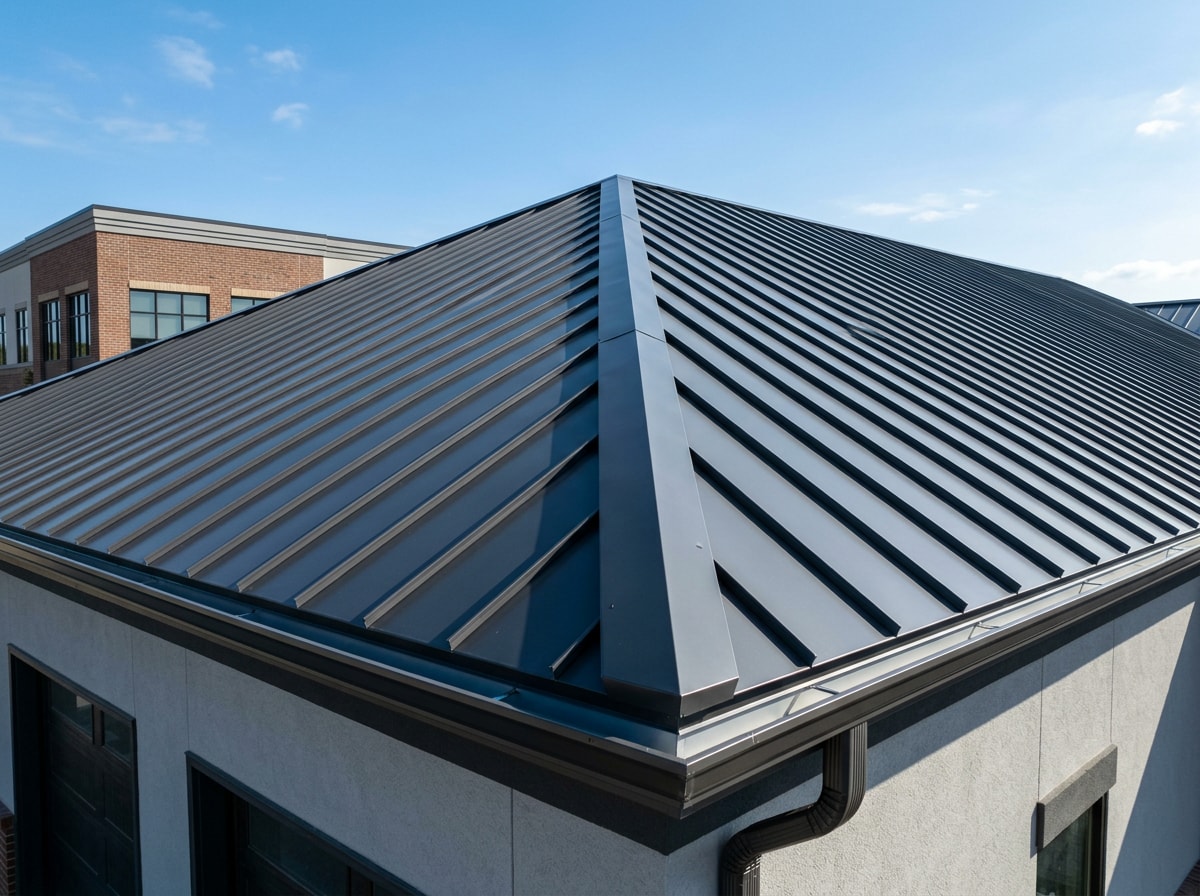
Metal splits into two camps. Standing seam panels conceal fasteners and let panels expand and contract. Exposed-fastener panels cost less but put a rubber gasket at every screw, and gaskets are the first thing to fail.
Material options run from galvanized steel and Galvalume to aluminum for coastal corrosion resistance, up to copper for architectural work. If you are weighing panel types and gauges, our guide to metal roofing cost per square foot) breaks the pricing down further.
Metal delivers the longest service life of any common commercial system, strong fire resistance, minimal maintenance, and full recyclability at end of life. Many coated panels also carry high solar reflectance.
The constraints: highest upfront cost, a real need for trained installers, and limited suitability for true flat roofs. Dents from hail, corrosion at dissimilar-metal contacts, and rain noise over unlined spaces are worth weighing too.
Typical lifespan: 40 to 60 years. Installed cost: roughly $9.00 to $18.00 per square foot. Best fit: sloped commercial buildings, long-hold assets, and high-visibility architecture.
How Much Does a Commercial Roof Cost in 2026?
On a 20,000 square foot warehouse, a TPO replacement lands somewhere around $110,000 to $190,000. A standing seam metal system on the same footprint runs closer to $180,000 to $360,000.
The spread inside each range is wide for a reason. Several variables move the total more than the membrane does:
- Deck condition and whether rotted sections need replacement
- Insulation R-value required by your energy code, which can account for a third of the total
- Full tear-off versus recover over the existing system
- Number of penetrations, curbs, and drains
- Regional labor rates and crane or staging access
Energy performance belongs in the cost conversation too. The Department of Energy's consumer guide to cool roofs notes that substituting a cool roof for a conventional roof in warm climates can reduce annual air-conditioning energy use of a single-story building by up to 15% . The federal benchmark for when that premium pays off is specific: FEMP calculated that a qualified cool roof product saves money if priced no more than $0.64 per square foot above the less efficient model .
Before you compare bids, make sure every contractor is pricing the same scope. Our roof replacement page covers what a complete scope of work should spell out, and a documented roof inspection tells you whether you need a replacement at all or just targeted repairs.
Get a free estimate and we will price the options side by side instead of pushing one system.
Best Roofing Material by Commercial Property Type
Building type narrows the field fast.
Retail. TPO usually wins. The white surface trims cooling load on buildings with long operating hours and large glass fronts, and the installed cost keeps multi-tenant budgets intact.
Warehouse and distribution. The goal is covering enormous spans economically. TPO and EPDM both work, mechanically fastened systems install quickly over wide decks, and low foot traffic plays to EPDM's strengths.
Office. Reflectivity and appearance both matter, especially where the roof is visible from adjacent floors or includes an amenity deck. TPO or PVC on the flat areas, standing seam metal on sloped architectural sections.
Healthcare. These carry the lowest tolerance for failure, since water intrusion in a clinical environment is a patient-safety issue. PVC's welded seams, chemical resistance, and long warranty availability tend to win.
Restaurants and food processing. Grease-laden exhaust is a membrane killer. PVC is the clearest answer, and it is worth specifying extra protection in the grease-fan zone regardless of membrane.
Light industrial and manufacturing. Check what the exhaust stacks are actually putting out before anyone quotes. Solvent vapor changes the answer from TPO to PVC in one sentence.
What Actually Causes Commercial Roofs to Fail Early
Here is the pattern we see most often on tear-offs across our Virginia service area: premature failure almost never starts in the open field of the membrane.
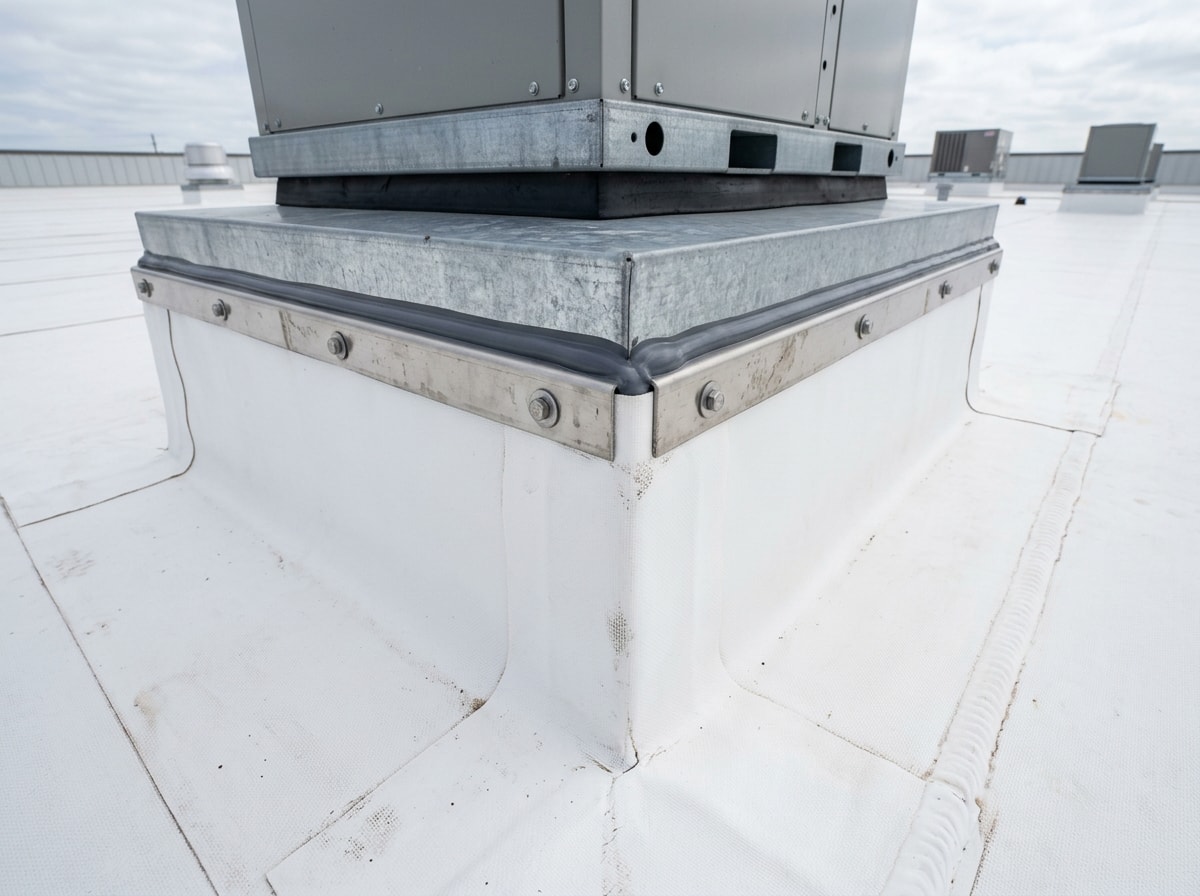
It starts at penetrations, curbs, drains, and perimeter flashings. Those are the details a rushed crew finishes last, in the dark, on the final day of the job.
On mixed-humid Virginia roofs, the second most common culprit we find is ponding at undersized or blocked drains, which turns a 25-year membrane into a 12-year membrane regardless of brand.
Two practical consequences:
- Spend your scrutiny on the installer's detail work and flashing drawings, not just the product data sheet.
- Budget for twice-yearly inspections and drain clearing. It is the cheapest line item on the roof and it protects both the lifespan and the warranty.
If something is already leaking, roof repair on a sound membrane is often the right call for several more years of service.
Making the Call for Your Building
Run it in this order:
- Confirm slope. Low slope removes metal and shingles from consideration.
- Check what the exhaust fans discharge. Grease or solvents means PVC.
- Set your hold period. Under 15 years, upfront cost dominates. Over 15 years, use the cost-per-year table.
- Verify code requirements. Wind uplift, fire rating, and insulation R-value for your jurisdiction.
- Vet the crew, not just the product. Ask to see flashing details from a completed job of similar scope.
Shortcuts, if you want them: best cost-to-performance balance, TPO. Proven cold-weather durability, EPDM. Chemical resistance, PVC. Longest life on a sloped building, metal.
Local Expertise in Virginia
Commercial roofs in central and northern Virginia sit in a mixed-humid climate with real freeze-thaw cycling, summer UV load, and periodic hail and wind events. That combination rewards membranes that stay flexible in winter and reflective in summer, which is why TPO and EPDM dominate the low-slope inventory here.
Shark Construction LLC handles commercial and residential roofing across Fredericksburg, Stafford, Spotsylvania, Culpeper, and Manassas. You can see the full range of work on our homepage, browse completed jobs in our project gallery, or review what each service covers on our roofing contractor page.
Ready to compare systems on your actual building? Get a free estimate and we will walk the roof, measure it, and give you costs for the two or three systems that genuinely fit.
FAQ
What is the best commercial roofing material?
There is no universal best. For low-slope roofs, TPO and EPDM offer the strongest balance of cost and performance. Metal lasts longest where slope allows it, and PVC wins wherever grease or chemical exhaust is present. Match the material to slope, climate, and building use.
What are the top 5 commercial roofing materials?
TPO for reflectivity at a moderate price. EPDM for cold-weather durability and the longest track record. PVC for chemical and grease resistance. Modified bitumen for low upfront cost and foot-traffic tolerance. Metal for the longest service life on sloped buildings.
What is the most durable commercial roofing material?
Metal, by a wide margin. Standing seam systems commonly run 40 to 60 years with minimal maintenance. Among membranes, PVC and reinforced TPO hold up best to punctures and chemical exposure.
What is the best roofing material for a flat roof?
TPO for most warm and mixed climates, EPDM for cold climates, PVC when grease or chemicals are involved. Metal is not a flat-roof material because it needs slope to shed water.
Is TPO better than EPDM?
Neither is universally better. TPO's heat-welded seams and white reflective surface suit hot and mixed climates. EPDM's cold flexibility, wider sheets, and longer field history suit cold climates and large, low-traffic roofs. Climate and installer skill decide it.
How long does a commercial roof last?
Most commercial roofs last 15 to 60 years. Modified bitumen typically runs 15 to 20 years, BUR 15 to 30, EPDM and TPO 20 to 30, PVC 20 to 30 or more, and metal 40 to 60. Regular maintenance and inspections protect both service life and the warranty.
What is the cheapest commercial roofing material?
Modified bitumen and EPDM usually carry the lowest upfront cost, often $4.50 to $9.00 per square foot installed. Measured per year of service, though, metal and EPDM come out ahead of modified bitumen.
Which commercial roof is most energy efficient?
Any high-reflectance white membrane or coated metal panel, paired with adequate insulation. Insulation R-value usually matters more than membrane color in mixed climates. Check verified aged solar reflectance on the Cool Roof Rating Council directory rather than relying on marketing claims.
Can you install a new commercial roof over an existing one?
Often yes. A recover avoids tear-off cost and disposal, but codes limit how many roof layers are allowed, and a wet or deteriorated existing system has to come off. An inspection with moisture scanning determines which path applies.
How much does a commercial roof cost per square foot in 2026?
Roughly $4.50 to $18.00 per square foot installed, depending on system. Deck repairs, insulation thickness, penetration count, and tear-off versus recover move the final number more than the membrane choice does.
---
About the author: This guide was written and reviewed by the roofing team at Shark Construction LLC, a licensed and insured roofing, siding, and window contractor serving Fredericksburg, Stafford, Spotsylvania, Culpeper, Manassas, King George, Dale City, and Bowling Green, Virginia. Cost ranges reflect 2026 regional pricing and completed project scopes. Questions about your building? Contact our team.