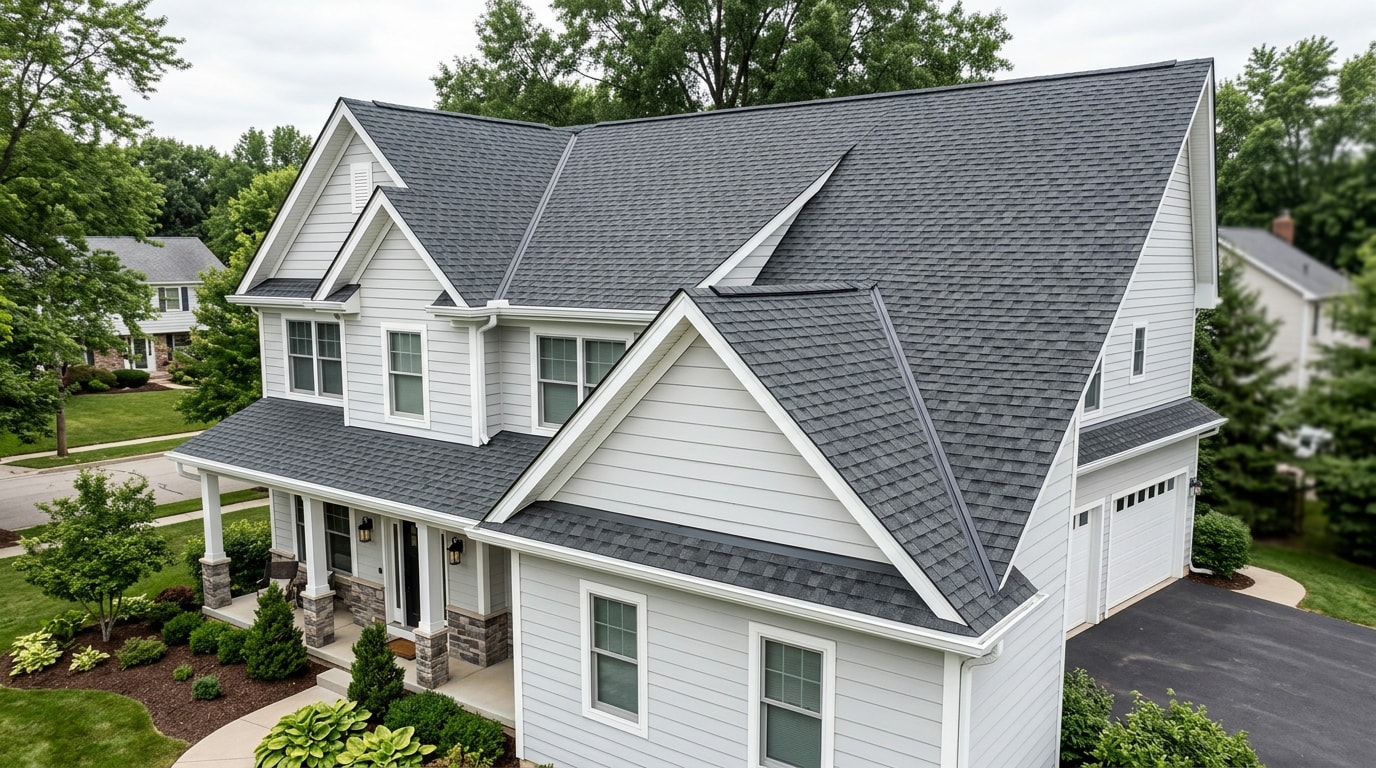
What is the best roofing shingle for most houses? A laminated architectural asphalt shingle with a 130 mph wind rating, installed by a certified crew. Everything above that tier buys you longevity, hail resistance, or looks, and this guide shows exactly where each upgrade pays and where it does not.
Visit Shark Construction to see our services and request a free estimate.
The Short Answer, by Situation
- Best all-around: architectural (laminated) asphalt. 25 to 30 years, strong wind ratings, moderate cost.
- Best in hail country: a polymer-modified Class 4 asphalt shingle or metal.
- Best lifespan per dollar: metal shingles, if you plan to stay 25 years or more.
- Best premium look without the weight: composite/synthetic slate or shake.
- Best for a short hold or rental: 3-tab asphalt, with eyes open about wind performance.
- Skip unless the structure supports it: clay tile and natural slate.
One number worth knowing before you shop: asphalt shingles make up roughly 80% of installed residential roofs in the U.S. That popularity is why asphalt has the deepest product range, the most installer competition, and the best repair availability.
Roofing Shingle Types Compared
| Shingle type | Typical lifespan | Installed cost per square | Relative weight | Best for |
|---|---|---|---|---|
| 3-tab asphalt | 15 to 20 yrs | $350 to $550 | Light | Tight budgets, short holds |
| Architectural asphalt | 25 to 30 yrs | $450 to $750 | Light | Most homes |
| Luxury asphalt | 30 to 50 yrs | $700 to $1,200 | Medium | Slate/shake look on a budget |
| Wood shake | 25 to 40 yrs | $800 to $1,400 | Medium | Dry climates, historic homes |
| Metal shingles | 40 to 70 yrs | $1,000 to $1,600 | Very light | Long holds, hot climates |
| Composite/synthetic | 30 to 50 yrs | $900 to $1,500 | Light | Premium look, low upkeep |
| Clay tile / slate | 50 to 100+ yrs | $1,000 to $3,000+ | Very heavy | Reinforced framing only |
A "square" is 100 square feet of roof surface. It is the unit every roofer quotes in.
Asphalt Shingles
Asphalt is inexpensive, stocked everywhere, and every crew knows how to install it. The family splits into three tiers.
3-tab is a single flat layer with cutouts that mimic three tabs. Lowest price, 15 to 20 years, and the weakest wind performance of the group.
Architectural (also called laminated or dimensional) bonds two or more layers for a thicker, shadowed profile. Expect 25 to 30 years at roughly 25% to 40% more than 3-tab. This is the default recommendation for most homes.
Luxury lines use heavier laminations to imitate slate or hand-split shake. They carry 30 to 50 year expectations at two to three times a standard architectural roof.
Algae-resistant granules are now standard on most architectural and luxury lines, so the dark streaking that plagued older roofs shows up far less on new work. If you want the profile explained in person, our roof installation) team will bring physical samples to the driveway.
Wood Shingles and Cedar Shakes
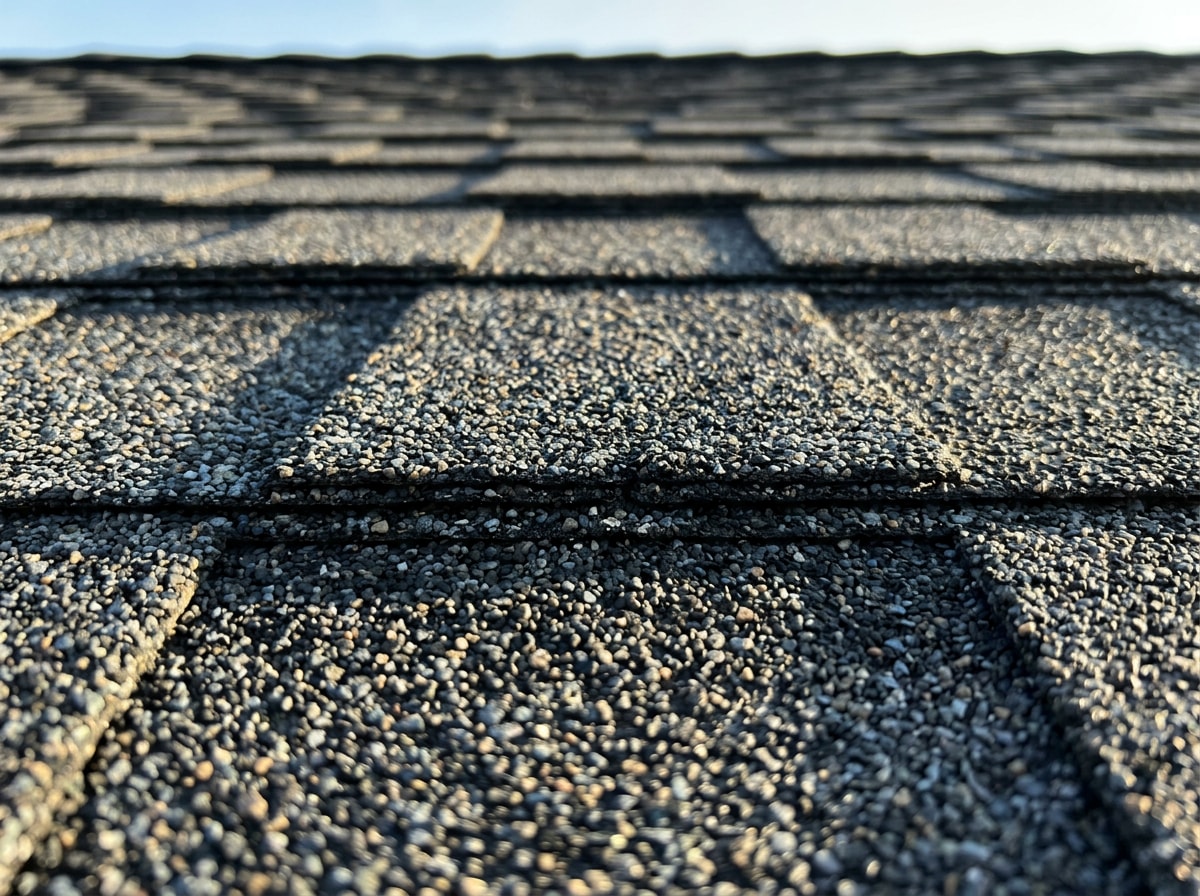
Machine-cut wood shingles have smooth, uniform faces. Cedar shakes are split for a thick, irregular texture. Both last 25 to 40 years, but only with real upkeep: periodic cleaning, moss control, and replacement of split or cupped pieces.
Be honest about the disqualifiers. Wood struggles in humid climates where rot and moss take hold, and fire-prone regions often restrict or ban it. Fire-retardant treated wood satisfies some codes but not all, and many HOAs limit it outright.
Metal Shingles
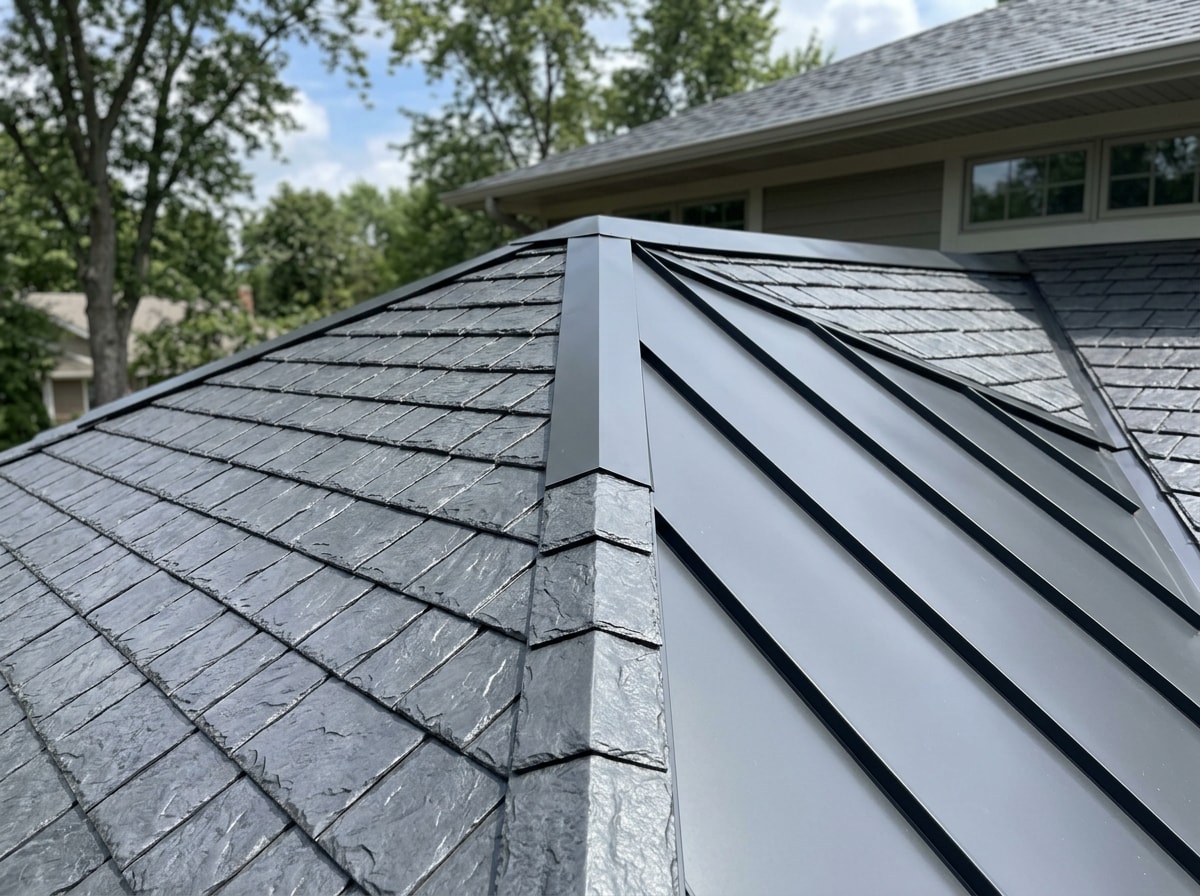
Metal shingles are stamped units that interlock to resemble shake, slate, or tile. They are different from standing-seam metal roofing, which uses long vertical panels with raised seams. Steel and aluminum dominate, with service lives of 40 to 70 years.
Weight is the quiet advantage. Metal shingles usually weigh less than asphalt, so they work on framing that could never carry tile.
Light-colored and coated metal also functions as a cool roof. How much energy you actually save depends on your climate, how well the roof is insulated, the roof type, and equipment efficiency , according to Department of Energy cool roof purchasing guidance.
Clay Tile and Natural Slate
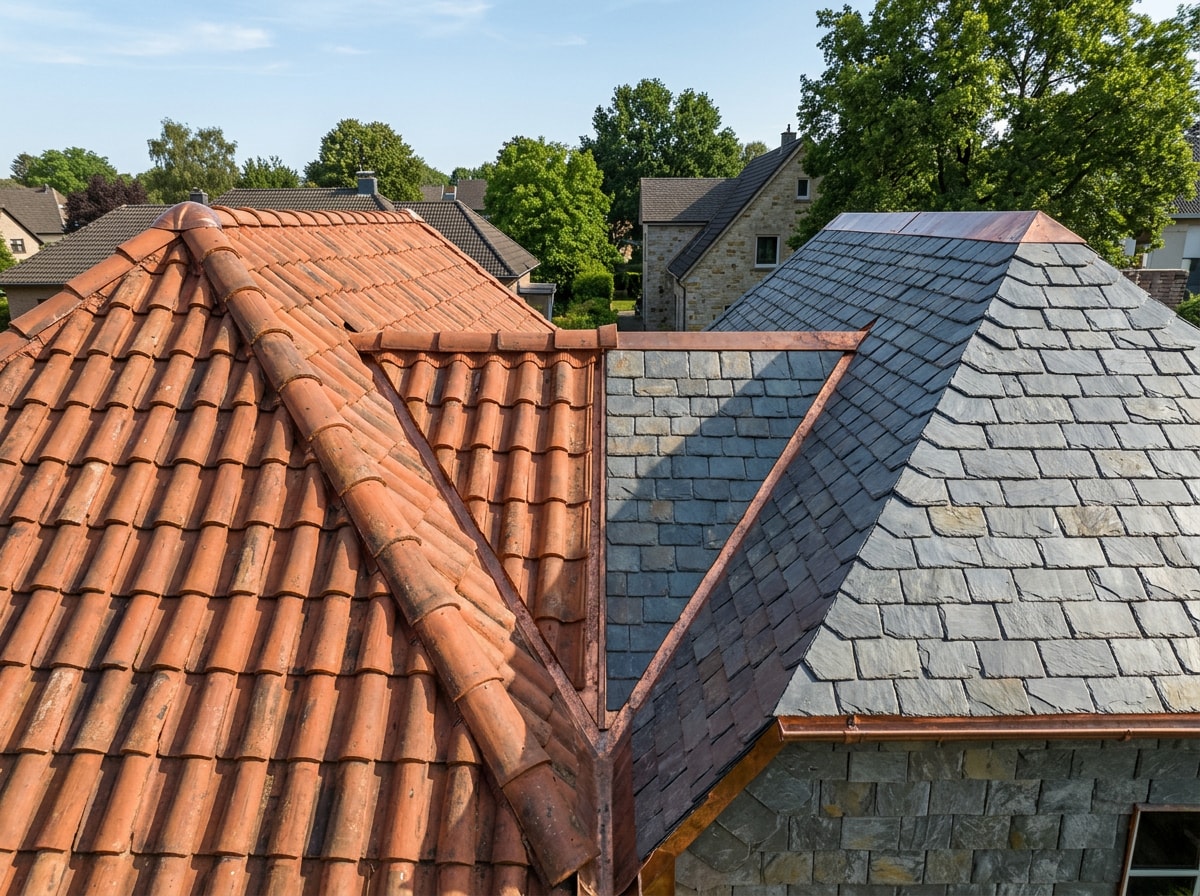
Clay, concrete tile, and natural slate form the heavyweight premium tier. Slate can pass 100 years. Tile commonly reaches 50 to 100. These are often the last roof a house ever needs.
The catch is load. A tile or slate assembly can weigh three to six times as much as asphalt per square. Most residential framing was never designed for that, so a structural engineer should evaluate rafters and decking first. Reinforcement is common and adds real cost. Repairs also need specialty crews that are not available in every market.
Composite and Synthetic Shingles
Composite shingles use engineered polymer or polymer-and-mineral blends to copy slate or shake at a fraction of the weight. They install with standard crews and standard fasteners, so you skip both the framing upgrade and the specialty installer. Expect 30 to 50 years, priced between luxury asphalt and real tile.
The weakness is track record. Polymer products have fewer field-proven decades than asphalt, and quality varies widely by manufacturer. Stick to established brands with long, transferable warranties and published test data.
The Shingle Is Only Part of the Roof
No individual shingle is waterproof. Water sheds from one overlapping course to the next, and the assembly underneath does the rest of the work.
That assembly is the deck (plywood or OSB), underlayment as a secondary water barrier, and metal flashing at valleys, chimneys, and pipe penetrations. A premium shingle over bad flashing still leaks. Most of the leaks our roof repair) crews chase start at flashing and penetrations, not in the field of the shingle.
Four Factors That Decide the Best Shingle for Your Roof
Durability Ratings
Three ratings tell you most of what you need to know.
- Impact resistance: Class 1 through 4, with Class 4 the highest tier for hail and debris.
- Wind rating: stated in mph. Roughly 60 to 80 mph for basic 3-tab, 110 to 130 mph for quality architectural products under enhanced nailing.
- Fire rating: Class A (best) through Class C. Most asphalt shingles over a proper deck reach Class A.
Those classes come from a lab test, not a marketing department. Products that survive a 1.75-inch steel ball dropped from 17 feet earn Class 3, and products that survive a 2-inch steel ball dropped from 20 feet earn the highest rating, Class 4. Certified products carry the mark and appear in the UL Solutions certification database.
Here is the information most shingle roundups leave out. The Insurance Institute for Business and Home Safety runs its own hail test using lab-grown hailstones instead of steel balls, and grades dents, tears, and granule loss. Its 2025 update evaluated 24 impact-resistant products covering about 95% of the impact-resistant shingles sold annually, and while most earned a "Good" rating, none achieved "Excellent."
The reason matters: UL 2218 judges physical breach seen from the back of the shingle, and does not account for the denting or granule loss a homeowner or adjuster can actually see. So "Class 4" is a floor, not a guarantee. Check the IBHS impact resistance research for the specific product you are being sold.
Many insurers discount premiums for Class 4 roofs, but eligibility and the amount vary by carrier and state. Call before you buy.
Compatibility and Installation Difficulty
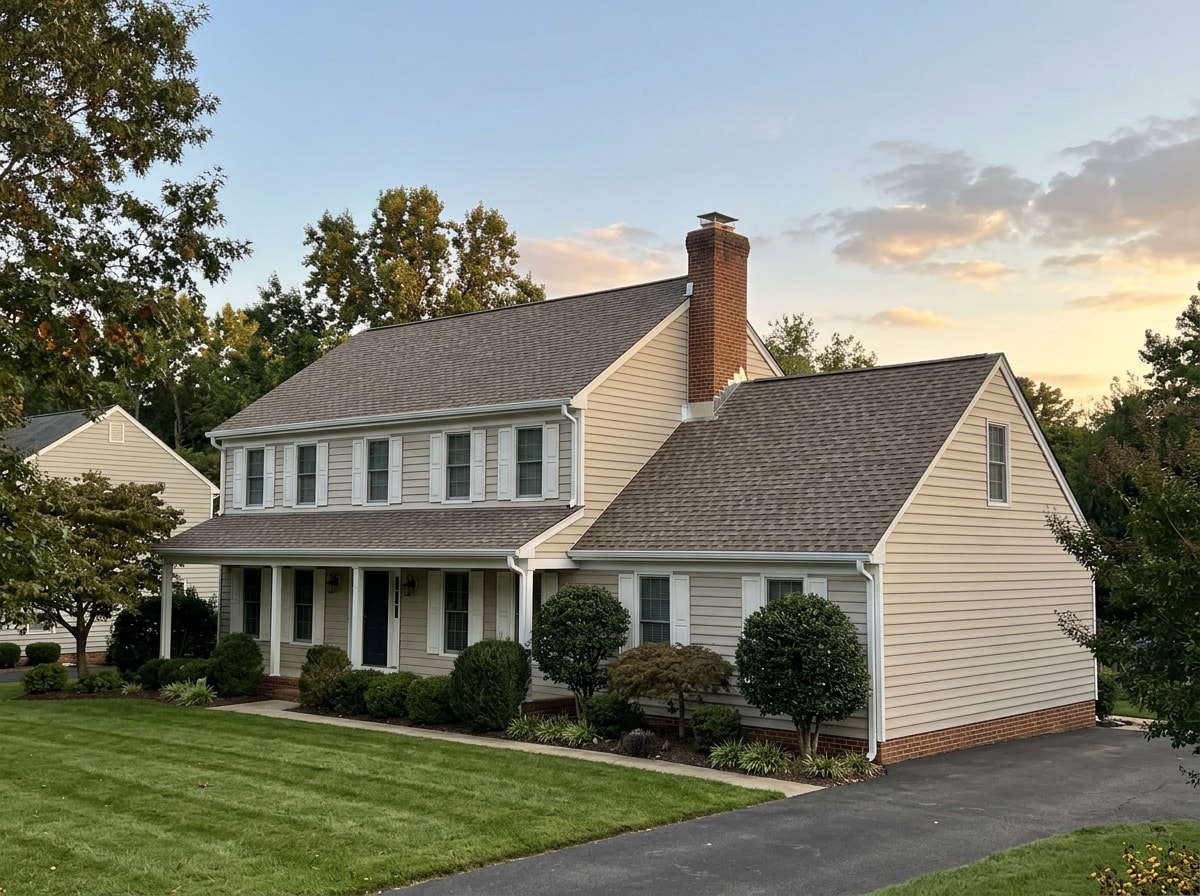
Not every shingle works on every roof. Most asphalt products need a pitch of 2:12 or steeper, with special underlayment detailing on low slopes. Soft or delaminated sheathing gets replaced before anything goes on.
Switching material families adds work. Tile or shake to asphalt usually means removing battens, re-decking, and reworking flashing. Going the other direction may trigger a framing evaluation. Local codes and HOA rules can also restrict color, profile, or material, so confirm what is allowed before you compare specs.
Maintenance Load
Upkeep runs roughly: asphalt and metal lowest, composite low, tile moderate, wood highest.
- Asphalt: annual visual check, keep valleys and gutters clear.
- Wood: cleaning and moss treatment every few years.
- Tile: cracked-piece replacement and flashing checks.
Ventilation matters as much as the product. Poor attic airflow bakes shingles from below and costs you years of service life. That is why a maintained mid-tier roof routinely outlives a neglected premium one. A roof inspection) is the cheapest way to find out which category yours is in.
Energy Efficiency
Reflective granules bounce part of the incoming solar radiation instead of absorbing it as heat. Products that hit defined reflectance and emittance thresholds can carry a cool roof rating, which some utilities and jurisdictions tie to rebates.
The size of the benefit is climate-dependent. Cool roofs save the most energy in hot sunny climates on buildings with low levels of roof insulation, and savings in northern climates are predicted to grow as the climate warms , per ENERGY STAR cool roof guidance. In a mixed climate like Virginia's, treat any blanket savings percentage with skepticism.
How Climate Changes the Answer
High wind and coastal. Prioritize wind rating and nailing pattern. Uplift starts at eaves, rakes, and ridges. Starter strips, six-nail patterns, and sealed edges matter more than the shingle body.
Hail-prone. Go Class 4, and favor polymer-modified (SBS) asphalt that flexes on impact instead of fracturing.
Hot and sun-intense. Reflective granules and UV-stable products. Heat accelerates asphalt aging and granule loss.
Cold with freeze-thaw. The sealant strip on asphalt shingles needs solar warmth to bond. Ice-and-water shield at the eaves is not optional.
That last point is where we see the most avoidable failures locally. On a late-November tear-off in Stafford) our crew hand-sealed every course because deck temperatures never cleared the mid-40s. Two winters later that roof is tight, while cold-weather installs on the same street that were nailed and left to self-seal lost tabs off the rake in the first hard spring blow. If wind has already found your roof, emergency roof repair) comes before material shopping.
Best Roofing Shingle Brands Compared
Seven manufacturers dominate the North American market. Figures below come from manufacturer literature and should be verified against current spec sheets, since warranty terms and pricing change without notice.
| Brand | Flagship architectural line | Wind rating (enhanced application) | Class 4 option in the lineup | Installed price per square (est.) |
|---|---|---|---|---|
| GAF | Timberline HDZ | Up to 130 mph | Timberline AS II | $450 to $650 |
| Owens Corning | Duration (SureNail) | Up to 130 mph | Duration Flex | $450 to $650 |
| CertainTeed | Landmark | 110 to 130 mph | Landmark IR | $475 to $675 |
| IKO | Cambridge | Up to 130 mph | Nordic | $425 to $600 |
| TAMKO | Heritage | Up to 130 mph | Titan XT (IR lines) | $425 to $600 |
| Atlas | Pinnacle Pristine | Up to 130 mph | StormMaster Shake | $450 to $650 |
| Malarkey | Vista / Legacy | Up to 130 mph | Legacy (SBS) | $500 to $700 |
Two useful details from the wider market: Owens Corning is known for its SureNail wider-nailing-zone design, Malarkey builds on SBS modified asphalt for durability, and Atlas is valued for built-in algae resistance , while Atlas StormMaster Shake reaches Class 4 at a relatively affordable price point .
The brand matters less than the crew. Top-tier non-prorated coverage is almost always contingent on installation by a manufacturer-certified contractor, and workmanship errors void product claims. Browse our completed projects) to see how the details are handled on real roofs, or read the full scope of our roofing services).
How Much Do Roofing Shingles Cost in 2026?
| Shingle type | Installed cost per sq ft | Cost per square | 2,000 sq ft roof (approx.) |
|---|---|---|---|
| 3-tab asphalt | $3.50 to $5.50 | $350 to $550 | $7,000 to $11,000 |
| Architectural asphalt | $4.50 to $7.50 | $450 to $750 | $9,000 to $15,000 |
| Luxury asphalt | $7 to $12 | $700 to $1,200 | $14,000 to $24,000 |
| Wood shake | $8 to $14 | $800 to $1,400 | $16,000 to $28,000 |
| Metal shingles | $10 to $16 | $1,000 to $1,600 | $20,000 to $32,000 |
| Composite | $9 to $15 | $900 to $1,500 | $18,000 to $30,000 |
| Tile / slate | $10 to $30+ | $1,000 to $3,000+ | $20,000 to $60,000+ |
These are national estimate ranges, not quotes. Real numbers move with pitch, cut-up complexity, tear-off versus overlay, waste allowance, and local labor rates.
Now divide by service life, which is the calculation almost nobody runs:
- 3-tab at $9,000 over 18 years: about $500 per year.
- Architectural at $12,000 over 28 years: about $430 per year.
- Metal at $26,000 over 55 years: about $475 per year, with no mid-ownership replacement.
Cheapest upfront is frequently the most expensive decision. Want the real number for your roof rather than a range? Get a free estimate) and we will measure and price the specific options you are weighing, including a full roof replacement) scope.
How to Choose: Five Questions in Order
- How long will you own the house?
- What is your hard budget ceiling, including decking surprises?
- Which climate stress dominates where you live: wind, hail, heat, or freeze-thaw?
- How much maintenance will you realistically do?
- Do you weight appearance or longevity more heavily?
For most homes the answer lands on architectural asphalt. It balances 25 to 30 year performance, 110 to 130 mph wind ratings, curb appeal, and price better than anything else sold today.
Push toward metal if you are in a hot climate or staying 30 years. Push toward composite if you want the shake look without the upkeep. Consider tile or slate only if the structure supports the load and long-term value outranks upfront cost.
Not sure what your deck and framing can carry? Start at our homepage) to see the full service list, or reach the crew directly through our contact page). We work throughout Fredericksburg) and the surrounding Virginia communities.
FAQ
What is the best roofing shingle overall?
Architectural asphalt, for most homes. It delivers 25 to 30 years, 110 to 130 mph wind resistance, and dimensional looks at a mid-tier price. Upgrade to Class 4 in hail country or metal if you are staying decades.
Which shingle brand is best?
There is no single winner. The best brand depends on your climate, home style, and budget, and GAF leads the market on contractor network size . Choose the certified installer first, then pick from the lines that installer is credentialed to warranty.
How long do roof shingles last?
3-tab 15 to 20 years, architectural 25 to 30, luxury asphalt 30 to 50, wood 25 to 40, metal 40 to 70, composite 30 to 50, tile or slate 50 to 100+. Installation quality and attic ventilation swing the real number more than product grade does.
What is the difference between 3-tab and architectural shingles?
3-tab is one flat layer. Architectural bonds two or more layers for depth. Architectural adds roughly 10 years of life and much better wind resistance for about 25% to 40% more money.
Are Class 4 impact-resistant shingles worth the extra cost?
In hail regions, usually yes, especially with an insurance credit. Just verify performance rather than trusting the label, since IBHS found most rated products land at "Good" and none reached "Excellent" .
What shingle color is best?
Lighter, reflective colors reduce roof surface temperature and help most in hot, sunny climates. Newer coatings and reflective granules now deliver high reflectance in colors beyond white , so you are not stuck with a pale roof to get the benefit.
Can you put new shingles over old ones?
Many jurisdictions allow one overlay on a sound single-layer roof and cap total layers at two. A full tear-off costs more but allows deck inspection, correct flashing, and longer service life. Confirm layer limits with your local building department.
Do roofing shingles affect home resale value?
Yes. A new roof improves curb appeal and removes a major inspection objection, since buyers price in roof age and remaining life. Published ROI percentages vary by market, so treat them as rough guides.