Can you paint TPO roofing with ordinary exterior paint? No, and the failure shows up fast: cracking, flaking, and peeling inside a season or two. There is a legitimate way to put a fresh white finish on that membrane, and the gap between the two methods is roughly fifteen years of roof life.
Visit Shark Construction to see our services and request a free estimate.
Can You Paint TPO Roofing? The Short Answer
No conventional paint. Latex, acrylic house paint, and oil-based exterior products will not bond to a thermoplastic membrane.
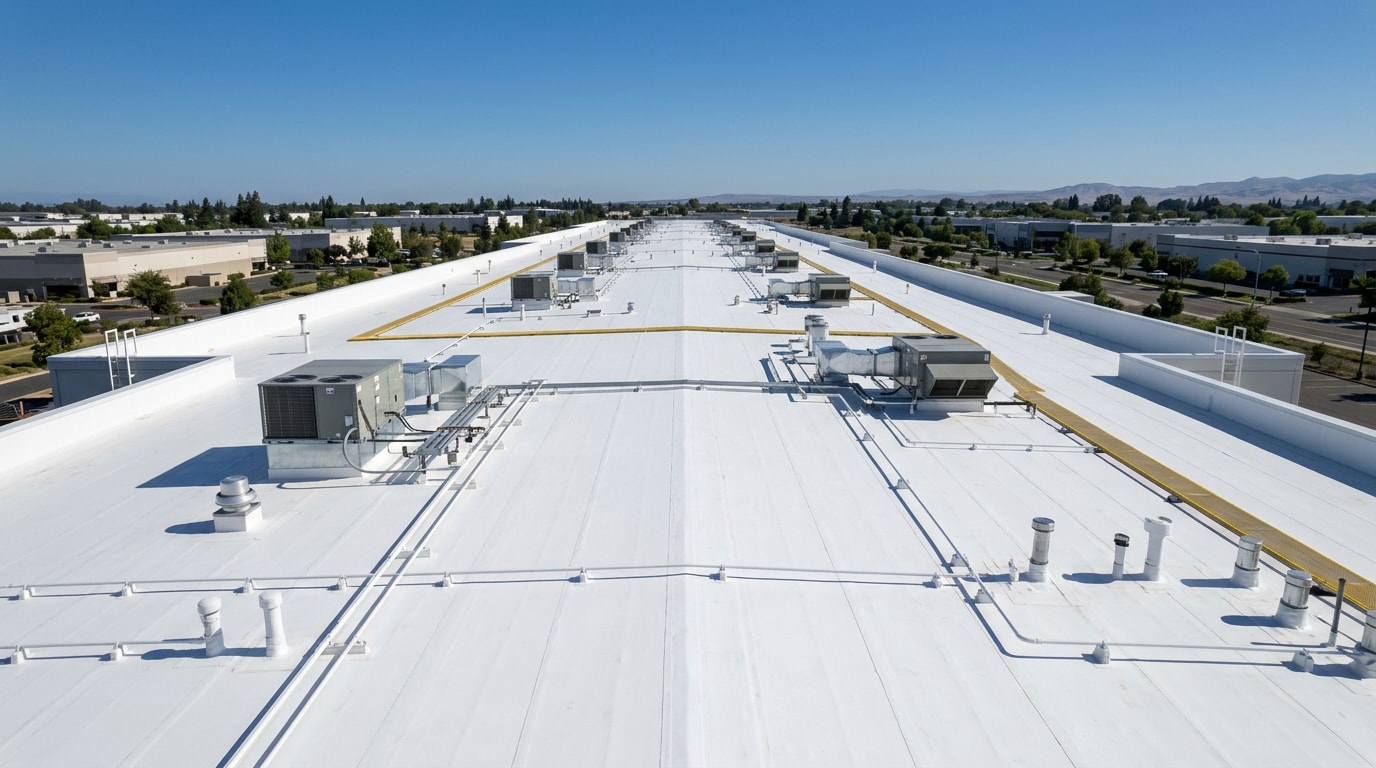
Yes to a manufacturer-approved coating system. A liquid-applied elastomeric coating, installed over a compatible primer on a properly prepped and weathered membrane, restores the white finish and adds waterproofing on top.
That distinction matters because contractors and building owners use the word "paint" for both. One is a cosmetic mistake. The other is a warranted restoration system with its own coverage term.
Why Regular Paint Fails on TPO
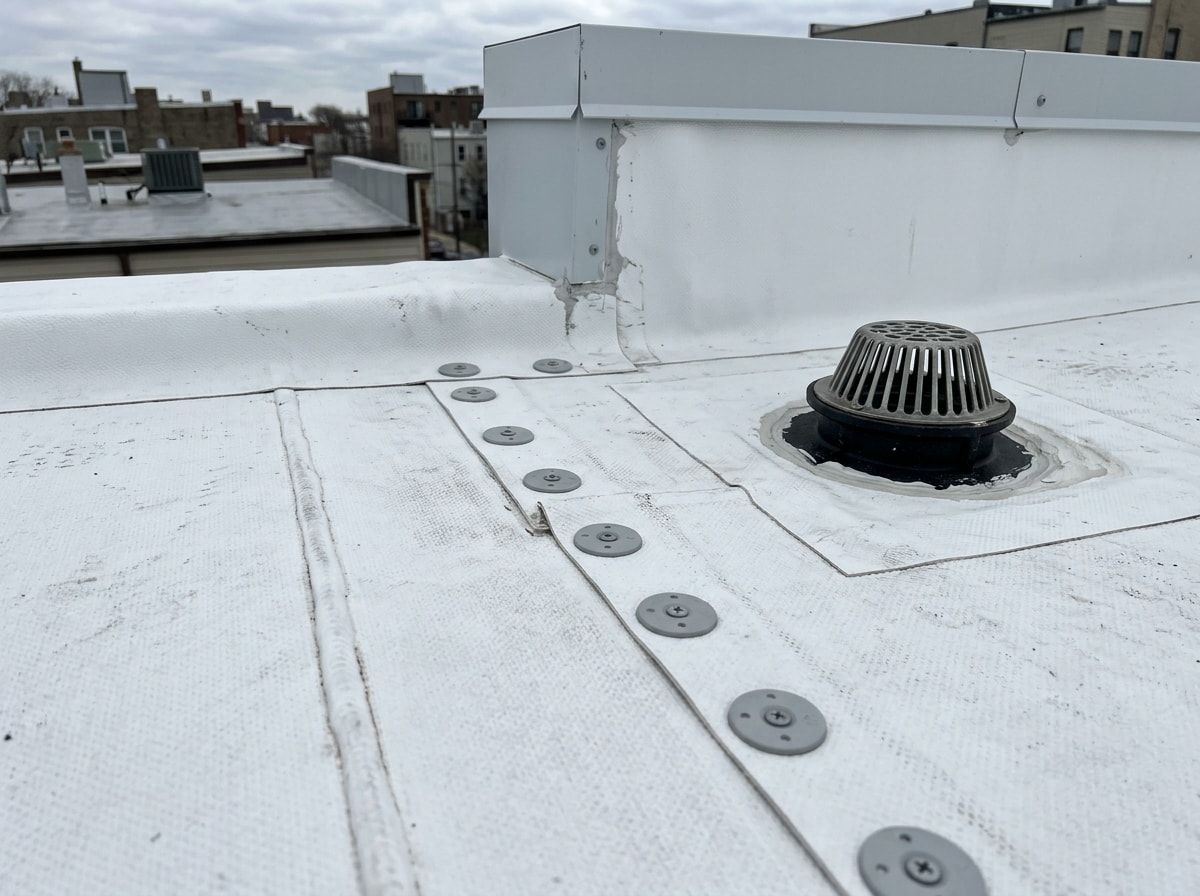
Everything traces back to one property: TPO is smooth, non-porous, and low surface energy. Nothing grips it.
Three failure modes follow:
- No mechanical bond. There is no porosity for paint to key into, so the film releases in sheets.
- No flexibility. TPO expands and contracts through daily thermal cycling. A rigid paint film splits, and those splits hold water.
- No warranty coverage. Most membrane manufacturers treat an unapproved field-applied product as a modification to the assembly, which can end your coverage.
There is a fourth cost people miss. Factory TPO is already engineered as a cool roof surface. A dark or poorly specified paint drops the reflectance you paid for, and on a low-slope roof that shows up in summer cooling load. The U.S. Department of Energy notes that a reflective roof can run more than 50°F cooler than a conventional roof on a sunny afternoon.
Acrylic vs. Silicone: What Actually Goes on TPO
Product choice is not about color. It is decided by drainage, slope, and the condition of the aged membrane.
Acrylic Coatings
Water-based acrylics suit roofs with positive drainage that shed water within a day or two. They cost less per square foot, clean up with water, and cure to a bright reflective white with strong UV resistance. The weakness is simple: they are water-based, so they soften and break down wherever water stands.
Silicone Coatings
Silicone is the answer for ponding water. It cures to a seamless, moisture-tolerant film that survives standing water long after acrylic degrades, and it stays flexible through thermal movement. It costs more, and it picks up dirt, so reflectivity dulls without periodic washing.
| Factor | Acrylic | Silicone |
|---|---|---|
| Relative material cost | Lower | Roughly 30% to 60% higher |
| Ponding water tolerance | Poor | Excellent |
| Reflectivity retention | Stays cleaner longer | Dulls faster without washing |
| Typical recoat interval | 8 to 12 years | 15 to 20 years |
| Typical warranty available | 10 to 15 years | 15 to 20 years |
Figures are typical ranges and vary by manufacturer, climate, and applied thickness. Check the rated solar reflectance of any product you are quoted against the Cool Roof Rating Council directory rather than trusting a sales sheet.
The Number Most Articles Skip: Mil Thickness Buys the Warranty
Here is what separates a real restoration from a paint job. On most silicone systems, the warranty term is not sold by brand or by contractor. It is sold by dry film thickness, verified with a mil gauge at inspection.
| Applied dry film thickness | Typical warranty term |
|---|---|
| ~20 mils | 10 years |
| ~25 mils | 15 years |
| ~30 mils | 20 years |
Two practical consequences:
- A cheap bid is usually a thin bid. If one quote is 30% lower, ask how many gallons per square are being applied, not what brand is in the bucket.
- Ask for mil readings in writing. Reputable manufacturers require thickness verification before they issue coverage, and that documentation is what you hand a future buyer or lender.
For budgeting, silicone restoration over sound TPO generally lands in the low-to-mid single digits per square foot installed, well under tear-off and replacement. If you are comparing whole-system costs across materials, our breakdown of installed roofing material costs) puts those numbers side by side.
How to Coat a TPO Roof, Step by Step
Skipped prep is the single most common cause of coating failure. Sequence and cure times decide whether the job lasts five years or five months.
Step 1: Inspect and Repair
Walk the roof. Mark open seams, punctures, blisters, and low spots that hold water. Repair every defect with compatible tape and sealant first. A coating bridges cosmetic flaws, not structural ones, and it will not fix wet insulation) under the deck.
Step 2: Confirm the Membrane Will Take It
Most systems require the TPO to be weathered before coating, and the required period varies widely by manufacturer. Some acrylic restoration systems accept aged TPO after about 30 days of weathering; others want years.
Then run an adhesion test. On our jobs we prep a small test patch, prime it, coat it, let it cure, and pull it. If the primer and coating do not hold on a one-foot square, they will not hold on 12,000. That single test has talked more than one Fredericksburg building owner out of a coating and into a proper roof replacement).
Step 3: Clean
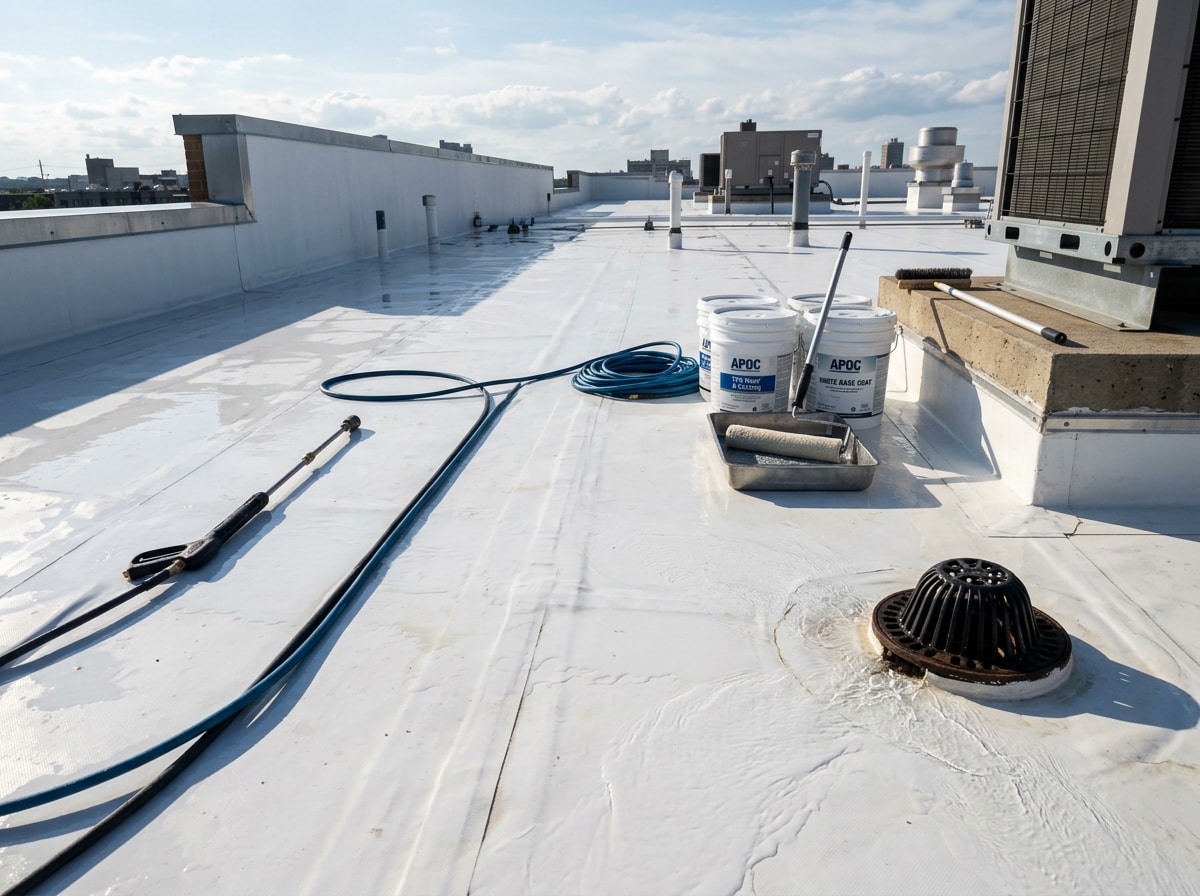
Power wash the entire surface with an approved TPO cleaner to strip oxidation, oils, dirt, and biological growth. Rinse thoroughly. Let it dry completely. Moisture trapped under a cured film causes blistering and delamination.
Step 4: Prime
Apply a thermoplastic-specific primer and let it cure per the data sheet. Standard primers will not bond to TPO. Work in mild temperatures with low humidity, and confirm no rain inside the cure window.
Step 5: Apply Two Coats
- Roller for curbs, penetrations, and detail work.
- Airless sprayer with a second worker back-rolling for open field.
- Two thin coats always beat one thick coat.
- Cross-hatch the second coat perpendicular to the first for even thickness.
- Hit the coverage rate on the data sheet, measured in gallons per square.
Step 6: Final Walk and Safety
Check for holidays, pinholes, and thin spots at seams and flashings. Then set an annual cleaning and inspection schedule.
One safety note worth repeating: wet membrane is dangerously slick, and low-slope roof work sits under OSHA fall protection requirements in 29 CFR 1910.28. This is the stage where DIY attempts go badly wrong.
Does Coating or Painting Void Your TPO Warranty?
Conventional paint: frequently yes. It reads as an unapproved modification.
Manufacturer-sanctioned restoration systems: no, and many carry their own 10 to 20 year coating warranty. The condition is that the system, the primer, and the applicator all have to be approved by that manufacturer.
Before anything touches the roof, pull your original warranty document and call the membrane manufacturer's technical line. Get the answer in writing. A lapsed warranty on a 20-year membrane is an expensive trade for a cosmetic upgrade.
Alternatives to Painting Your TPO Roof
Start cheaper than you think you need to.
- Professional cleaning. A large share of "my roof looks terrible" calls are dirt and algae. A proper wash solves them with zero warranty exposure.
- Approved coating system. True restoration on a sound membrane, with its own warranty.
- Overlay. New membrane installed over the existing system where code and deck condition allow.
- Full replacement. The honest answer when there are active leaks, failed seams, widespread deterioration, or wet insulation.
The decision rule is short. Sound membrane and no active leaks: restoration wins on cost every time. Water already in the assembly: a coating just seals the problem in and buys you a bigger bill later.
Want a color other than white? Specify it at installation. A factory color membrane outlasts any field-applied finish.
Not sure which category your roof falls into? A documented roof inspection) with core samples tells you whether the insulation is dry before you spend a dollar on coating.
Get a Straight Answer on Your Roof
Shark Construction has coated, repaired, and replaced low-slope systems across Fredericksburg), Stafford), and Culpeper), and we will tell you when a coating is the wrong call.
See recent low-slope and steep-slope work on our project gallery), browse our full roofing services) or start at our home page).
Get a free estimate) and we will run the slope, drainage, and adhesion checks before recommending anything.
FAQ
What kind of paint do you use on a TPO roof?
Not house paint. Use an elastomeric acrylic or silicone coating specifically listed as TPO-approved by the manufacturer, applied over a compatible thermoplastic primer. Drainage decides the product, not color preference.
Does painting a TPO roof void the warranty?
Often, yes. Conventional paint counts as an unapproved modification under most manufacturer warranty terms. Approved restoration systems are the exception and can carry their own coverage. Confirm with the membrane manufacturer in writing first.
How long does paint last on a TPO roof?
Regular paint typically shows fading and hairline cracking within three to five years, and that assumes good prep. A correctly specified coating system runs 10 to 20 years, with the term tied to applied dry film thickness.
Can you paint a TPO roof a dark color?
You can tint some coatings, but it is rarely a good idea on a low-slope roof. Dark surfaces absorb heat, raise membrane temperature, and increase cooling load. If you need a non-white roof, specify a factory color membrane at installation instead.
How much does it cost to coat a TPO roof?
Installed silicone restoration over sound TPO generally runs in the low-to-mid single digits per square foot, with acrylic on the lower end. Price scales with mil thickness, roof access, and how much seam and flashing repair is needed first. Expect a site visit before any firm number.
How long does TPO have to weather before it can be coated?
It depends on the system. Some acrylic restoration systems accept TPO weathered roughly 30 days; other manufacturers require the membrane to age for years. Always follow the specific coating manufacturer's requirement and back it up with an adhesion test.
Do I need to pressure wash before coating TPO?
Yes. Power washing removes oxidation, oils, dirt, and biological growth that block adhesion, and most manufacturers make it a warranty condition. The surface must be fully dry before primer goes down.
Can you coat the TPO roof on an RV or trailer?
Many RV TPO roofs carry a manufacturer warranty that a coating would void, and RV membranes are thinner than commercial TPO. Check the coach warranty and the membrane manufacturer's guidance before coating; routine washing and sealant maintenance is usually the better path.
Are roof coatings better than paint for TPO?
Yes, on durability. Coatings are formulated to bond to thermoplastic surfaces, stay flexible as the membrane moves, and resist UV. They can genuinely extend roof life. Ordinary paint does none of it.