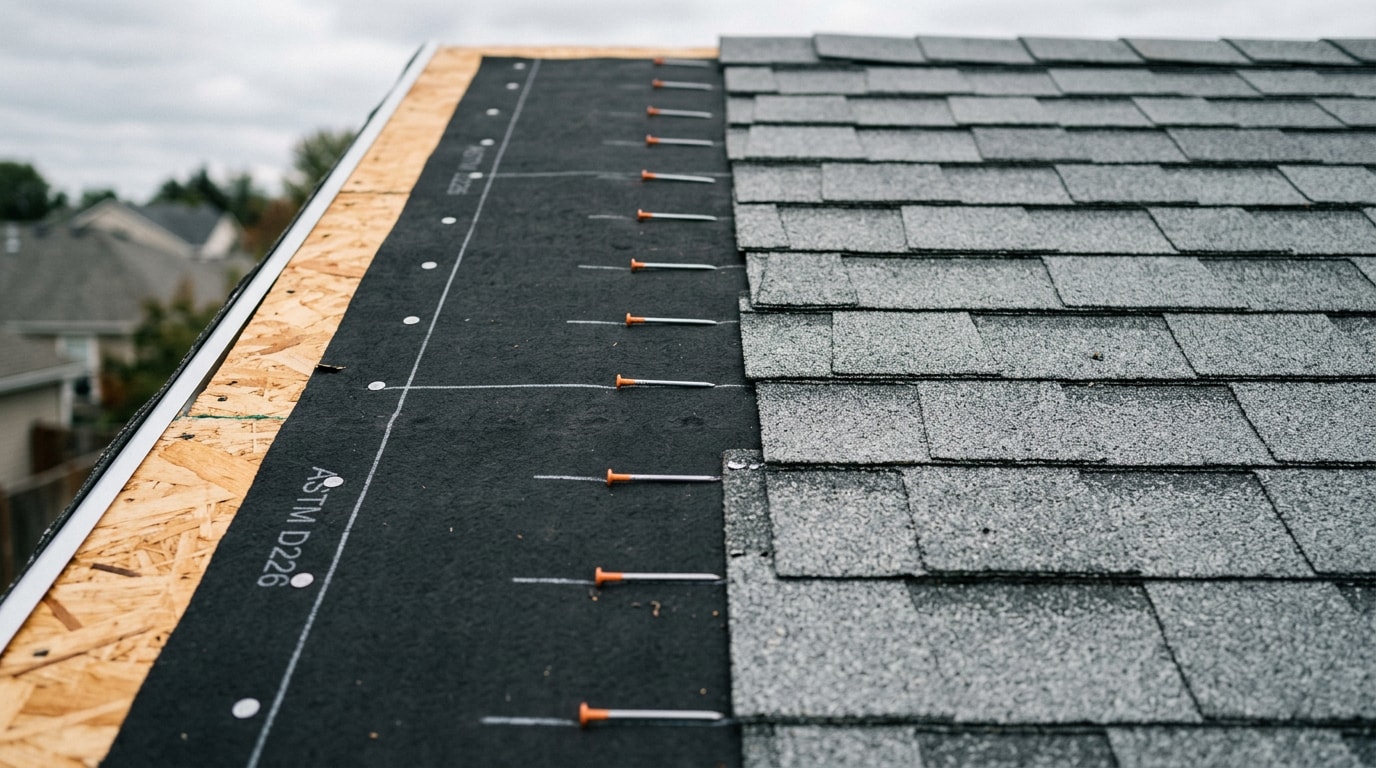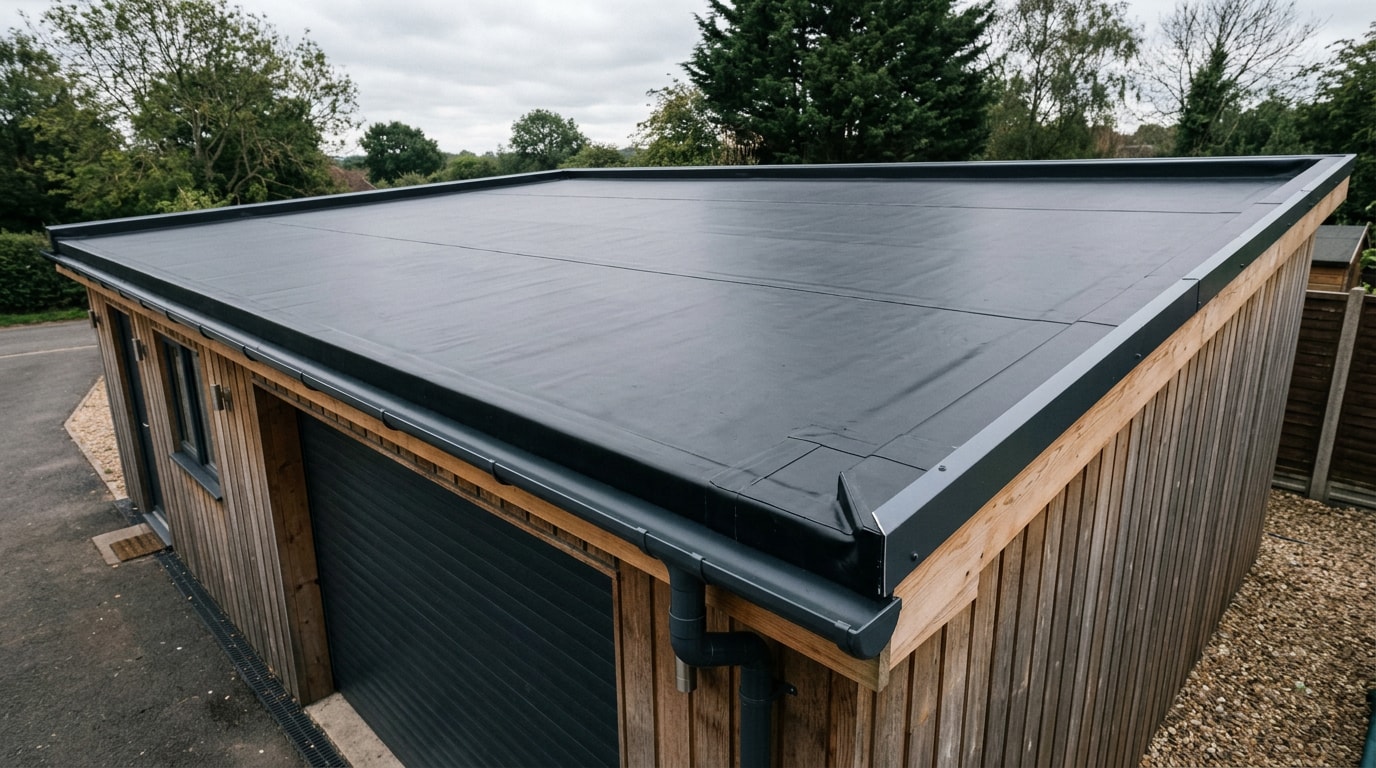
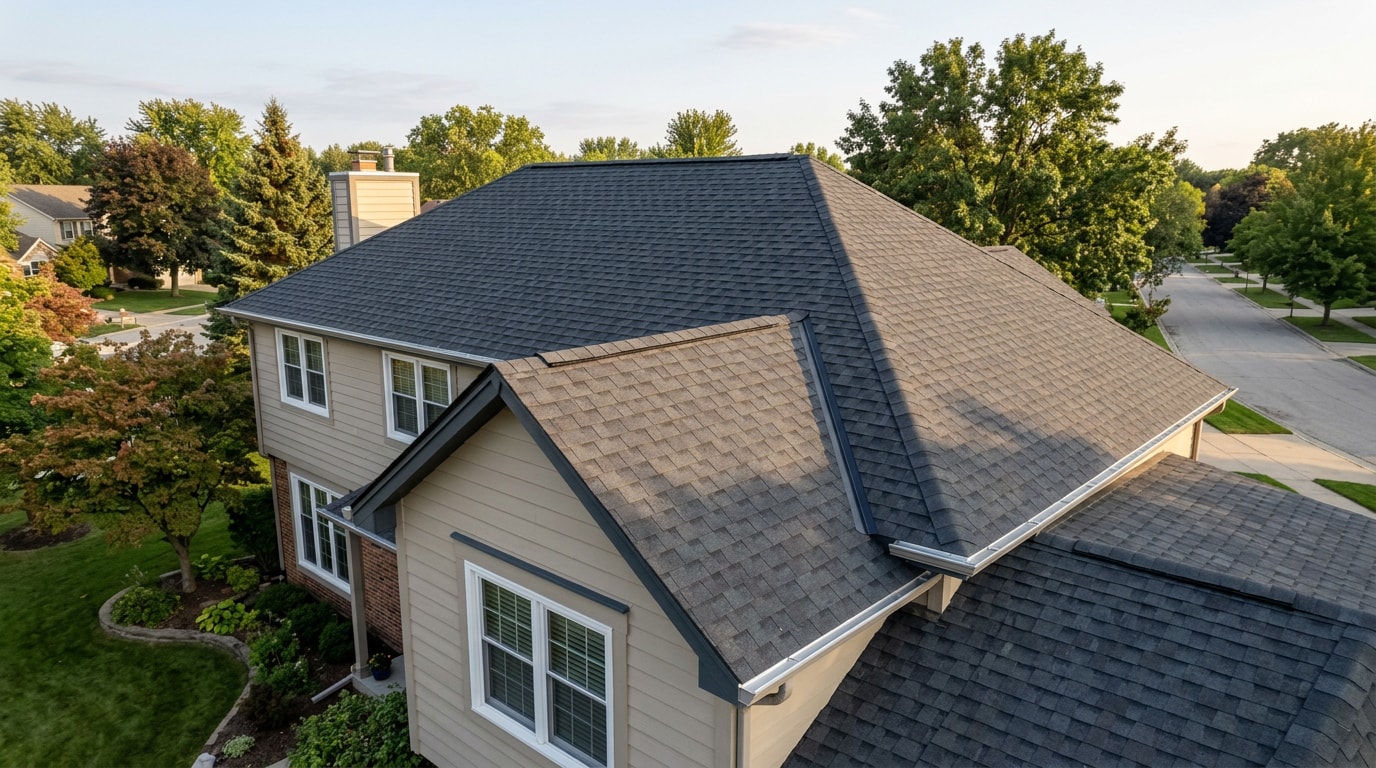
How much is roofing on a typical single-family home? Most owners land between $6,000 and $30,000, with asphalt shingle replacements clustering around $9,000 to $17,000. The spread is that wide because two houses on the same street rarely carry the same roof, and the next few sections show exactly where your quote will fall.
How Much Is Roofing? Average Cost of a Roof Replacement
Plan on roughly $9,500 to $11,500 for an average asphalt shingle replacement in 2026.
Contractors price the same job two ways:
- Total project cost, the number on the signature line
- Cost per square foot, generally $4 to $11 installed for asphalt and $10 to $30 for metal, tile, or slate
You will also see the word square on the estimate. One roofing square equals 100 square feet of roof surface, so a 2,000 square foot roof is 20 squares. If that unit is new to you, our breakdown of what a square means in roofing terms explains how crews price material by the bundle.
Published national averages disagree with each other, and that confuses people. Some guides report a new roof near $9,500. Others put it above $17,000. Neither is wrong. The gap comes from the roof size each source assumes, not from bad data.
Treat every figure here as a planning range. Only an on-site measurement produces a real price, which is what our roof replacement visit is for.
Roofing Cost by Roof Size
Roof area drives material quantity and labor hours, so it is the single biggest line item in any estimate. These ranges assume architectural asphalt shingles with a standard tear-off.
| Roof area | Squares | Typical installed cost |
|---|---|---|
| 1,000 sq ft | 10 | $4,500 to $9,000 |
| 1,500 sq ft | 15 | $6,500 to $13,000 |
| 2,000 sq ft | 20 | $9,000 to $17,000 |
| 2,500 sq ft | 25 | $11,000 to $21,000 |
| 3,000 sq ft | 30 | $13,500 to $25,000 |
Here is the part most cost guides skim past: roof area is not your home's living square footage.
Overhangs, eaves, and slope all add surface. A 1,600 square foot single-story home often carries closer to 1,900 or 2,000 square feet of roof.
To estimate your own roof size:
- Start with the footprint of the house.
- Add about 10 percent for overhangs.
- Multiply by a pitch factor: about 1.05 for a shallow roof, 1.15 for a moderate one, 1.25 or more for a steep one.
- Divide by 100 to get your squares.
Roofing Cost by Material
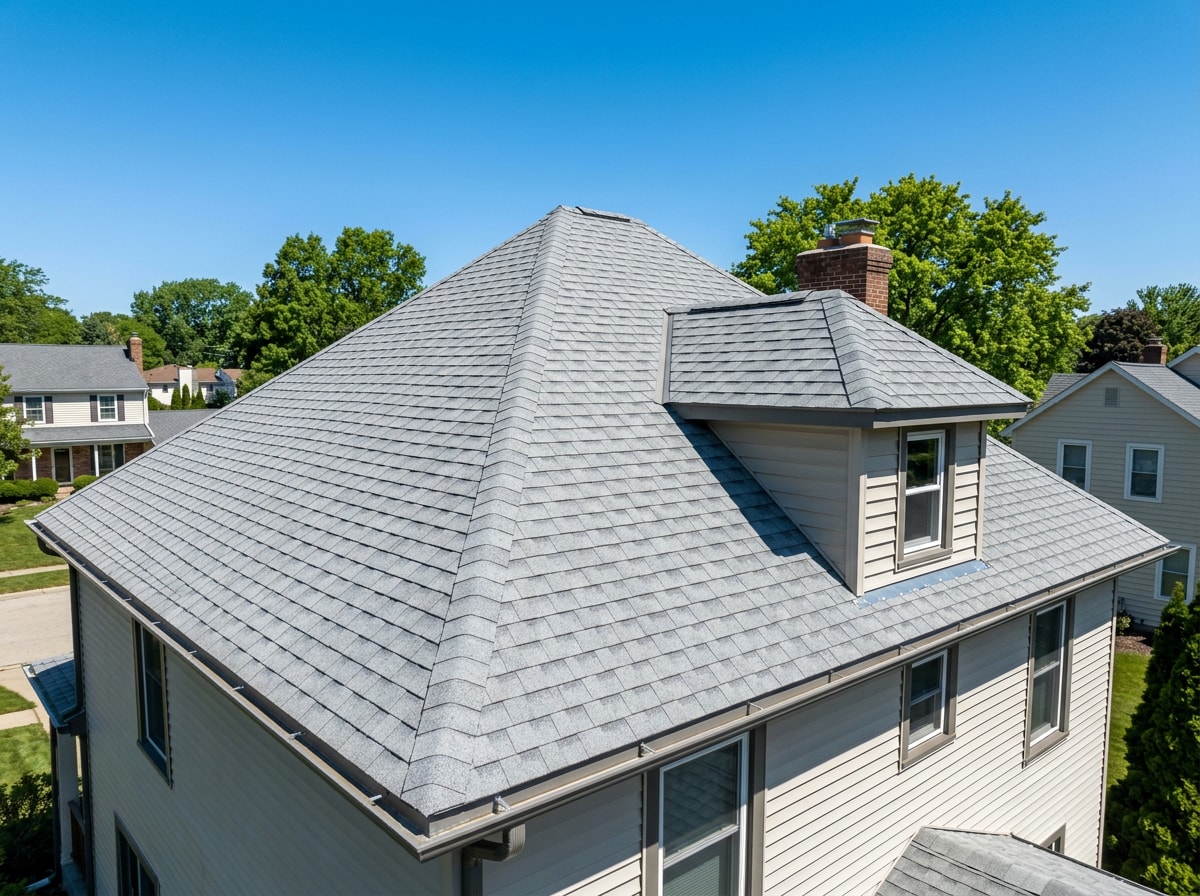
Material choice can triple your price. It can also triple how long the roof lasts, which is the comparison almost nobody runs.
| Material | Installed cost/sq ft | Expected lifespan | 2,000 sq ft roof | Cost per year of service |
|---|---|---|---|---|
| 3-tab asphalt | $3.50 to $5.50 | 15 to 20 yrs | $7,000 to $11,000 | $450 to $600 |
| Architectural asphalt | $4.50 to $8 | 22 to 30 yrs | $9,000 to $16,000 | $380 to $500 |
| Luxury asphalt | $7 to $12 | 30 to 40 yrs | $14,000 to $24,000 | $450 to $600 |
| Standing seam metal | $10 to $18 | 40 to 70 yrs | $20,000 to $36,000 | $400 to $600 |
| Concrete or clay tile | $10 to $25 | 50 to 100 yrs | $20,000 to $50,000 | $350 to $600 |
| Synthetic composite | $7 to $13 | 30 to 50 yrs | $14,000 to $26,000 | $400 to $550 |
| Wood shake | $8 to $15 | 25 to 35 yrs | $16,000 to $30,000 | $550 to $850 |
| Slate | $15 to $30 | 75 to 150 yrs | $30,000 to $60,000 | $300 to $500 |
Asphalt shingles suit most owners, especially anyone planning to sell within a decade. Metal earns its premium in high-wind and wildfire regions. Tile fits hot, dry climates. Slate fits historic homes and owners who are never moving.
Run the per-year math and the ranking shifts. A $12,000 architectural asphalt roof lasting 25 years costs about $480 per year of service. A $34,000 slate roof lasting 100 years costs about $340 per year, cheaper annually despite nearly tripling the upfront bill.
Be honest about where that logic breaks:
- You only capture 100 years of value if the house and the owner stay that long.
- Heavy tile and slate often require framing reinforcement, which is not in the price per square foot.
- Lifespans are industry estimates under normal maintenance, not guarantees. Poor attic ventilation can cut a shingle roof's life by years.
One cost lever worth knowing about: reflective roofing. The EPA retired its ENERGY STAR label for roof products in 2022, so the current consumer resource is the agency's cool roofs guidance, which points to third-party reflectance ratings instead of a single label. If a salesperson quotes you an "ENERGY STAR shingle," ask which rating they actually mean.
What Drives a Roofing Quote Up or Down
Two similar-sized homes can draw a $9,000 bid and a $25,000 bid. The gap comes from a short list of variables: material, size and pitch, building height, site access, local labor rates, deck condition, and whether the old roof comes off first.
Roof Pitch and Complexity
Size sets how much material you buy. Pitch sets how hard the hours are.
Pitch is written as rise over run. An 8/12 roof climbs 8 inches vertically for every 12 inches horizontally.
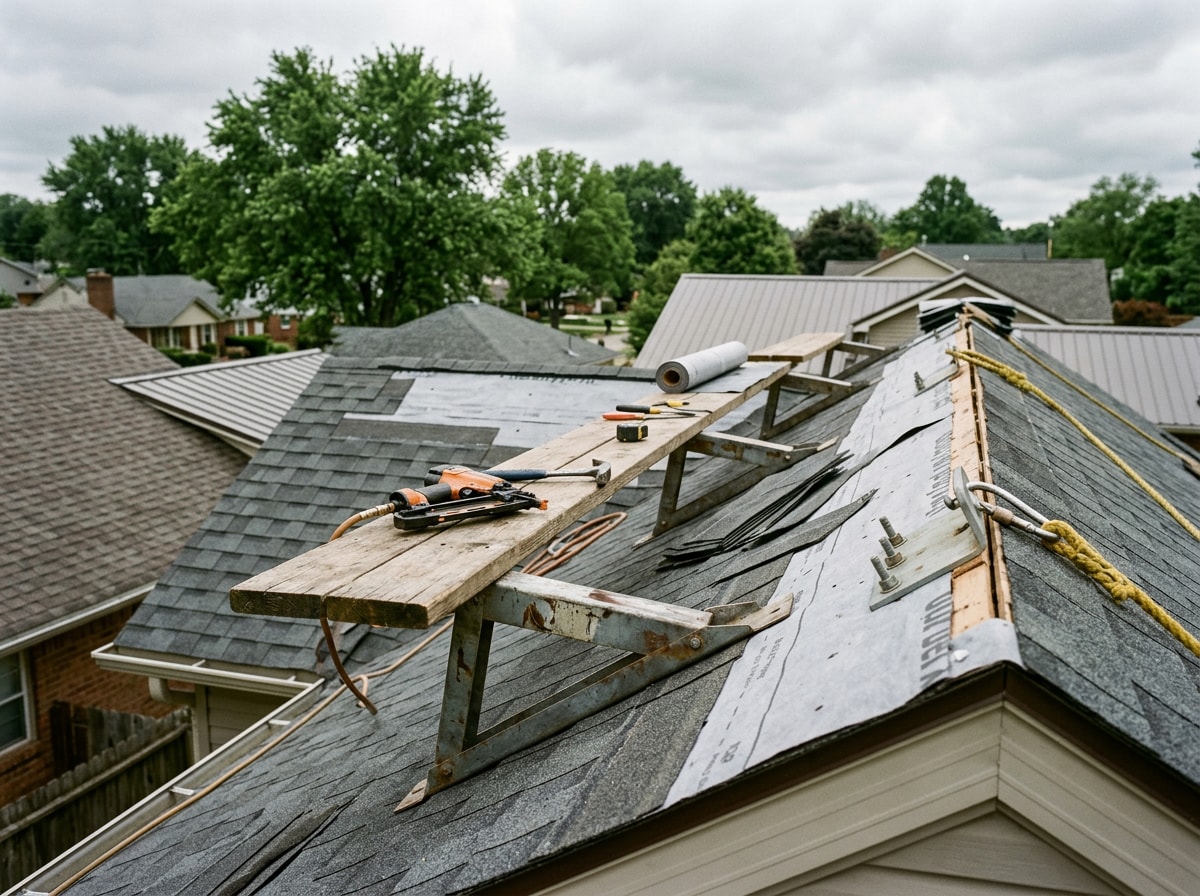
Below about 6/12, crews walk the roof normally. Past roughly 8/12, they need roof jacks, harnesses, and anchor points, and more material gets wasted on cuts. Those systems are not optional either, since OSHA fall protection rules for residential construction govern how roofing crews work at height.
Expect a pitch surcharge of roughly $25 to $100 per square once slope passes 8/12, often a 15 to 30 percent bump on the total.
Complexity compounds it. Every valley, dormer, skylight, and chimney means custom flashing, and flashing is slow, skilled work. It is frequently the real difference between two bids on the same house.
Stories and Site Access
Height adds cost before a single shingle moves. A two-story roof means more staging, full fall-protection setup, longer hauls for bundles and debris, and sometimes a lift rental. Budget roughly $50 to $150 per square extra above two stories.
Access is a separate issue. Tight lot lines, mature landscaping, no clear spot for the dumpster, and a narrow driveway all add labor even on a single-story ranch.
Ask every bidder where the dumpster and material delivery will stage. A bid priced for easy access that meets reality on day one is one of the most common sources of change orders. Access and labor rates are local, so check what is typical in Fredericksburg, Stafford, or Spotsylvania.
Tear-Off, Decking, Permits, and Other Line Items
These are the items that separate an estimate from a final invoice. A legitimate bid itemizes each one. A single lump sum with no breakdown is a reason to ask more questions.
- Tear-off and disposal: roughly $1 to $2 per square foot
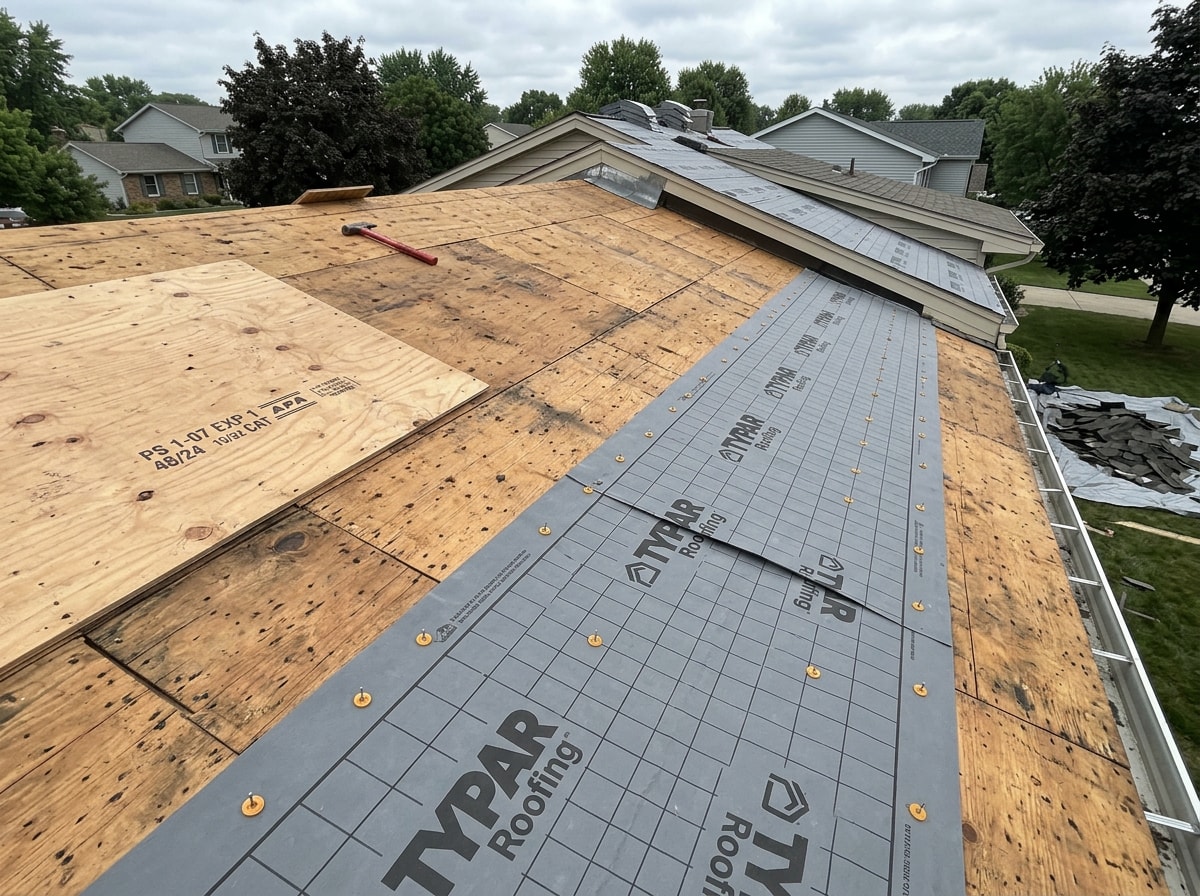
- Decking repair: about $70 to $140 per sheet of plywood or OSB installed
- Full re-decking: $3,000 to $7,000 on a 2,000 square foot roof if widespread rot turns up
- Permit: varies by jurisdiction, commonly a few hundred dollars
- Underlayment, flashing, drip edge, ventilation: usually bundled, but should be listed
On tear-offs our crews run across the Fredericksburg region, decking is the line item that moves most. Nobody knows how many sheets are soft until the shingles are off, which is why we write deck replacement as a per-sheet unit price in the contract instead of a guess folded into the total.
Layering vs. Full Tear-Off
Going over an existing layer saves roughly $1,000 to $3,000 upfront because nobody pays to strip and haul the old roof. The tradeoff is that the deck stays hidden, so nobody inspects what is under there.
Code limits matter here. IRC Chapter 9 reroofing provisions state that a roof replacement includes removing existing coverings down to the deck, and allow a recover only under specific conditions. Recover is not permitted where the existing roofing is water soaked or deteriorated. Most jurisdictions also cap total layers, and layering commonly limits manufacturer warranty coverage.
Confirm the layer cap and permit requirements with your local building department before you accept a layover bid. A roof inspection before tear-off tells you what you are actually buying.
Repair or Replace? How to Tell
Budget questions are usually timing questions. Repairs cost a fraction of replacement, so the decision rests on three things: roof age against rated lifespan, how widespread the damage is, and how often you have already paid someone to patch it.
From outside:
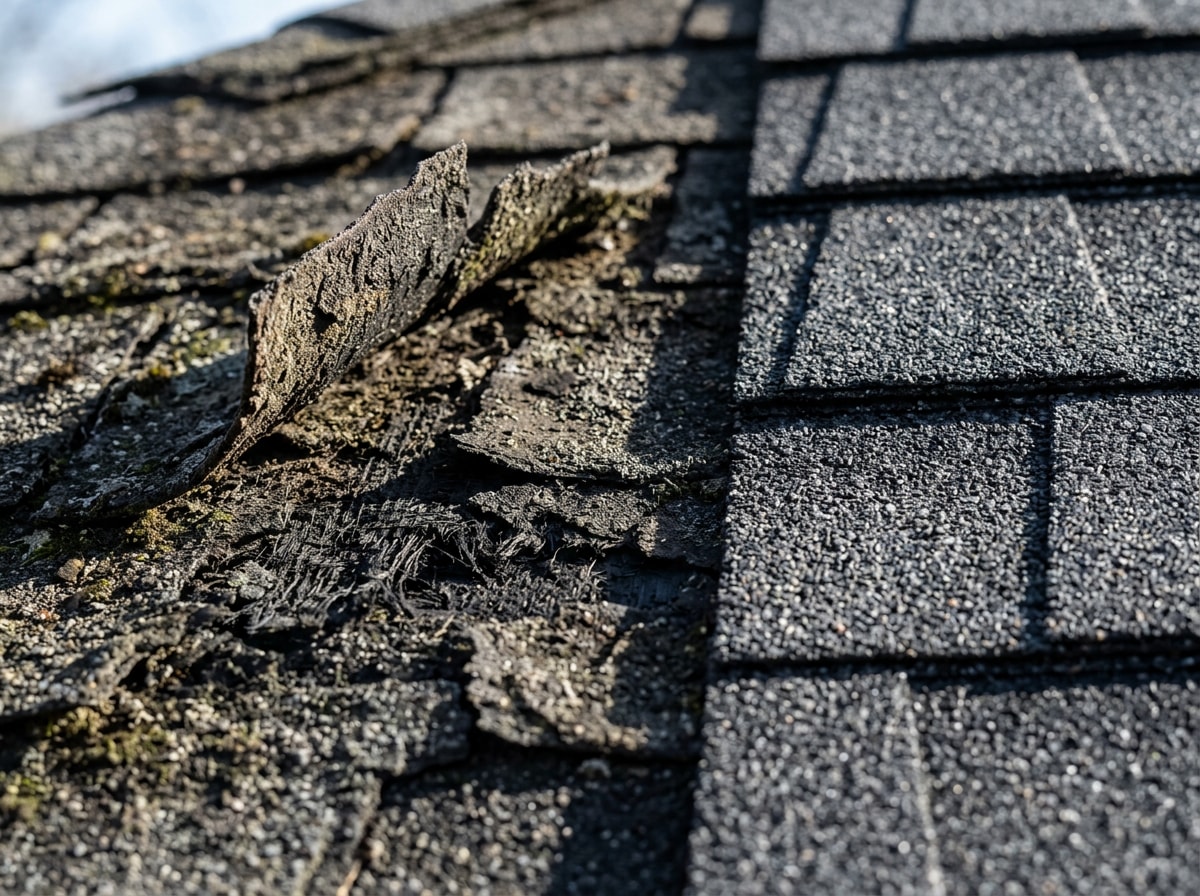
- Curling, cracked, buckling, or missing shingles
- Granule loss, with shingle grit collecting in gutters
- A visibly sagging roof line or dipping ridge
- Rusted, lifted, or damaged flashing at chimneys and vents
- Moss or heavy algae in valleys
From inside the attic:
- Water stains on ceilings or sheathing
- Daylight visible through roof boards
- Soft or spongy decking underfoot
- Unexplained jumps in heating and cooling bills
Then apply the economics. Once a single year of repair spending approaches 25 to 30 percent of full replacement cost, or the roof is within a few years of its rated life, replacement is the better use of the money. Isolated storm damage on a newer roof is a roof repair job, not a replacement.
How to Pay for a New Roof
Paying for a roof usually comes down to seven paths, ordered roughly cheapest to most expensive:
- Insurance claim. Best for covered events like hail or wind. Wear and age-related failure are not covered.
- Cash or savings. Zero interest, but it drains the emergency fund.
- Home equity loan or HELOC. Typically the lowest rates on large projects. Your home is collateral and closing takes weeks.
- Cash-out refinance. Worth it only if current rates beat your existing mortgage.
- Personal loan. Fast and unsecured, with higher rates and shorter terms.
- Contractor financing. Best when speed matters. Ask whether fees are folded into the project price rather than disclosed as interest.
- Government-backed programs. FHA Title I property improvement loans insure lender financing for repairs and improvements and are aimed at owners with limited equity, subject to current HUD limits and eligibility rules.
On the insurance path, learn the ACV vs. RCV distinction. Actual cash value pays replacement cost minus depreciation. Replacement cost value pays the full amount to rebuild. Carriers increasingly move older roofs to ACV, which can swing a payout by thousands. Read your declarations page before you file.
Rates and lender terms change constantly, so treat this as general information rather than financial advice.
Compare Quotes Before You Sign
Get three written, itemized bids. Confirm each contractor's license and insurance, check that the deck repair rate is listed as a unit price, and make sure the permit is named in the scope.
When you want a measured, line-item number for your own roof, get a free estimate from our team. You can see completed local work on our projects page or start at our homepage to browse every service we run.
FAQ
How much does a new roof cost?
Most homeowners pay between $6,000 and $30,000, with a typical asphalt shingle replacement near $9,500 to $11,500 in 2026. Metal, tile, and slate commonly pass $20,000 on an average-sized home.
How much does roofing cost per square foot?
Roughly $4 to $11 per square foot installed for asphalt shingles and $10 to $30 for metal, tile, or slate. In squares, that is about $400 to $1,100 per square for asphalt and $1,000 to $3,000 for premium materials.
How much does it cost to roof a 2,000 square foot house?
Expect about $9,000 to $17,000 for architectural asphalt with a tear-off. Remember that a 2,000 square foot house usually has more than 2,000 square feet of roof once overhangs and pitch are counted.
Why is roofing so expensive?
Labor is the largest share of most bids, and it is skilled work done at height under fall-protection requirements. Material, tear-off, disposal, permits, deck repair, and insurance costs stack on top of that.
How often should you replace your roof?
Asphalt shingles last 15 to 30 years, metal 40 to 70, and tile or slate 50 to 100 or more. Harsh sun, freeze-thaw cycles, and poor attic ventilation shorten every one of those ranges, so inspect annually once a roof passes 15 years.
Is it cheaper to repair or replace a roof?
Repair is far cheaper upfront, often $400 to $1,800 versus $9,000 or more. Repair isolated, recent damage on a roof with years left. Replace when damage is widespread or the roof is near end of life.
Do you need a permit to replace a roof?
In most jurisdictions, yes. Reroofing permits are issued by your local building department, and the permit plus any required inspection should be written into the contractor's scope of work.
How long does a roof replacement take?
Most single-family asphalt roofs are torn off and reinstalled in one to three days, weather permitting. Steep, complex, or premium-material roofs can run a week or longer.
About This Guide
Written by the roofing team at Shark Construction LLC, a licensed and insured exterior contractor serving Fredericksburg, Stafford, Spotsylvania, Culpeper, Manassas, King George, Dale City, and Bowling Green, Virginia. The cost figures above reflect published national ranges adjusted against the tear-off, decking, and access conditions we see on local jobs. Questions about your own roof? Contact us and we will walk the roof before we quote it.