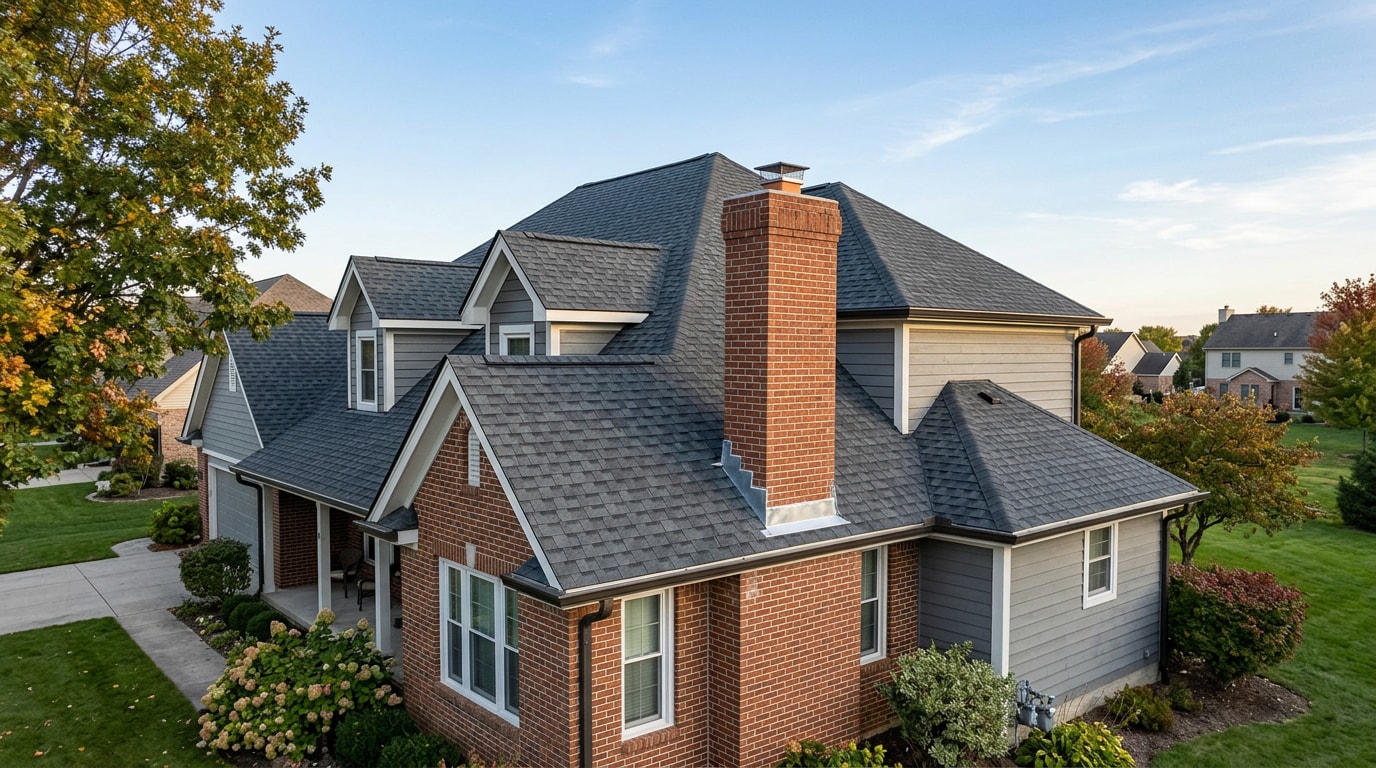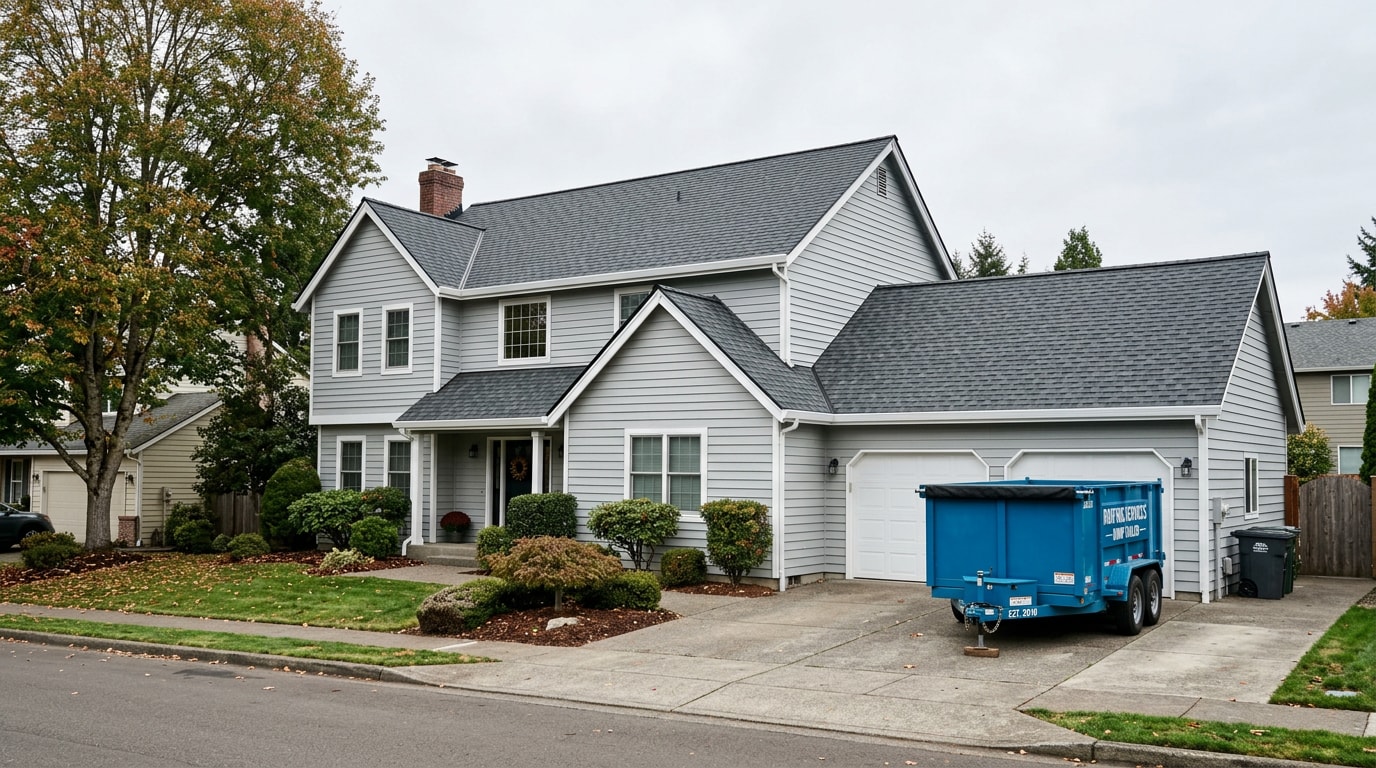
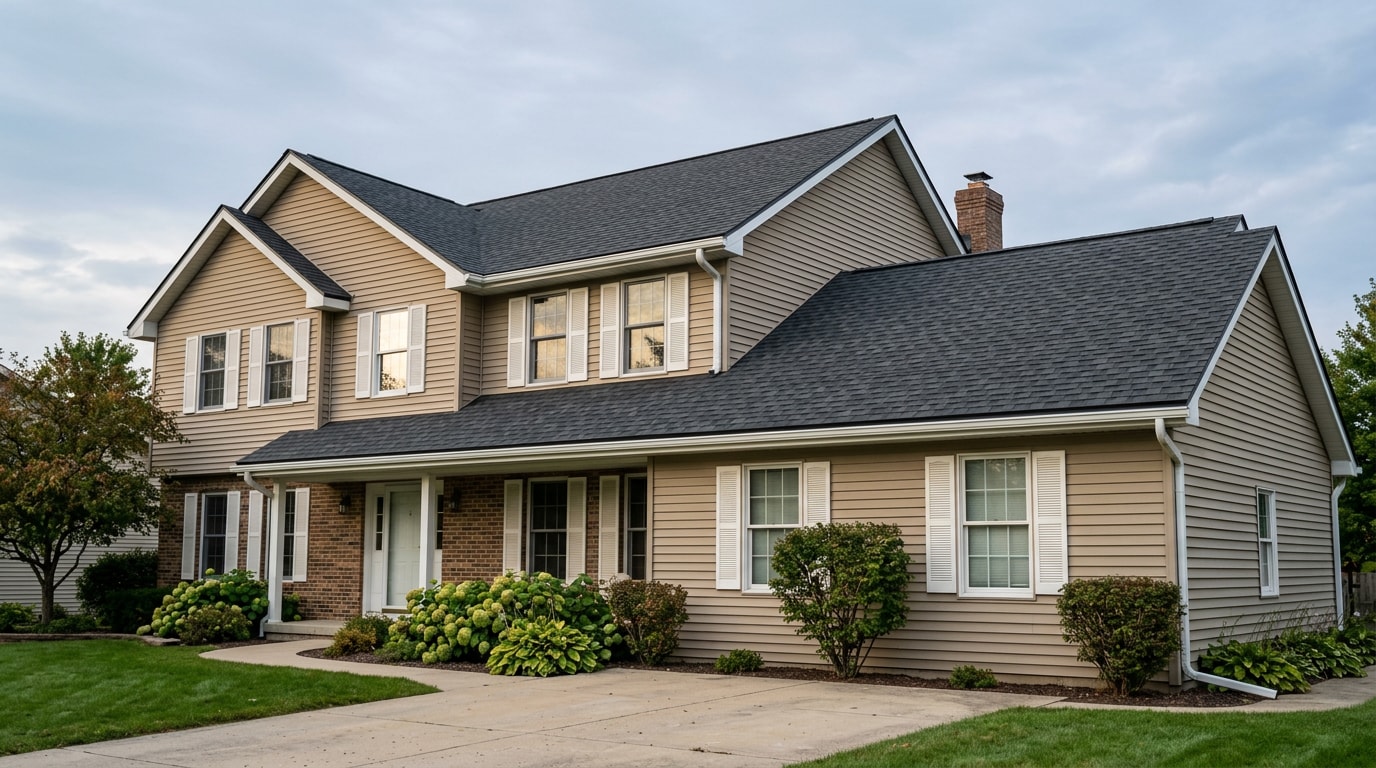
Ask five contractors how much roofing cost runs on an average home and you will get five defensible answers, because pricing moves with material, roof area, pitch, access, and local labor rates. Most homeowners replacing asphalt shingles in 2026 land between $9,000 and $24,000. Below is how an estimator actually builds that number, so you can read a bid line by line instead of guessing whether $12,000 or $28,000 is fair.
How Much Does a New Roof Cost in 2026?
A straightforward architectural shingle replacement on a typical single family home usually falls in the $9,000 to $24,000 range, with most of our Virginia jobs clustering near the middle of it.
Published "averages" swing wildly because they measure different things. Some quote shingles over an existing deck. Others include tear off, synthetic underlayment, drip edge, new pipe boots, and full flashing replacement on a roof larger than average. Same word, different scope.
Three things move a quote off the average fast:
- Tear off layers. Two existing layers instead of one adds disposal weight and labor hours.
- Decking condition. Rotten sheathing is not visible until the old roof comes off.
- Roof geometry. Valleys, dormers, and pitch cost more than square footage does.
Treat any average as a budgeting placeholder. The only number that matters is the one a licensed roofer gives you after walking the roof. Our roof replacement page lists what a full scope estimate should contain before you compare totals.
How Much Does Roofing Cost per Square?
One roofing square equals 100 square feet of roof surface. Installed asphalt shingle roofing typically runs $350 to $1,200 per square in 2026, depending on shingle grade and labor market. A 22 square roof, about 2,200 square feet of surface, therefore lands between roughly $7,700 and $26,400.
Contractors estimate in squares because that is how material ships and how crews price production. A bundle of shingles covers about one third of a square.
The conversion, once:
- Roof surface area divided by 100 equals the number of squares.
- Squares multiplied by price per square gives the material and labor subtotal.
- Add tear off, disposal, flashing, and any decking repair.
That makes per square foot math easy to sanity check. $750 per square is simply $7.50 per square foot. If a bid lists squares but the total does not divide cleanly, ask what else is buried in the line. Our breakdown of what a square means in roofing terms covers the measuring side in more detail.
Roof Replacement Cost by Size
Installed roofing generally prices out at $4 to $11 per square foot. The low end assumes basic shingles on a simple gable. The high end assumes upgraded material, steep pitch, or a tight labor market.
| Roof surface area | Typical total cost |
|---|---|
| 1,000 sq ft | $4,000 to $11,000 |
| 1,500 sq ft | $6,000 to $16,500 |
| 2,000 sq ft | $8,000 to $22,000 |
| 2,500 sq ft | $10,000 to $27,500 |
| 3,000 sq ft | $12,000 to $33,000 |
Here is the trap almost every homeowner falls into: roof square footage is not house square footage. A roof is a sloped plane, so it always covers more area than the footprint under it.
The Pitch Multiplier Most Cost Guides Skip
You can calculate the difference yourself. Take the building footprint under the roof and multiply by the factor for your pitch.
| Roof pitch | Area multiplier | 1,600 sq ft footprint becomes |
|---|---|---|
| 3/12 | 1.03 | 1,648 sq ft |
| 4/12 | 1.05 | 1,680 sq ft |
| 6/12 | 1.12 | 1,792 sq ft |
| 8/12 | 1.20 | 1,920 sq ft |
| 10/12 | 1.30 | 2,080 sq ft |
| 12/12 | 1.41 | 2,256 sq ft |
Two identical floor plans, one at 4/12 and one at 12/12, differ by roughly 576 square feet of shingles before a single labor hour is counted. Add overhangs and a waste factor of 10 to 15 percent for cuts around valleys and hips, and the gap grows again. That is why a "2,000 square foot house" quote and a "2,000 square foot roof" quote are not the same conversation.
Cost to Replace a Roof by Material
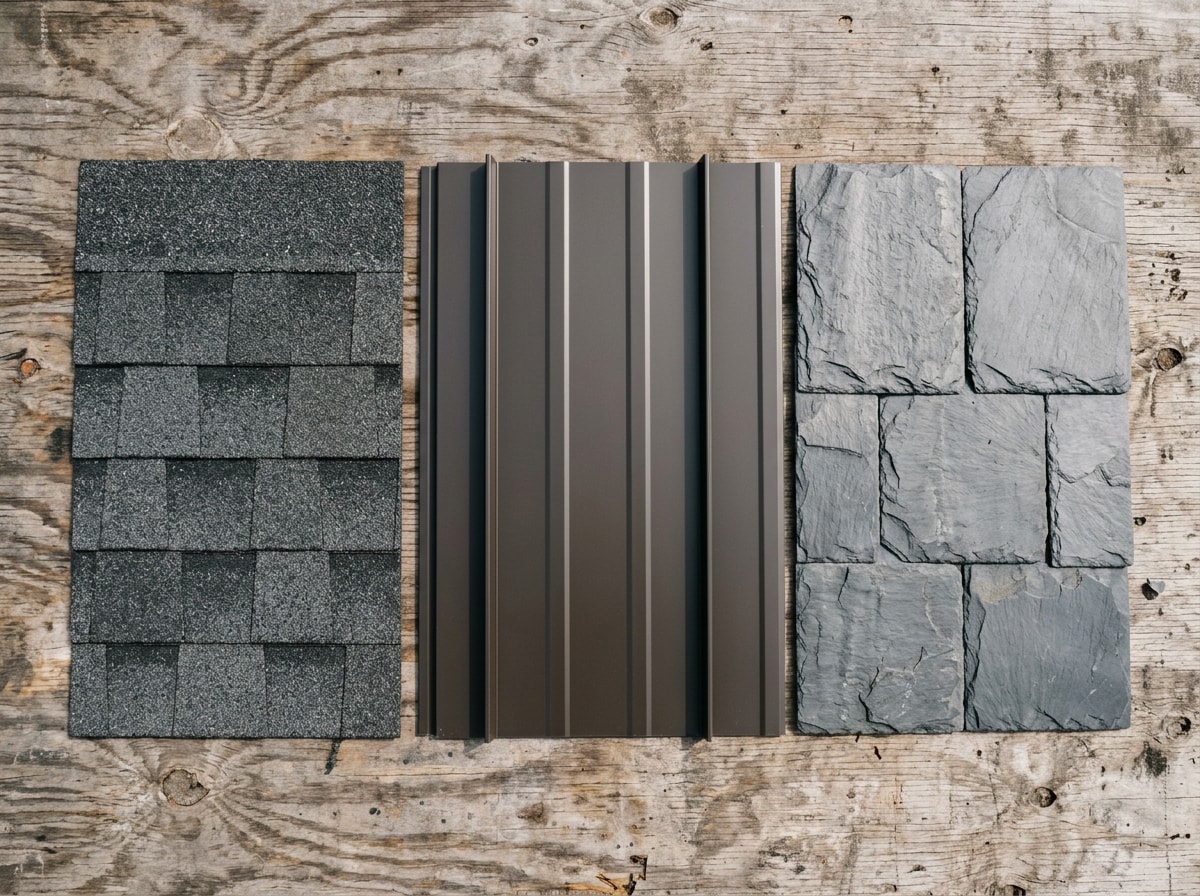
Material swings the total further than any other single variable. The table pairs installed price with service life and an approximate cost per year, which is the number that tells you which roof is actually expensive.
| Material | Cost/sq ft installed | Total (2,000 sq ft roof) | Lifespan | Approx. cost per year |
|---|---|---|---|---|
| 3-tab asphalt | $3.50 to $5.50 | $7,000 to $11,000 | 15 to 20 yrs | $450 to $650 |
| Architectural asphalt | $4.50 to $9 | $9,000 to $18,000 | 20 to 30 yrs | $400 to $700 |
| Luxury asphalt | $7 to $13 | $14,000 to $26,000 | 30 to 40 yrs | $450 to $700 |
| Exposed-fastener metal | $6 to $12 | $12,000 to $24,000 | 25 to 40 yrs | $400 to $700 |
| Standing-seam metal | $10 to $20 | $20,000 to $40,000 | 40 to 60 yrs | $450 to $750 |
| Synthetic shake/slate | $9 to $16 | $18,000 to $32,000 | 40 to 50 yrs | $450 to $700 |
| Cedar shake | $8 to $16 | $16,000 to $32,000 | 25 to 35 yrs | $550 to $950 |
| Clay or concrete tile | $10 to $22 | $20,000 to $44,000 | 50+ yrs | $400 to $800 |
| Slate | $15 to $35 | $30,000 to $70,000 | 75 to 100+ yrs | $350 to $750 |
Read the last column carefully. Annualized, slate and standing seam metal can beat asphalt, assuming you stay in the house long enough and the structure carries the weight. Lifespans vary with climate, ventilation, and install quality, so check the manufacturer's published wind, impact, and warranty ratings for the exact product line in your bid.
What Factors Affect the Cost of a New Roof?
Two houses on the same street with identical footprints can be quoted $8,000 apart. The difference is rarely markup. It is the variables below, each priced separately before the totals are added.
Labor
Labor is the largest line on almost every roofing estimate, commonly 50 to 60 percent of the project total.
Hourly rates are regional, so a national figure is only a reality check. The U.S. Bureau of Labor Statistics reports that the median annual wage for roofers was $55,440, or $26.65 per hour, in May 2025, with the lowest 10 percent under $37,460 and the highest 10 percent above $81,720 . You can compare that against current wage and employment data for roofers in your own state.
That labor line covers tear off, property protection, staging material, the install itself, and cleanup down to the last nail. Tear off alone typically runs $1 to $2 per square foot and climbs with multiple existing layers.
A crew that bids labor low is usually planning to spend less time on your property. It shows up in the details.
The Rest of the Roof System
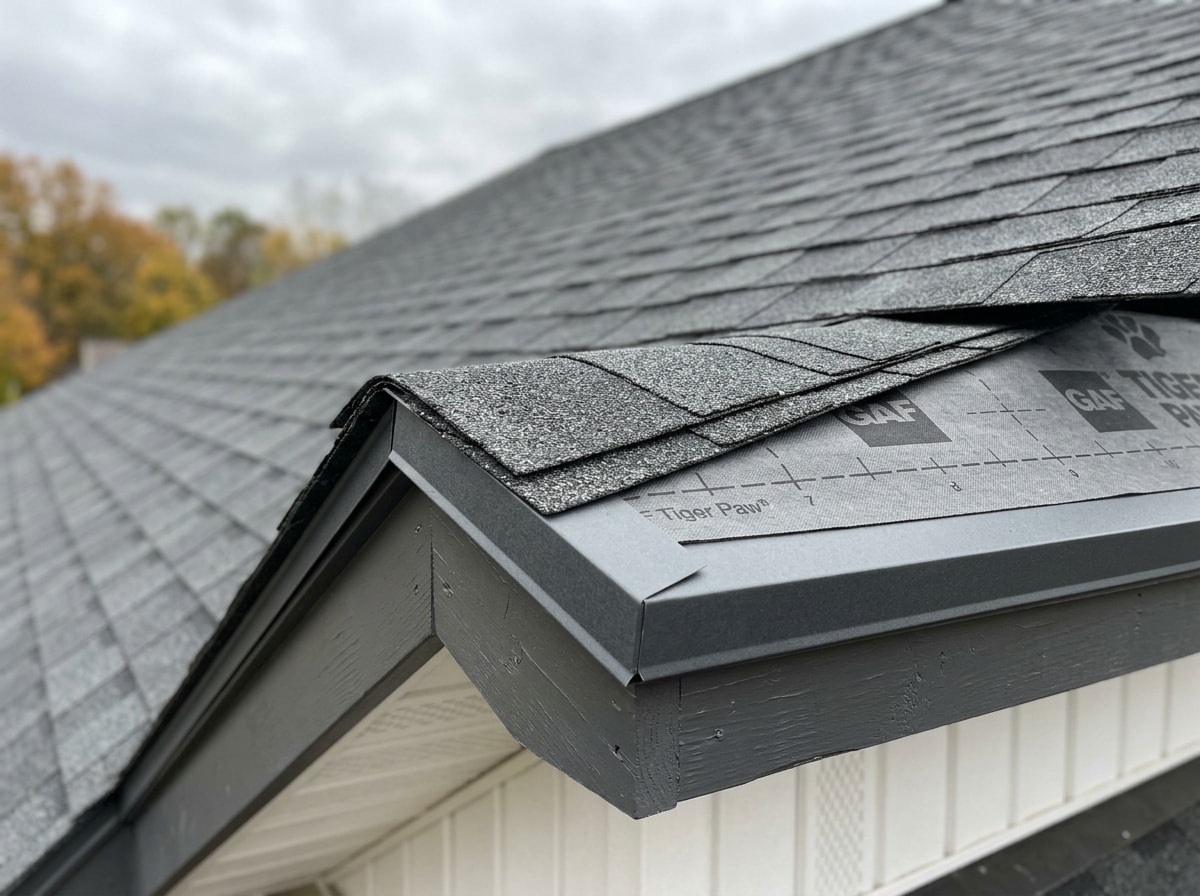
Shingles are the visible part of what you are buying. A complete system also includes underlayment, starter course, drip edge, ridge cap, pipe boots, ventilation, and disposal.
Use this as your bid comparison checklist:
- Underlayment: synthetic or felt, and which grade
- Starter shingles at eaves and rakes, not cut up field shingles
- Drip edge at every eave and rake, required by code in most jurisdictions
- Ridge cap: manufactured cap, not three tab cut down
- Pipe boots replaced, not reused
- Ventilation: intake and exhaust, sized to the attic
- Tear off and disposal with dump fees stated
When one bid comes in thousands below the others, this is almost always where the money was removed. Ask the low bidder to itemize these components and watch the total move.
Roof Access
How easily a crew moves material up and debris down changes the hours on the job. Common blockers:
- Landscaping, decks, or sunrooms directly below the roofline
- Fencing that blocks the driveway or a dumpster drop
- No paved surface near the access point for a truck or trailer
- Neighboring houses close enough to limit ladder placement
Each one forces the same workaround: hand carrying. Shingle bundles weigh roughly 70 pounds. Walking them 100 feet instead of 20 adds hours, and those hours land on your estimate.
Penetrations
A penetration is anything breaking the roof plane: plumbing vents, gas vents, bath and kitchen exhausts, skylights, chimneys.
Every one needs flashing, careful shingle weaving, and detail labor that cannot be rushed. Skylight and chimney flashing are priced per unit and installed by hand.
They are also where roofs leak first. This is the least glamorous and most valuable money on the job.
Complexity and Pitch
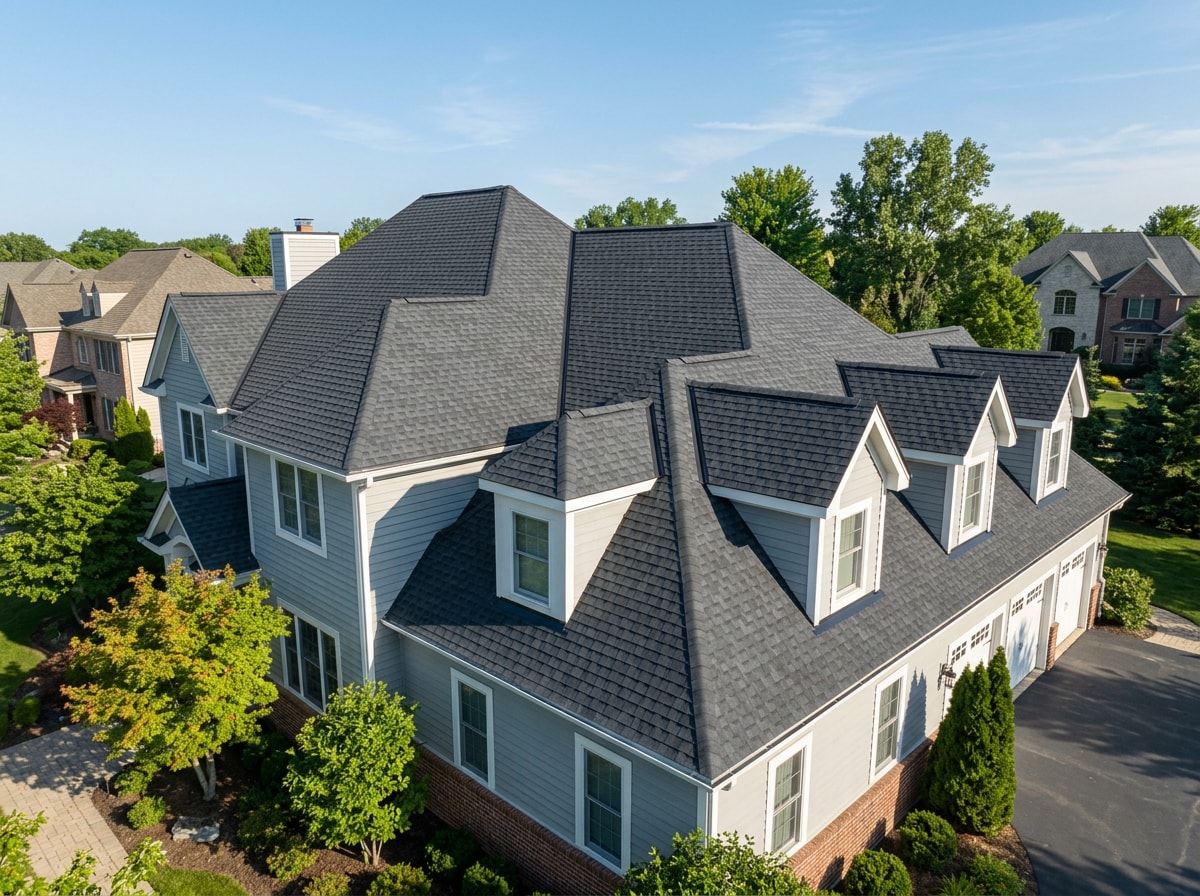
Valleys, hips, dormers, and story count act as multipliers. Pitch hits twice: a steep slope slows the crew down and often requires roping off, which raises labor, and it adds surface area, which raises material.
A cut up hip roof with three dormers on a two story home can run 30 to 50 percent more than a simple gable over the same footprint. You can see examples of both in our project gallery.
Roof Replacement vs. Repair
Targeted repairs commonly run a few hundred to a couple thousand dollars, against five figures for a full replacement. Price alone should not decide it.
The working rule: repair isolated damage on a roof with meaningful life left, replace when damage is widespread or the roof is near the end of its service life.
Compare your roof's age to the lifespan column above. An asphalt roof at year 8 with one wind damaged slope is a repair. The same roof at year 22, with granules in the gutters and a second leak in two years, is a replacement. Patching buys time at a bad exchange rate.
Two more tests:
- If repairs would cost more than about a third of replacement, replace.
- If you have already paid for two repairs on the same roof, replace.
Our roof repair page explains what a legitimate repair scope includes, and a roof inspection will tell you which side of the line you are on.
DIY vs. Hiring a Pro
The savings are real. Material only for a typical home runs roughly $2,500 to $6,300, against $5,700 to $12,300 for professional installation.
The risk is real too. OSHA requires workers in residential construction at six feet or more above lower levels to be protected by guardrails, safety nets, or personal fall arrest systems . Most homeowners own none of that. See OSHA's fall protection guidance for residential construction before you climb anything steeper than a shed.
Then there is warranty. Many manufacturers condition full coverage on installation by an approved or licensed contractor, so a DIY roof can forfeit decades of material protection to save a few thousand up front.
A detached garage or shed is a reasonable weekend project. A two story house is not.
How to Save Money Without Cutting Quality
- Choose mid tier, not premium. Architectural shingles deliver most of the durability of designer lines at a fraction of the cost.
- Keep the same material. Existing vents, gutters, and flashing details often carry over, avoiding re-engineering.
- Book off season. Late fall and winter scheduling often prices better.
- Get three itemized bids. Not three totals. Three itemized estimates you can compare line by line.
- Ask what is excluded. Package prices routinely leave out decking replacement, extra layers, steep pitch charges, and skylight flashing.
- Verify the license before price.
Virginia contractors are licensed through the Department of Professional and Occupational Regulation, and you can confirm a license by business name or number through the DPOR lookup . Check it at the DPOR license lookup.
- Price locally. Rates differ between Fredericksburg, Stafford, and Manassas, even on identical scopes.
Two "savings" are false economy. Shingling over an existing layer skips tear off but hides rotten decking and shortens the new roof's life. Downgrading underlayment saves a few hundred dollars on the one component protecting you when wind lifts a shingle.
Want a number for your actual roof instead of a range? Get a free estimate and we will measure, photograph, and itemize it.
FAQ
How much does it cost to replace a roof on a 2,000-square-foot home?
Budget roughly $8,000 to $22,000 for a 2,000 square foot roof surface with standard architectural shingles, labor, and tear off. Rotted decking, structural repair, or code driven upgrades found after tear off can push past the high end.
How much does roofing cost per square foot?
Most installed residential roofing prices between $4 and $11 per square foot in 2026. Three tab asphalt sits at the bottom, standing seam metal and slate at the top.
What is the most expensive part of replacing a roof?
Labor, consistently. Removal, underlayment, flashing details, and ventilation all take crew hours that cannot be compressed, and labor commonly accounts for more than half the invoice.
What is the cheapest roofing material?
Three tab asphalt shingles, around $3.50 to $5.50 per square foot installed. Expect 15 to 20 years of service versus 20 to 30 for architectural shingles, so the lower sticker often costs more per year.
Is it cheaper to repair or replace a roof?
Repair is cheaper today and usually the right call on a roof with years of life left. Once repairs approach a third of replacement cost, or you are on your second repair, replacement wins on total cost of ownership.
Why is roofing so expensive right now?
Three stacked inputs: shingle and metal material pricing, skilled labor wages, and disposal fees. Steep or complex roofs amplify all three because they consume more hours per square.
Does homeowners insurance cover roof replacement?
Generally yes for sudden covered perils like hail, wind, or a fallen tree, and generally no for wear, age, or deferred maintenance. Whether your policy pays actual cash value or replacement cost value, plus your deductible, sets your out of pocket. Read your declarations page.
How long does a roof replacement take?
Most asphalt shingle homes are torn off and reroofed in one to three days. Steep pitches, multiple layers, decking repair, or metal and tile systems extend that to a week or more.
Does a new roof increase home value?
A new roof rarely returns its full cost in resale dollars, but it removes a major buyer objection and an inspection red flag. On a house with a failing roof, the practical value is closing at all.
How often should you replace your roof?
Plan on 20 to 30 years for architectural asphalt, 40 to 60 for metal, and 50 to 100 or more for tile and slate. Age is not the only trigger. A sagging roofline, granules in the gutters, repeated leaks, or curling shingles mean it is time regardless.
Get a Real Number for Your Roof
Shark Construction LLC is a licensed and insured roofing, siding, and window contractor working across Fredericksburg, Stafford, Spotsylvania, Culpeper, and the surrounding counties. Our estimators measure roofs on site, photograph problem areas, and hand you an itemized scope you can hold other bids against.
See our full range of work on the Shark Construction homepage, review what is included in a roof installation, or contact us for a free estimate.