Learning how to find roofing crews that show up, install clean, and come back next week is the difference between selling volume and delivering it. The channels below are ranked by how fast they produce a working crew and how much vetting you have to do yourself. Start with the one that matches your timeline, then run every candidate through the same paperwork gate.
Where to Find Roofing Crews and Subcontractors
Treat these five channels as a portfolio, not a ranked list. Contractors who stay staffed run three or four continuously instead of scrambling through one the week a big job lands.
| Channel | Time to a working crew | Vetting you must do yourself | Typical staying power |
|---|---|---|---|
| Supplier and distributor referrals | Days | Moderate | High |
| Crew and contractor referrals | 1 to 3 weeks | Low | Highest |
| Unions and association chapters | 2 to 4 weeks | Low | High |
| Job boards and trade job sites | 1 to 4 weeks | High | Medium |
| Social media and local groups | Hours to days | Very high | Lowest |
| Trade schools and apprenticeships | 1 to 2 seasons | Moderate | Very high |
That ordering comes from our own hiring log, not a survey. The pattern has held every storm season we have staffed up.
Referrals and a Working Referral Network
The best crews rarely apply anywhere. They get passed along.
Four sources are worth working deliberately:
- Your existing crews and foremen
- Your supply house counter staff, who know who buys, who pays, and who returns product
- Non competing trades such as gutter, siding, and framing crews
- Roofing owners outside your service radius who trade names instead of competing for them
A small referral bonus paid after the new sub finishes a job clean moves this faster than anything else. Frame it with your current crews as added capacity, not replacement.
Supply Houses and Distributor Branches
This is the fastest channel that still carries real signal. Branch managers see credit history, pickup volume, and return rates. Ask which independent crews run consistent material volume and pay on terms, then ask who they would not recommend. The second answer is usually more useful.
Roofing Unions and Industry Associations
Membership pre filters for you. A contractor who carries dues, training, and insurance is signaling that they plan to still be here next year.
Work both levels. National bodies maintain contractor directories and career resources. Regional and state chapters know who is actually available in your market this month.
Job Boards and Construction Job Sites
Split your spend. General employment sites deliver volume and reach people outside the trade. Trade specific construction job sites deliver fewer applicants with better fit, which usually justifies the higher cost per posting.
The job description does the filtering. Name the pay structure (per square versus hourly), the expected schedule, the travel radius, and whether tools and dump equipment are supplied. Vague listings pull tire kickers.
Social Media and Local Industry Groups
Posting and participating are not the same thing. A job ad dropped into a roofing Facebook group usually dies quietly. Being a known name in local groups, answering questions, and messaging owners directly produces far more.
It is the fastest channel and the least pre vetted. Anything sourced here goes through the full verification sequence below, no exceptions.
Trade Schools and Apprenticeship Programs
A vocational program will not solve a staffing hole this week. It builds your pipeline for next year.
Call the program director, ask to join the employer list, and get on the calendar before graduation cycles. According to the U.S. Bureau of Labor Statistics, roofer employment is projected to grow 5 percent from 2025 to 2035 with about 12,000 openings each year , and most of those openings come from replacing workers who leave the occupation or retire . You are recruiting into a pool that shrinks by attrition every year, so the crew you grow yourself is the cheapest crew you will ever run.
How to Vet Roofing Crews Before They Touch a Roof
Run every candidate through the same sequence, in this order. No shortcuts for referrals.
| What to request | Who issues it | What a pass looks like | Exposure if you skip it |
|---|---|---|---|
| License verification | State or local licensing board | Active status, no open discipline | Unpermitted work, voided warranty, fines on you |
| Certificate of insurance | The sub's carrier or agent | General liability plus workers' comp, your company listed as additional insured | Their injury becomes your claim |
| References | Prior general contractors | Two or three who would rehire | Callbacks and abandoned jobs |
| Driving records | State motor vehicle agency | Clean recent history | Liability for a branded truck you do not control |
| Fall protection training | Employer or training provider | Current written certification per crew | Shared citation exposure on your site |
Our rule is a 72 hour paperwork window. If a crew cannot produce a current certificate of insurance and license number within three business days of asking, they do not get scheduled. It sounds rigid. It has never once cost us a crew worth having, and it has filtered out several that were not.
Fall protection is the layer most sourcing advice skips. Under OSHA's construction fall protection standard, workers on a surface six feet or more above a lower level must be protected by a guardrail system, safety net system, or personal fall arrest system . As the controlling contractor, you share exposure for what happens on your job site, so ask for the written training certification, not a verbal yes.
Licensing rules vary by state, so confirm requirements with your own board rather than assuming a national rule. If you are coaching a crew toward their own credential, our guide on how to get a roofing license covers the steps and costs.
Then make the reference calls. One sub we had already cleared on paperwork turned out, per the third reference, to have walked off two jobs mid season chasing storm work two states away. No license lookup shows that.
Run the First Job as a Paid Tryout
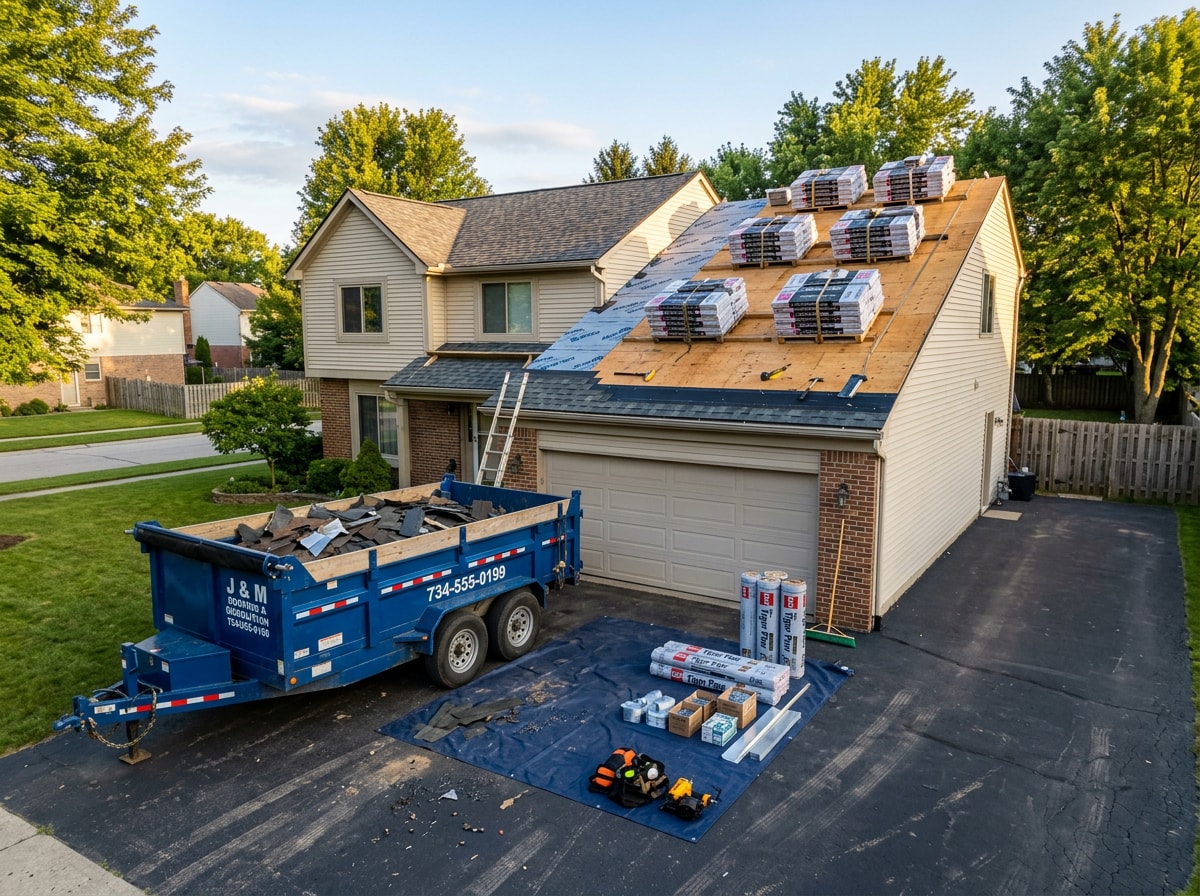
Give every new crew one job with a defined scope, a walkthrough at dry in, and a final inspection before you release payment. A single roof replacement on a straightforward gable tells you more about a crew than any interview. Watch three things: staging and material handling, valley and flashing detail, and whether the site is clean before the trailer leaves.
Crews vs. Subcontractors: Know What You Are Signing
Two words get used interchangeably on job sites, and the difference matters.
- A crew is the labor unit, often four to eight installers under a crew lead.
- A subcontractor is the contracting entity you sign with, and that entity may field one crew or five.
You vet the sub. You schedule the crew.
Because a subcontractor is not a W-2 employee, getting that classification wrong carries real tax and liability exposure. The IRS notes that if you classify an employee as an independent contractor without a reasonable basis, you may be held liable for employment taxes for that worker . Read the IRS guidance on contractor versus employee status before you write your first agreement.
Subcontracting buys you three things: labor capacity without permanent payroll, specialty skill you cannot justify employing full time (standing seam, tile, low slope membrane), and the ability to flex with storm and seasonal demand.
One honest counterweight. The subs you train up get busier. Eventually they raise rates or go fully independent. Plan for that turnover instead of being surprised by it.
Put the Terms in Writing Before the First Load Drops
Have the money conversation before the paperwork. Settle pay structure, who supplies materials and dump equipment, and who owns callbacks and warranty labor. Those three items cause most subcontractor disputes.
Then sign an agreement covering:
- Scope of work, written task by task
- Insurance requirements and additional insured status
- Payment terms, rates, and when invoices get paid
- Milestones and completion deadlines
- Site cleanup, including tear off haul away, gutter clearing, and a magnet sweep before the crew leaves
Spelling out cleanup sounds petty until a homeowner finds nails in the driveway.
Want to see the standard we hold crews to? Browse our recent projects or get a free estimate if you need the work done rather than staffed.
Keep the Good Crews Booked
Retention beats recruiting. Crews stay with companies that keep them busy.
- Publish the schedule far enough ahead that nobody is guessing about next week.
- Run measurements, photos, and job details through one channel instead of scattered texts.
- Track job history per crew so you know who handles steep tile and who does not.
- Pay promptly and predictably. That alone puts you ahead of most of your competition.
Once you run multiple crews, one person has to own coordination, whether that is a foreman or a production manager. Match crews to work type too. The team that excels at a complex roof installation is not always the team you want on an emergency roof repair call at 6 a.m.
Frequently Asked Questions
How much do roofing subcontractors charge?
Most subs price one of two ways: a per square labor rate for installation, or an hourly or day rate for tear off, repairs, and time and materials work. Both ranges shift substantially by region, roof pitch, and material, so quote your own market rather than a national average.
Do roofing subcontractors need their own insurance?
Yes. A sub should carry general liability and workers' compensation under their own business. Collect a certificate of insurance naming your company as additional insured before work starts. Without it, an injury or property claim can land on your policy.
Is it better to hire roofing employees or subcontractors?
It is a trade off. Subcontractors give you flexibility and lower fixed cost when volume swings. W-2 employees give you schedule certainty and tighter quality control at the price of year round payroll. Predictable volume favors employees. Seasonal or storm driven volume favors subs.
How many people are on a roofing crew?
Most residential shingle crews run four to eight installers plus a crew lead. Steep or complex roofs and low slope commercial work often run larger, with dedicated tear off and loading help.
Where can I find roofing crews near me?
Start with the two channels that are genuinely local first: your supply house branch, where counter staff know which crews buy consistently and pay on time, and local association chapters or roofing groups. Both produce names faster than a job posting.
How fast can I get a vetted crew working?
Referrals and supply house names can produce a working crew in under a week if the paperwork is clean. Budget three business days for license, insurance, and reference verification, and schedule the first job as a tryout.
Do I need a contract for every subcontractor?
Yes, and a signed one per job or per season. A verbal scope is the single most common cause of callback and payment disputes.
---
Shark Construction LLC installs and repairs roofs, siding, windows, and decks across Virginia, including Fredericksburg and Stafford. Our production team vets and schedules roofing crews every week, and the standards above are the ones we actually use. See our full roofing services, visit the Shark Construction homepage, or contact us for a free estimate.