How much is metal roofing per square foot? Most homeowners pay $7 to $16 per square foot installed in 2026, but corrugated steel and copper standing seam are both "metal" and can sit five times apart on the same roof.
This guide breaks the number down the way an estimate actually gets built: by metal, panel profile, gauge, labor and the trim nobody budgets for.
How Much Is Metal Roofing Per Square Foot Installed?
The 2026 national planning range is $7 to $16 per square foot installed, with a typical average near $11. Materials alone run roughly $4 to $15 per square foot. Premium metals such as zinc and copper push the installed number to $20 or more.
On an average home that works out to $12,000 to $30,000, with simple ranch roofs in exposed-fastener steel starting near $8,000.
| Panel system | Installed cost per sq ft | Typical 2,000 sq ft roof |
|---|---|---|
| Exposed-fastener steel | $5-$12 | $10,000-$24,000 |
| Standing seam steel | $10-$20 | $20,000-$40,000 |
| Metal shingle / stone-coated | $9-$20 | $18,000-$40,000 |
| Aluminum | $9-$18 | $18,000-$36,000 |
| Zinc or copper | $16-$40 | $32,000-$80,000 |
Contractors rarely quote in square feet. They quote in roofing squares, where one square equals 100 square feet of roof area, so the ranges above equal roughly $700 to $1,600 per square installed. If that unit is new to you, our explainer on what a square means in roofing terms covers how crews measure and price it.
Published averages disagree by several dollars per square foot for one reason: they measure different things. Some price panels only. Some price a finished install. Some fold in tear-off, deck repair and permits, and some do not. Before comparing two numbers, check what is inside each one. Our roof installation page lists what a full-scope metal install includes.
Metal Roof Cost by Type of Metal
The metal itself is the largest material variable in any quote. Four choices cover nearly all residential work, and they separate on lifespan as sharply as they do on price.
Steel (Galvanized and Galvalume)
Steel runs $6 to $14 per square foot installed and accounts for the large majority of residential metal roofs. It is strong, widely stocked and cheaper than every alternative.
Cost depends heavily on the coating under the paint.
- Galvanized steel uses a zinc coating and typically lasts 40 to 60 years in mild climates.
- Galvalume uses an aluminum-zinc alloy coating, resists rust better on low-slope runs, adds roughly $0.50 to $1.50 per square foot, and often carries a longer substrate warranty.
One caution: Galvalume can corrode where it contacts treated lumber or where water sits against masonry, so flashing details matter more than the coating spec alone.
Aluminum
Aluminum lands around $9 to $18 per square foot installed. The premium buys corrosion resistance, since aluminum does not rust, which makes it the default within a few miles of salt air. It is also lighter, which helps on structures with limited load capacity.
Watch one quote-reading detail. Aluminum is sold by decimal thickness in inches (0.032", 0.040"), not by gauge like steel, so a 0.032 aluminum panel and a 26 gauge steel panel are not directly comparable on the price line.
Copper
Copper sits at the top of the market, roughly $20 to $40 per square foot installed, and complex work exceeds that.
What buyers get is longevity and appearance. Copper develops a patina that moves from bright to brown to green, and a well-detailed copper roof can last 70 to 100 years or more. Most of it is soldered by hand, so labor is a large share of the total. For that reason, copper usually shows up on bay windows, porch roofs, dormers and historic restorations rather than a whole house.
Zinc
Zinc generally falls between $16 and $28 per square foot installed. Zinc panels form a protective surface layer that slowly re-covers light scratches, which is where the "self-healing" description comes from, and lifespans of 80 to 100 years are common.
The practical limit is availability. Supply and experienced installers are thin across much of the country, so real installed cost in your market may sit above the published range.
| Metal | Installed cost per sq ft | Expected life | Approx. cost per sq ft per year |
|---|---|---|---|
| Galvanized steel | $6-$13 | 40-60 yrs | $0.13-$0.25 |
| Galvalume steel | $7-$14 | 50-70 yrs | $0.12-$0.22 |
| Aluminum | $9-$18 | 50+ yrs | $0.16-$0.30 |
| Zinc | $16-$28 | 80-100 yrs | $0.18-$0.30 |
| Copper | $20-$40 | 70-100+ yrs | $0.24-$0.45 |
That last column is the one most cost guides skip. Priced per year of service, the spread between cheap steel and copper narrows from roughly 4x to under 2x.
Metal Roof Cost by Panel Style
After the metal, the panel system is the next lever. The split is simple: exposed-fastener panels, where screws go through the face, and concealed-fastener systems, where clips hide underneath.
Corrugated and Exposed-Fastener Panels
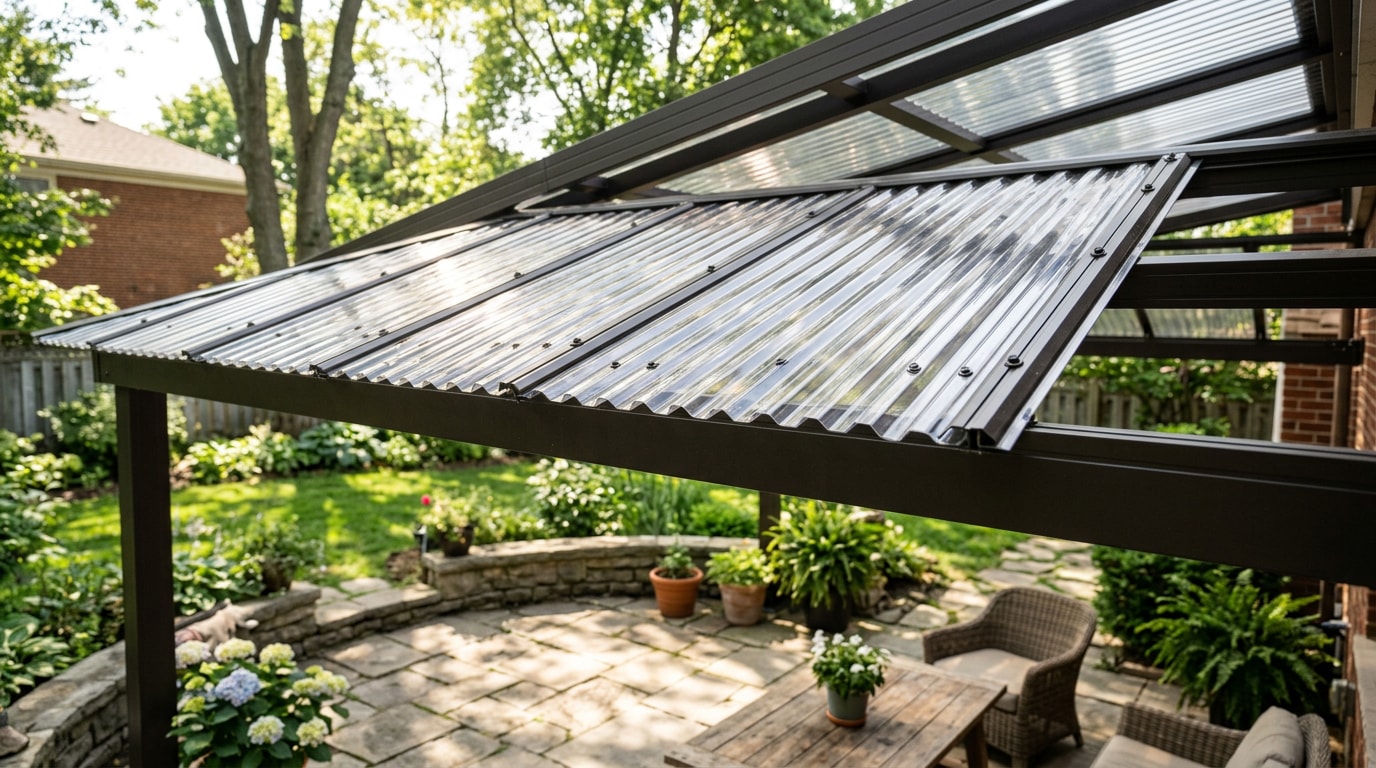
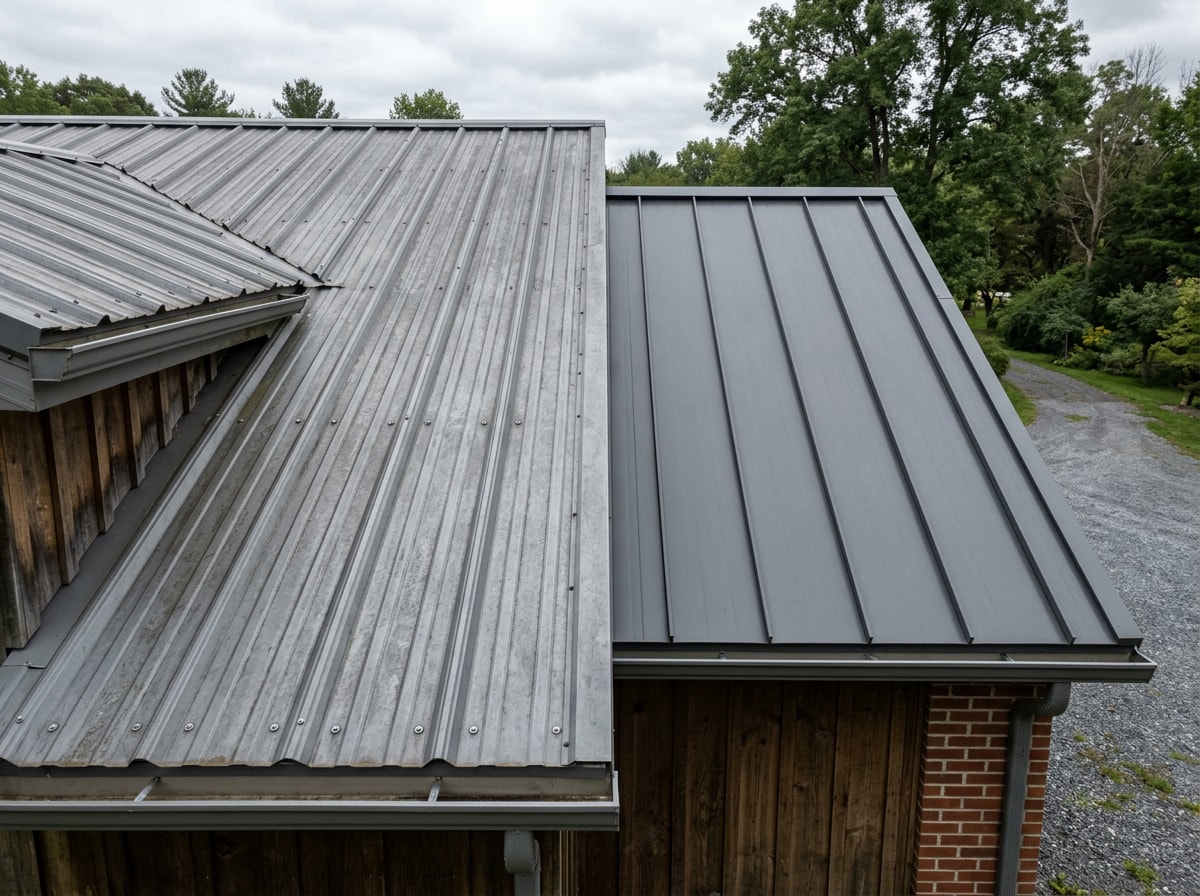
Corrugated metal roof cost is the lowest in the category, about $5 to $12 per square foot installed. That covers classic corrugated sheets and R-panel (also sold as PBR), the ribbed profile common on barns, shops and value-focused homes.
These panels are cheap because they are formed in high volume and screwed straight through the face, which is far faster than clipping and seaming.
The trade-off is maintenance. Each exposed fastener relies on a neoprene washer that dries and loosens, so screws need inspection every few years and eventual replacement.
Standing Seam Metal Roofing
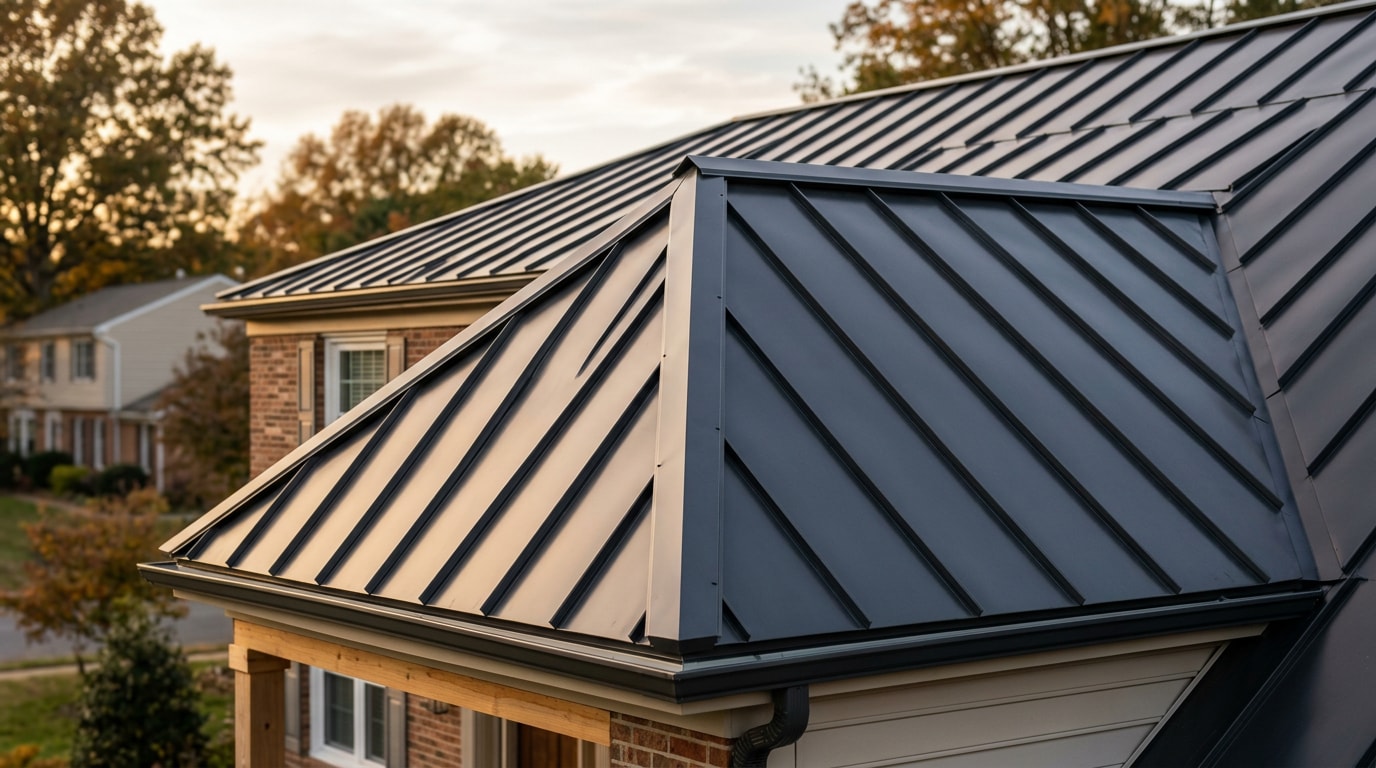
Standing seam typically runs $10 to $20 per square foot installed, roughly double an exposed-fastener system in comparable steel. The premium buys concealed clips fixed to the deck and hidden inside the raised seam, with nothing penetrating the panel face. Those clips also let panels expand and contract instead of elongating screw holes.
Two variables move the price:
- Snap-lock panels press together by hand and sit at the lower end of the range.
- Mechanically seamed panels are folded closed with a powered seamer, add labor hours, and perform better on low slopes and in high wind.
Narrower panels cost more per square foot but reduce oil canning, the visible waviness that shows in broad flat metal.
Metal Shingles, Shakes and Stone-Coated Steel
Metal shingles cost about $9 to $18 per square foot installed. Stone-coated steel, which bonds stone granules to a steel panel, usually runs $11 to $20.
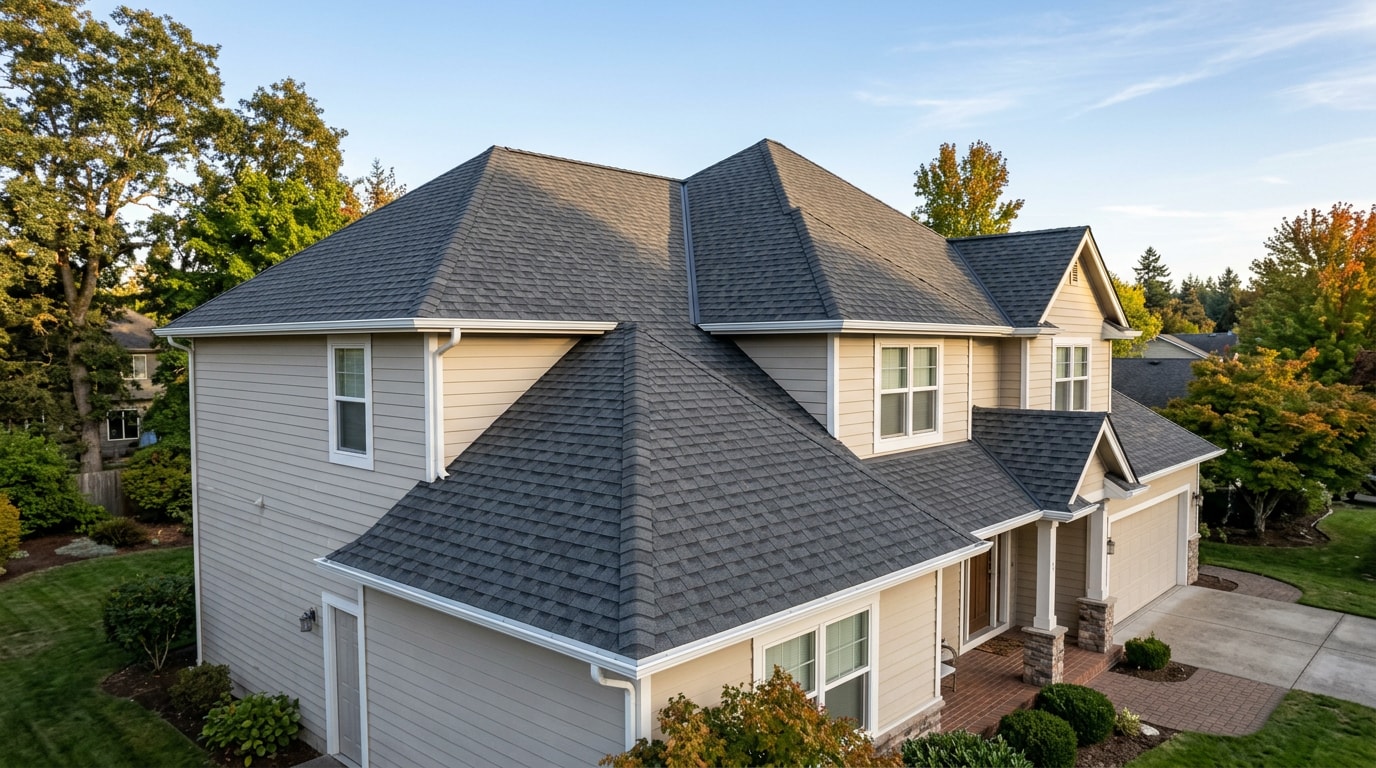
These systems mimic slate, wood shake or architectural asphalt while delivering metal's lifespan, which makes them the practical pick in HOA neighborhoods and historic districts where a ribbed profile will not get approved. Price climbs because the pieces are smaller, there are more of them, and the labor resembles conventional shingle work.
Labor Cost to Install a Metal Roof
Labor alone generally costs $3.50 to $8 per square foot, or roughly 45% to 60% of the finished project. Metal rates exceed asphalt rates because the work involves site forming, hand-bent flashing, custom trim and tight tolerances at valleys and penetrations.
What moves the rate: crew experience with your specific panel system, roof height and access, whether staging or a lift is needed, and seasonal demand. Steep and multi-story roofs require more fall-protection setup under <a href="https://www.osha.gov/construction/fall-protection-factsheet">OSHA's residential fall protection rules</a>, and which generally require guardrails, safety nets, or personal fall arrest systems for work six feet or more above lower levels . That setup time shows up in the bid.
| Panel system | Material | Labor | Total | Labor share |
|---|---|---|---|---|
| Exposed-fastener steel | $6,500 | $8,500 | $15,000 | 57% |
| Snap-lock standing seam | $13,000 | $14,000 | $27,000 | 52% |
| Stone-coated steel shingle | $13,500 | $11,500 | $25,000 | 46% |
Notice the labor share is not constant. Cheap panels do not install proportionally cheaper, because the crew still flashes every penetration and trims every edge, so labor eats a bigger slice of a low-cost system.
Metal Roof Cost Factors
Two homes can choose the identical panel, gauge and color and still see quotes 30% to 50% apart. Four variables explain most of that gap.
Roof Size and Square Footage
Bigger jobs cost less per square foot. Mobilization, permits and crew travel are largely fixed, so they spread across more squares. Jobs under about 10 squares can run 20% to 50% above the large-job rate.
There is a second trap in self-estimating. Roof area is always larger than floor area because of pitch and overhangs. A 2,000 square foot single-story house commonly has 2,300 to 2,800 square feet of roof, so multiply your footprint by 1.15 to 1.4 before applying any per square foot figure.
Roof Pitch and Complexity
Slopes steeper than about 6:12 typically add 15% to 35% to labor. Crews work slower, need more equipment and cannot stage material on the deck.
Complexity adds cost independently of pitch. Valleys, dormers, chimneys, skylights, multiple roof levels and plumbing stacks each require cut panels and hand-formed flashing.
The hidden second cost is waste. A simple gable might scrap 5% to 10% of material, while a cut-up roof with several valleys can waste 15% to 20%, and on metal that waste is expensive panel rather than bundles of shingles.
Metal Gauge and Finish
Gauge runs backwards: the lower the number, the thicker the steel. Residential panels are commonly 29, 26 or 24 gauge, and stepping from 26 to 24 gauge usually adds $0.50 to $1.50 per square foot, about 10% to 20% of material cost.
- 24 gauge: standard for residential standing seam
- 26 gauge: common on exposed-fastener homes
- 29 gauge: generally an agricultural or outbuilding product
Heavy snow and high-wind regions push buyers thicker. Ask for the decimal thickness on the manufacturer's data sheet rather than trusting the gauge label alone, since tolerances vary between mills.
Finish matters too. PVDF (Kynar-type) coatings cost roughly $0.50 to $1.25 more per square foot than SMP paint and generally carry longer fade and chalk warranties.
Geographic Location
High-cost metros in California, the Northeast and the Pacific Northwest often run 15% to 30% above national averages, driven mostly by labor rates, licensing and permit fees. Rural areas in the South and Midwest can come in 10% to 20% below, unless freight works against you, since panels ship long and flat and a remote address far from a roll-forming plant pays a delivery premium.
Regional pricing is why we quote by market rather than by calculator. See our Fredericksburg, VA service area or browse recent project photos for local examples.
Additional Metal Roof Costs to Budget For
A headline cost per square foot rarely covers the whole invoice. Budget separately for:
- Tear-off and disposal: $1 to $5 per square foot, higher with multiple existing layers
- Roof deck repair: $2 to $6 per square foot of affected area, $3 to $7 for a full re-deck
- Underlayment: $0.30 to $1.50 per square foot, synthetic low, peel-and-stick membrane high
- Fasteners and clips: $0.25 to $1 per square foot depending on panel system
- Trim, flashing, ridge caps and closures: $2 to $12 per linear foot installed
- Ridge ventilation: $8 to $20 per linear foot
- Snow guards: $3 to $12 each, often required above entries and walkways
- Permits and inspections: commonly $250 to $1,000
The trim math nobody runs
On the metal roofs our crews install around Fredericksburg and Stafford, the line item that surprises homeowners is almost never the panel. It is the trim.
Take a straightforward 2,400 square foot gable roof: about 120 linear feet of eave trim, 100 feet of rake, 40 feet of ridge cap and 30 feet of valley. That is roughly 290 linear feet. At $6 per linear foot installed, the trim package alone adds about $1,740, or $0.72 per square foot on top of the panel price. Add two dormers and a chimney cricket and the same roof crosses $3,000 in hand-formed metal.
That number never appears in a per square foot estimate, which is exactly why two bids on the same house can land thousands apart.
Permit rules are set locally. Many jurisdictions adopt the <a href="https://codes.iccsafe.org/content/IRC2021P2">International Residential Code</a> as their baseline, but only your building department's adopted version and amendments govern your address, so confirm before assuming a metal-over-shingle overlay is legal. A pre-bid roof inspection will tell you whether your deck and existing layers even allow it.
Metal Roof vs. Asphalt Shingles Cost
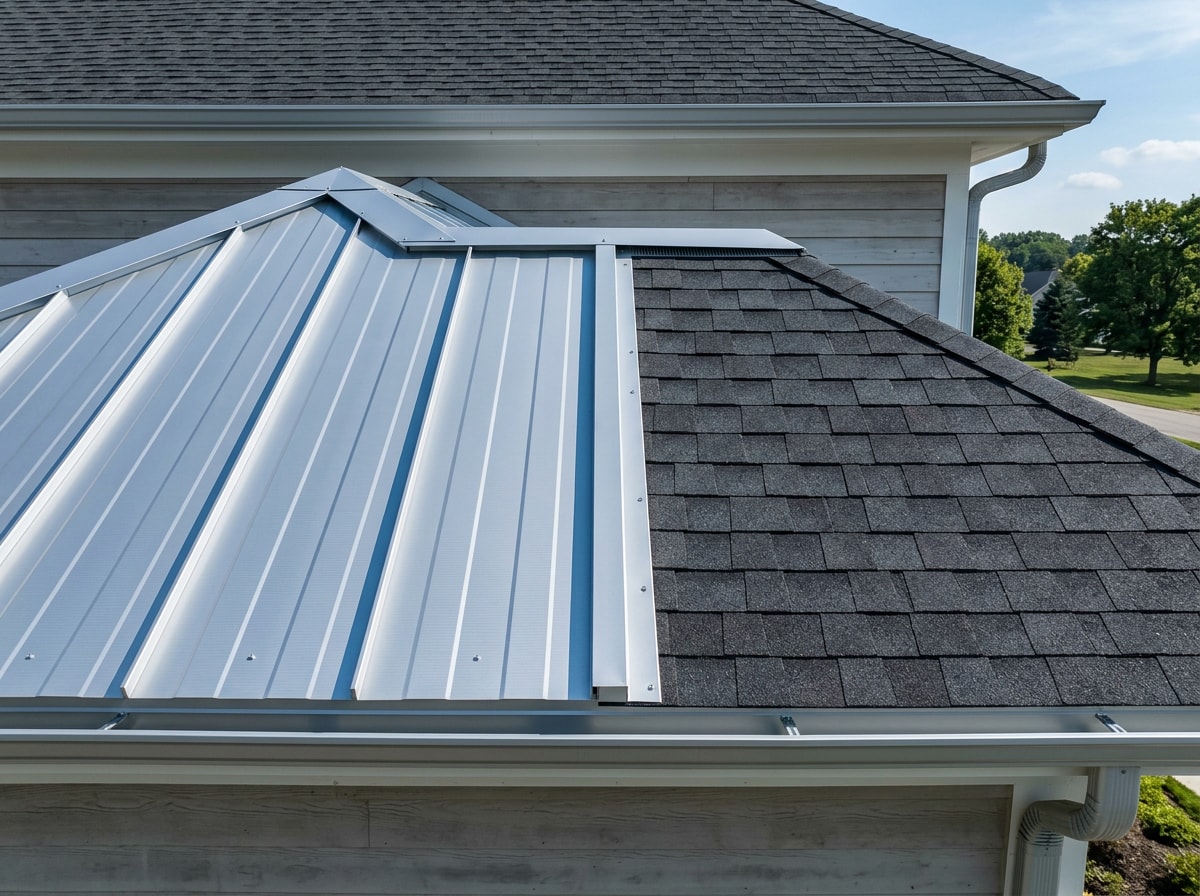
Metal costs materially more up front. Architectural asphalt installs for roughly $4.50 to $9 per square foot, so metal's $7 to $16 is a 50% to 100% premium on day one.
| Asphalt shingles | Metal roofing | |
|---|---|---|
| Installed cost per sq ft | $4.50-$9 | $7-$16 |
| Expected life | 15-30 yrs | 40-70 yrs |
| Maintenance | Periodic repairs, granule loss | Low, fastener checks on exposed-fastener systems |
| Weather and fire | Wind rated, combustible mat | High wind resistance, Class A assemblies available |
On cost per year, asphalt lands near $0.25 to $0.35 per square foot annually and metal near $0.15 to $0.25. Break-even typically falls around year 15 to 20, right when the asphalt roof would have needed replacing.
The scenario where metal does not pay off is short ownership. If you plan to sell within five to seven years, you will not reach break-even, and resale recovery varies widely by market. Our roof replacement team can price both options on your actual measurements. Get a free estimate and compare the two side by side.
How to Save Money on a Metal Roof
Real levers, in rough order of impact:
- Choose an exposed-fastener system where appearance is secondary, such as a detached garage, shop or rear elevation. That alone can nearly halve the cost per square foot.
- Pick a stock color and standard finish. Custom colors carry setup charges and long lead times.
- Order accurate quantities. Have panels cut to length from a measured takeoff instead of trimming stock lengths.
- Consider an overlay if code allows and your deck is sound, which skips $1 to $5 per square foot of tear-off.
- Schedule off-peak. Late fall and winter bookings often price below the summer rush.
- Get three written bids scoped identically.
That last one only works if the bids are comparable. Confirm each names the metal type, gauge, coating, underlayment, tear-off scope, permits, trim allowance and both warranty terms, material and workmanship.
Reflective finishes are a separate lever. Light-colored, high-reflectance metal can cut cooling load in hot climates, and the Department of Energy's <a href="https://www.energy.gov/energysaver/consumer-guide-cool-roofs-fact-sheet">consumer guide to cool roofs</a> explains how to compare reflectance ratings before you pick a color.
FAQ
How much does a metal roof cost for a 2,000 square foot house?
Roughly $18,000 to $38,000 installed. Exposed-fastener steel lands near $13,000 to $28,000, standing seam near $24,000 to $45,000, and copper can exceed $60,000. Remember that a 2,000 square foot house usually has 2,300 to 2,800 square feet of actual roof area.
How much does a metal roof cost for a 1,500 square foot house?
Expect about $13,000 to $29,000 installed, based on roughly 1,700 to 2,100 square feet of roof area at $7 to $16 per square foot. Simple gable roofs in 26 gauge exposed-fastener steel can come in under $11,000.
Is metal roofing cheaper than shingles?
No, not up front. Metal costs roughly 50% to 100% more to install than architectural asphalt. It becomes cheaper per year of service around the 15 to 20 year mark, when an asphalt roof typically needs replacing.
What is the cheapest metal roofing option?
Corrugated or R-panel exposed-fastener steel, about $5 to $12 per square foot installed in 29 or 26 gauge. The trade-off is visible screws with rubber washers that need periodic inspection and eventual replacement.
What is the downside of a metal roof?
High up-front cost, noise on an unlined deck, denting from large hail on softer metals such as aluminum and copper, and a smaller pool of qualified installers. Panels also expand and contract, so poor fastening or clip spacing shows up as oil canning or loosened screws.
Can you install metal roofing over existing shingles?
Often yes, if your local code allows the existing layer to stay and the deck is sound. An overlay saves $1 to $5 per square foot in tear-off but hides deck rot, so it usually requires a ventilated furring layer and an inspection first.
Does a metal roof lower home insurance?
Sometimes. Many carriers discount impact-resistant or Class A fire-rated roof assemblies, but the amount varies by insurer and state. Ask for the discount in writing before you factor it into the budget.
How long does a metal roof last?
Steel typically lasts 40 to 70 years, aluminum 50 or more, zinc 80 to 100, and copper 70 to 100 plus. Installation quality is the biggest variable, since flashing detail, fastener selection and allowance for thermal movement matter more than the panel itself.
---
Written by the Shark Construction LLC roofing team, licensed and insured roofing, siding and window contractors serving Fredericksburg, Stafford, Spotsylvania, Culpeper and Northern Virginia. Questions on a specific roof? Contact us for a measured, line-item estimate.