Learning how to paint metal roofing correctly is the difference between a finish that holds for a decade and one that peels by the second summer. Prep does roughly 80% of the work here, and the paint gets all the credit. Get the adhesion test right first, and everything after it is just labor.
Can You Paint a Metal Roof?
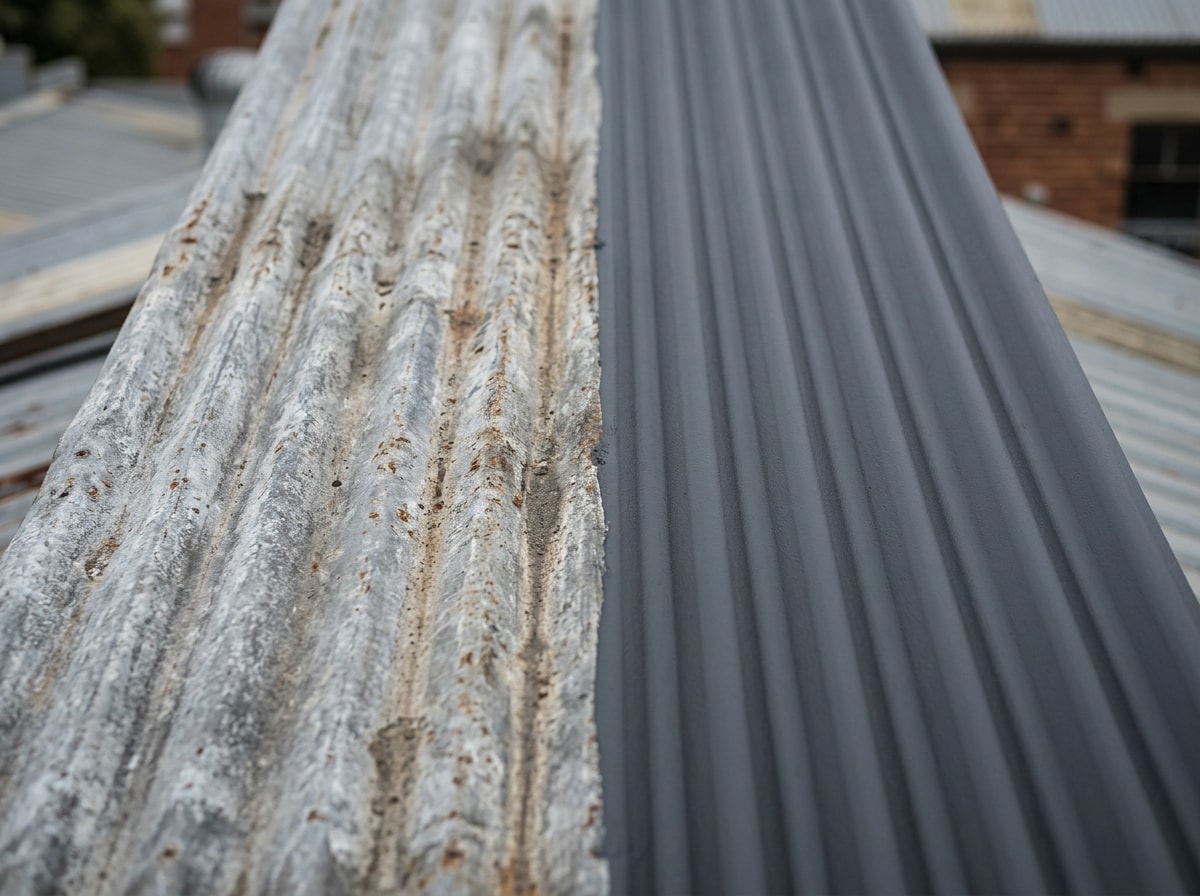
Yes, if the panels are structurally sound and properly prepped.
Standing seam, corrugated, aluminum, steel and galvanized panels all accept field-applied coatings when they are cleaned, primed and topcoated with products labeled for roofing metal.
A few surfaces are fussier. Galvalume and hard baked-on PVDF (Kynar) factory finishes are slick by design and need a bonding primer rated for that substrate.
Two conditions rule out painting entirely:
- Rust that has perforated a panel. That is a metal replacement job, not a coating job. Our roof replacement crew can tell you which panels are past saving.
- A roof still covered by its original factory finish warranty.
One more thing worth saying plainly: paint is a finish, not a repair. It will not stop a leak.
Check the Warranty, Then Run a Test Patch
This is the step most guides skip, and it is the one that saves the whole project.
Warranty first
Modern factory-finished panels often carry a 20 to 40 year paint and fade warranty. Field-applied paint usually voids it, because the manufacturer cannot stand behind a surface someone else coated.
Before you buy a gallon, do three things:
- Find the original warranty paperwork or closing documents.
- Identify the panel manufacturer and the exact finish system (PVDF, SMP, polyester, bare galvanized).
- Call the manufacturer and ask directly what a repaint does to your coverage.
The Metal Construction Association's guidance on field-applied paint systems makes the same point: talk to the panel supplier before you put air-dry paint on a factory finish.
Then test adhesion before you commit
Here is what our crews do on every repaint estimate, and what almost no DIY guide tells you.
Pick an inconspicuous 2 ft by 2 ft area. Wash it, prep it, prime it and topcoat it exactly the way you plan to do the full roof. Let it cure a full seven days.
Then run a simple tape pull: press quality masking tape firmly over the cured patch and rip it off fast. If color comes up with the tape, your primer is wrong for that substrate and the whole roof would have failed the same way in year two.
A second quick check before you even start: rub a dark cloth across the panels. Heavy chalk transfer means the old finish is oxidizing and needs a chalk-binding primer, not just a wash.
One test patch costs about $40 in materials and a week of patience. A failed roof-wide coating costs thousands.
Best Paint and Primer for a Metal Roof
Three coating families dominate residential work.
- Acrylic latex / DTM: flexes as panels expand and contract through the day instead of cracking at the seams. The default choice.
- Oil-based alkyd: bonds hard and blocks stains, but goes brittle with age. Best for trim, fasteners and small prepped areas.
- Elastomeric: stretches the most and builds the thickest film, which suits low-slope panels and seam detailing.
Primer is its own decision:
- Rust-inhibiting metal primer on bare or previously rusted steel
- Acrylic metal primer on galvanized
- Bonding primer rated for chalky or glossy aged factory finishes
Primer and topcoat must come from a compatible system and be labeled for metal roofing. Mixing brands across a system is where most peeling starts.
| Coating type | Typical cost per gallon (2026) | Realistic service life | Flexibility | Best substrate | When to avoid |
|---|---|---|---|---|---|
| Acrylic latex / DTM | $35 to $70 | 8 to 12 years | High | Primed steel, galvanized, aged factory finish | Cold or damp application windows |
| Oil-based alkyd | $40 to $80 | 5 to 10 years | Low to moderate | Trim, fasteners, heavily prepped rusted steel | Full-field use on panels with large thermal movement |
| Elastomeric | $60 to $120 | 10 to 20 years | Very high | Low-slope panels, seams, full coating systems | Over active rust or unprimed metal |
Prices and service life are typical published ranges for 2026 and vary by brand, region and prep quality. The product data sheet wins every argument.
If you are choosing between a repaint and new panels, our guide to metal roofing cost per square foot lays out what replacement actually runs.
A note on reflective colors
A light or reflective coating can reduce cooling load in summer. The Department of Energy's consumer guide to cool roofs explains how solar reflectance and thermal emittance affect energy use. Treat dramatic savings claims from coating marketers with skepticism unless there is a tested reflectance value behind them.
Roof Safety Before You Start
Never do this alone.
Keep a helper on the ground. Extend the ladder at least three feet past the eave and tie it off. Scan for overhead power lines before you raise anything.
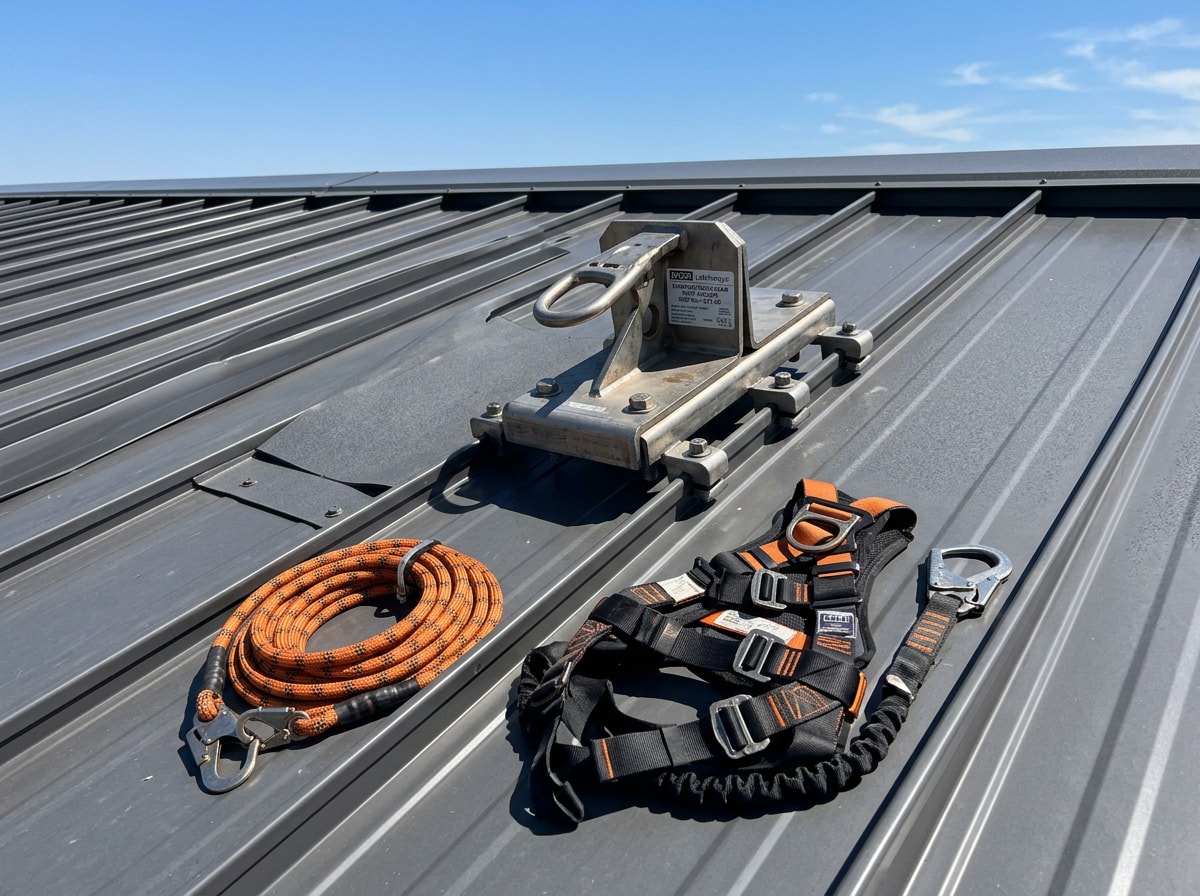
Wear rubber-soled non-slip shoes and clip a harness to a rated anchor. OSHA's fall protection guidance for residential construction requires protection at six feet and up, which is a sound benchmark for homeowners too.
Here is the hazard specific to this job: painted or damp metal is dramatically slicker than shingle, and wet coating makes it worse. Plan your exit path before the first gallon opens.
Steep pitches, two-story roofs and any moisture are stop-work conditions. Hire those out.
Tools and Materials You Will Need
- Pressure washer and a biodegradable cleaner
- Wire brush, sandpaper, or a power wire wheel for heavier rust
- Paint scraper, drop cloths, painter's tape and masking film
- Primer and topcoat rated for metal roofing
- Harness, rated anchor, stabilized ladder, non-slip footwear, eye protection
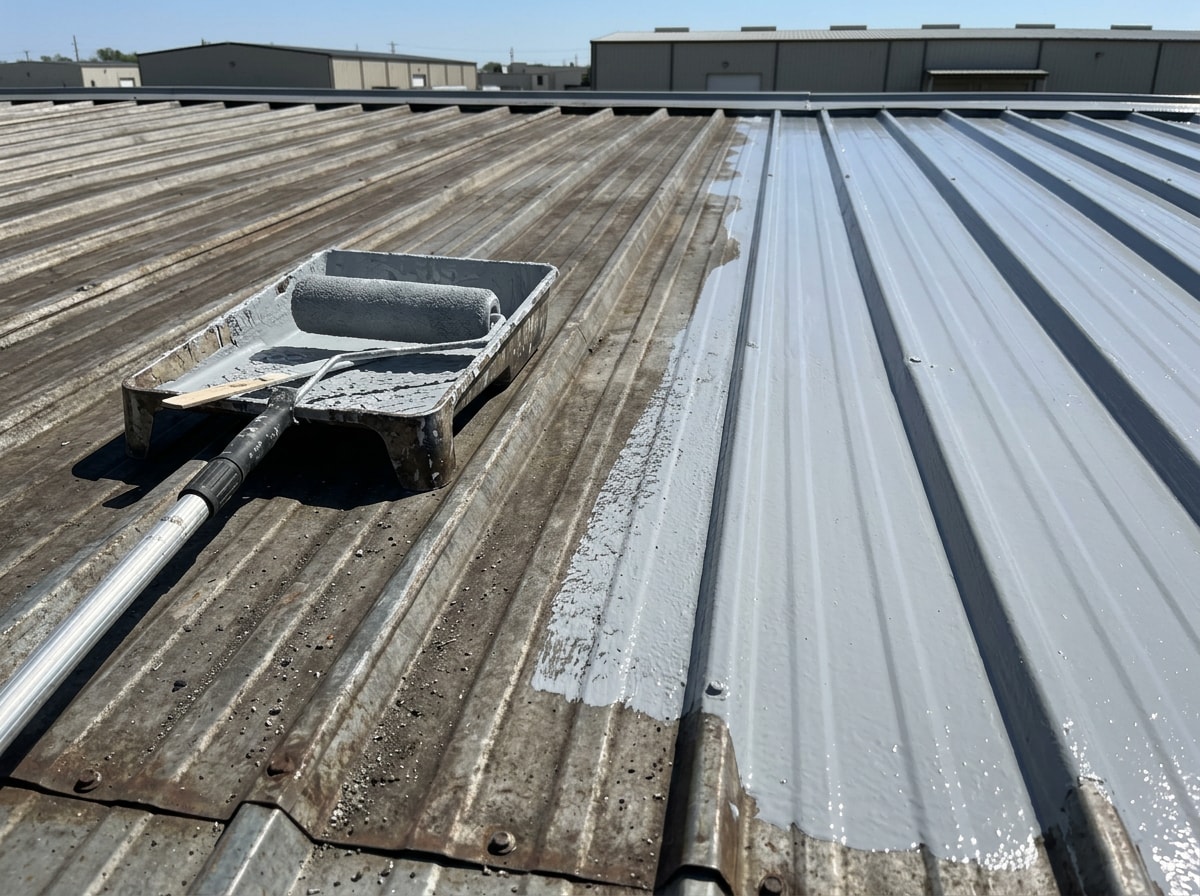
Match the applicator to the panel profile. Use a profiled corrugated roller for ribbed metal, a standard 3/8-inch nap roller for standing seam, brushes for seams and fasteners, and an airless sprayer for speed on large roofs.
How to Paint Metal Roofing in 6 Steps
Expect prep to eat most of your labor hours. Always work top down, from the ridge toward your ladder.
1. Inspect the roof and make repairs
Walk the roof slowly and mark problems: rust spots, backed-out or missing fasteners, lifted seams, dents that hold water, cracked sealant at vents, pipes and chimneys.
Paint over an unrepaired defect and you seal moisture in, which speeds up the failure. Handle repairs first. Our roof repair team can take on anything above your comfort level.
2. Clean and wash the roof
Pressure wash away chalking, mold, mildew, dirt and loose paint. Panel manufacturer Metal Sales cites roughly 2,500 PSI as a working figure, though the right setting depends on panel gauge and coating age. Keep the wand moving and never drive water up under a seam or lap.
Hit stubborn staining with a biodegradable cleaner, rinse completely, and let everything dry fully.
On bare galvanized, a 1:1 vinegar and water wipe dulls the surface slightly and improves adhesion. Rinse thoroughly afterward.
3. Remove rust and loose paint
Attack corrosion mechanically. A wire brush or sandpaper clears surface rust and peeling paint. A power wire wheel handles heavier patches.
Sweep or blow off all sanding debris before priming.
Two mistakes ruin otherwise good work: painting over active rust, and spot-priming only the patched areas instead of the whole surface.
4. Prime the entire surface
Prime everything, not just repaired spots. Uniform primer means uniform adhesion and uniform sheen once the color goes on.
Apply with a sprayer or an extended-handle roller, cutting in seams and fasteners with a brush. Start at the peak and work down toward your ladder so you never paint yourself into a corner.
Respect the recoat window on the label. Too soon traps solvent, too late weakens the bond.
5. Apply the topcoat
Cut in edges, trim, seams and fastener heads first, then roll or spray the field. Keep a wet edge so laps do not flash.
Two thin coats beat one thick coat on sloped metal. They cure more completely, sag less, and hide seams better. Some manufacturers permit a single heavier coat, so read the label and follow it.
Check the forecast for a dry stretch, stay inside the label's temperature and humidity range, and start early so you are not spraying hot panels.
6. Seal seams and fasteners (optional)
This one is entirely product-dependent. Once the topcoat has fully cured, a compatible silicone, butyl or polyurethane sealant can reinforce seams and fastener heads.
Brush it on thin. An over-thick bead cracks as the panel moves. Skip it if the coating manufacturer does not approve it.
Cost to Paint a Metal Roof, and When to Hire a Pro
Professional metal roof painting generally runs about $1.50 to $4.50 per square foot, or roughly $2,500 to $7,500 on an average home. Published national estimates run lower on small, simple roofs and higher on steep or badly corroded ones.
DIY materials alone typically land between $500 and $1,500.
Cost drivers:
- Roof size and pitch
- Panel profile (corrugated eats more paint than standing seam)
- How much rust repair is needed
- Coating grade and number of coats
- Access, staging and story height
Treat these as national ranges, not quotes. Pricing swings hard by region, so collect local bids. We handle metal roof work across Fredericksburg, VA and the surrounding counties, and you can see the full range of our roofing services or browse Shark Construction LLC to see how we work.
Hire out steep or multi-story roofs, widespread corrosion, any sprayer-applied system, and any job where you want a coating warranty behind the work. Get a free estimate before you buy materials you may not need.
Maintaining a Painted Metal Roof
Rinse the roof once or twice a year. Clear leaves, needles and moss from valleys and behind penetrations, where debris holds moisture against the coating.
Inspect at least annually, ideally each spring. Touch up chips, scratches and early peeling right away. Small repairs stay small.
Watch for the three early warnings of coating failure:
- Chalking that powders onto your hand
- Edge lift along seams and panel ends
- Rust bleed weeping from fastener heads
Catch those early and you may only need a spot repair instead of a full recoat. A professional roof inspection will tell you which one you are looking at.
FAQ
Is it worth painting a metal roof?
Usually yes, if the panels are sound. A repaint restores color and adds a protective film for a fraction of replacement cost. It is not worth it if panels are perforated, seams are failing, or the roof is near the end of its structural life.
What kind of paint do you use on a metal roof?
Acrylic latex or a direct-to-metal (DTM) acrylic rated for roofing is the standard choice, because it flexes with thermal movement. Elastomeric coatings suit low-slope panels and seam work. Oil-based alkyd is better reserved for trim and fasteners.
Do you have to prime a metal roof before painting?
In almost every case, yes. Bare steel needs a rust-inhibiting primer, galvanized needs an acrylic metal primer, and aged factory finishes need a bonding primer. Some DTM products skip primer on specific substrates, but only when the data sheet says so.
Can you paint a rusted metal roof?
Surface rust, yes, once it is brushed or wheeled back to sound metal and primed with a rust-inhibiting product. Rust that has eaten through the panel is a replacement issue. Coating over active corrosion just hides it while it spreads.
How long does paint last on a metal roof?
A properly prepped acrylic system typically lasts 8 to 12 years. Elastomeric systems can reach 15 to 20. Prep quality and climate matter far more than brand. No field-applied finish matches a baked-on factory coating.
How many coats of paint does a metal roof need?
Primer plus two thin topcoats is the standard, with full dry time between each. Two thin coats cure more completely and run less on sloped panels than one heavy coat.
Can you change the color of a metal roof?
Yes, in either direction. A dramatic color shift may need an extra coat or a tinted primer for full hide. Light colors help with summer cooling in hot climates. Check HOA color rules before you buy.
What is the best time of year to paint a metal roof?
Aim for 50 to 85 degrees Fahrenheit with humidity under about 70%, plus two to three dry days after application. Late spring and early fall suit most climates. In Virginia, wait out heavy spring pollen, because a yellow film on freshly washed panels ruins adhesion.
Can you paint over a Kynar or PVDF factory finish?
Only with a bonding primer specifically rated for PVDF, and only after the finish has weathered and been properly cleaned. These coatings are engineered to shed things, including new paint. Test-patch first, always.
Written by the roofing crew at Shark Construction LLC, who have prepped, coated and replaced metal panel roofs across Fredericksburg, Stafford, Spotsylvania and Culpeper. Questions about your specific panel or finish system? Reach out for a free estimate and we will tell you honestly whether paint or replacement is the better spend.