I'll research the SERP landscape before revising. Now let me confirm authoritative external sources.
Polycarbonate roofing is a rigid, light-transmitting plastic panel used for patio covers, carports, greenhouses, and skylights, not for whole houses. Most buyers get burned on one of three things: the wrong panel type, the UV layer installed face-down, or fastener holes drilled with no room to move. Here is the plain version, with 2026 pricing and the install details that decide whether the roof leaks in year two.
What Is Polycarbonate Roofing?
Polycarbonate roofing is a thermoplastic sheet, extruded into flat, corrugated, or multiwall panels, that spans a roof frame while letting daylight pass through. It works as both the weather barrier and the glazing at the same time.
That dual role is why it shows up on patio and deck covers, carports, greenhouses, sheds, walkway canopies, pool enclosures, and warehouse daylighting strips.
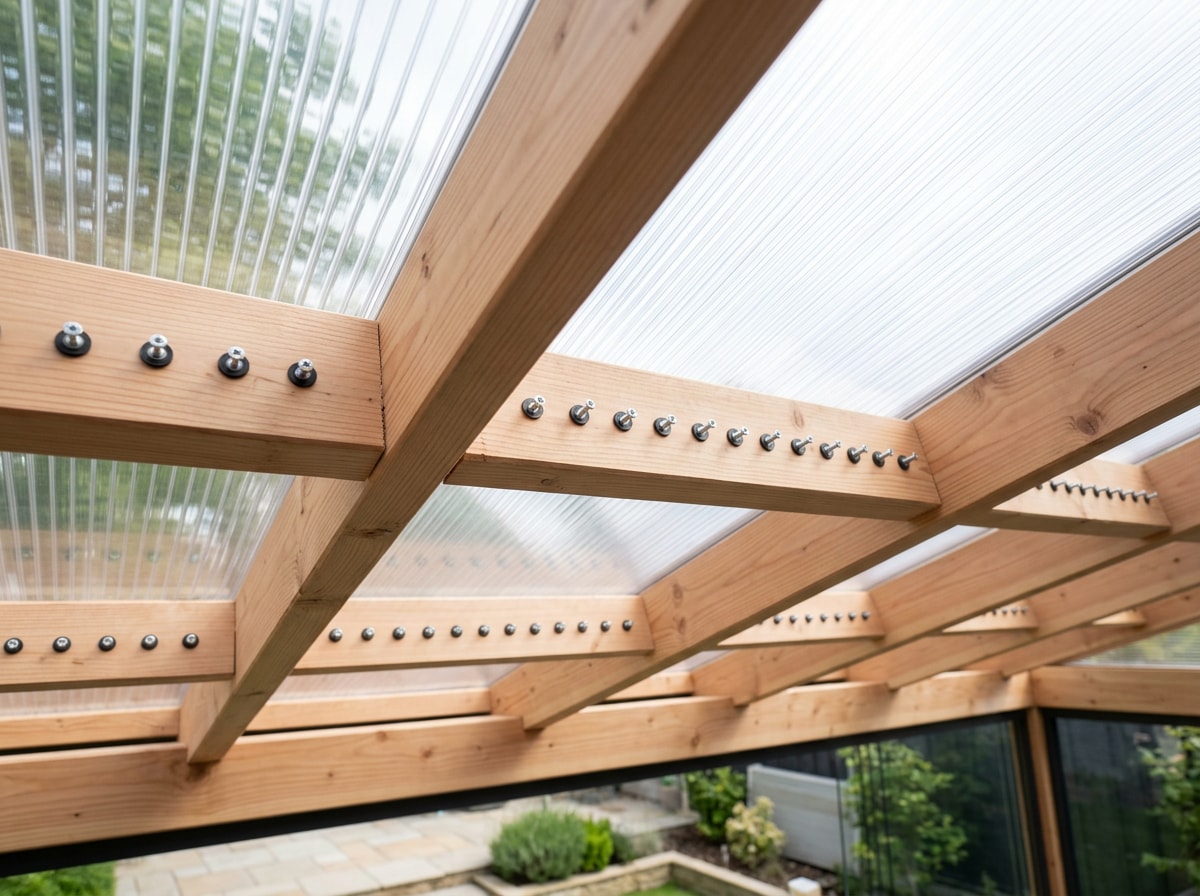
What it is not is a whole-house roofing material. Industry suppliers are consistent on this point: polycarbonate roofing is not the best option for an entire house, but it suits decks, garages, patios, sheds, and conservatories . Nobody roofs a residence in polycarbonate sheets. They are a glazing product used where you want light, not a substitute for shingles or standing seam.
The appeal is toughness. Manufacturers commonly cite figures like 250 times the impact strength of float glass and 30 times that of acrylic , and the sheet flexes instead of shattering. Treat those multiples as product-level marketing claims tied to a specific grade and thickness, not one fixed number that applies to every panel on the shelf.
Types of Polycarbonate Roofing
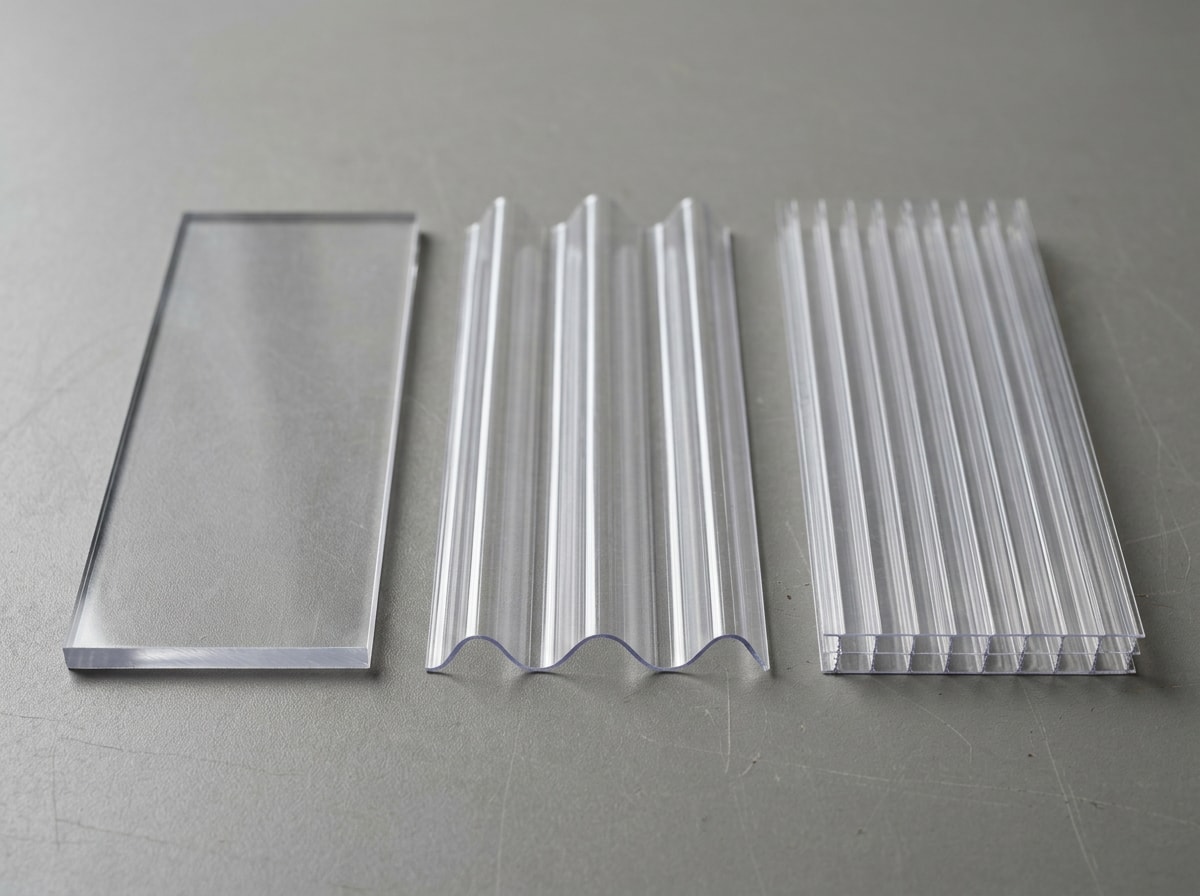
Three structural formats exist. Picking between them sets your cost, insulation value, and finished look. Everything after that (thickness, tint, warranty) follows from this one choice.
Solid Polycarbonate Sheets
A solid sheet is a single continuous layer with near-glass clarity, and it delivers the best impact resistance of the three formats. It is the standard pick for skylight glazing, entry canopies, facade infill, and transparent enclosures where appearance matters.
The trade-offs get glossed over in product listings:
- Heaviest option per square foot, so framing has to carry more load.
- No internal air gap, so solar heat gain is its weakest point.
- A clear solid roof over a south-facing patio will get genuinely hot by mid-afternoon.
Corrugated Polycarbonate Sheets
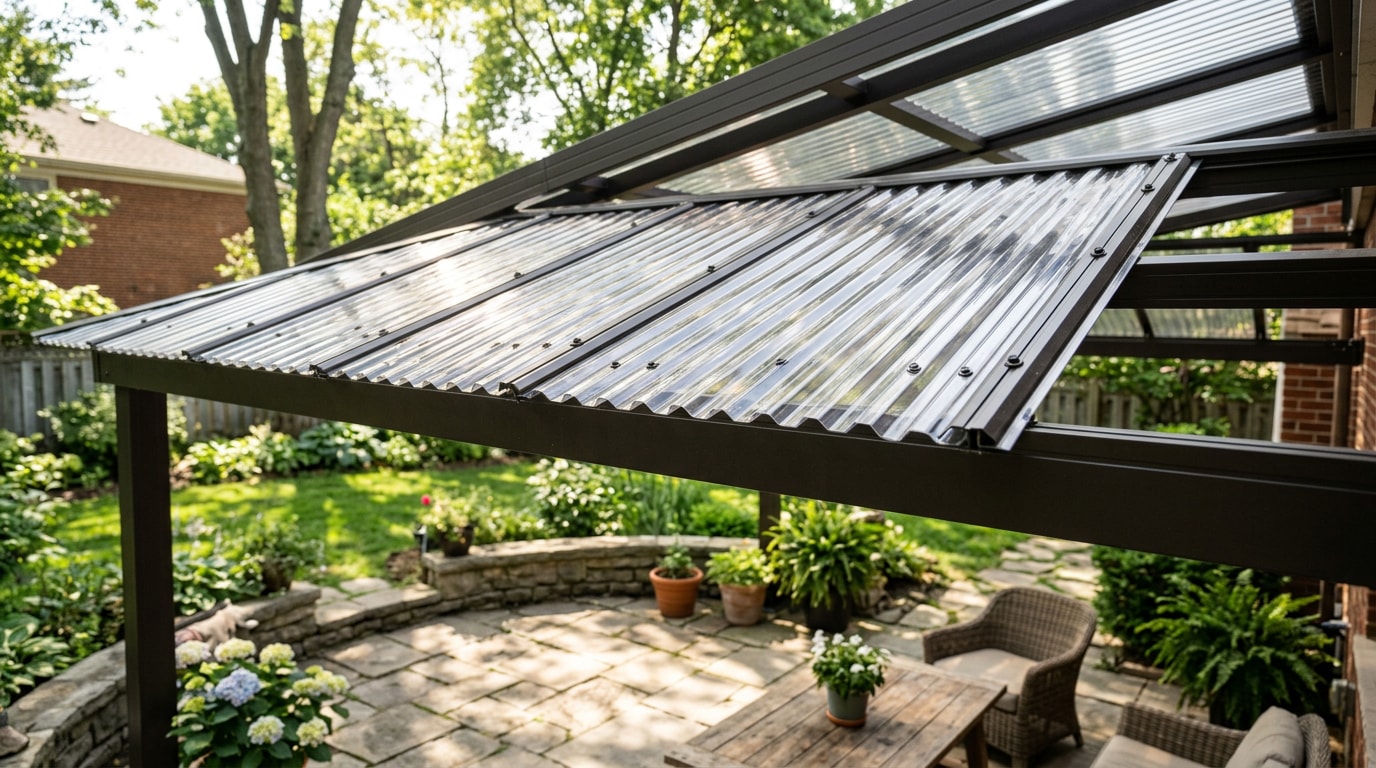
Corrugated polycarbonate uses a ribbed profile that mirrors metal roofing panels. The ribs add stiffness across the span and channel water off fast, and the sheets fasten straight through into purlins or rafters. No glazing bars, no edge profiles. That makes it the friendliest format for a weekend build and the cheapest per square foot.
You will see it on patio covers, carports, barn and shed roofs, and agricultural structures. Corrugated profiles also work as skylights or side lights in metal-clad warehouses, or independently as roofing on agricultural greenhouses.
One detail to check before ordering: the corrugation profile has to match your fasteners and foam closure strips. Profiled sheets come in several distinct profiles, including corrugated, greca, and trimdeck. A greca profile and a sinusoidal profile are not interchangeable, and mismatched closures leave open gaps at the eave.
Multiwall Polycarbonate Sheets (Twinwall and Triplewall)
Multiwall sandwiches two or more layers together with vertical ribs between them, creating sealed air chambers. Those chambers do two jobs: trapped air slows heat transfer, and the hollow structure cuts weight well below a solid sheet of the same thickness.
That is why twinwall and triplewall are standard on greenhouses and conditioned sunrooms. Multiwall provides strong thermal insulation, which suits lean-to extensions and conservatories, and thicker gauges generally insulate better.
Multiwall thickness commonly ranges from 4 mm up to 25 mm, with different internal layer counts.
Two practical rules apply:
- The flutes must run with the slope so internal condensation drains out the bottom edge.
- Thicker multiwall buys insulation at the cost of light transmission.
Benefits and Drawbacks
What it does well:
- Lightweight with high impact strength, so framing demands drop while hail and falling branches bounce off.
- Passes a large share of visible light in clear form, and diffuses it in opal.
- Blocks most UV through a co-extruded surface layer.
- Insulates in multiwall form thanks to sealed air chambers.
- Cuts with a fine-tooth circular saw or jigsaw.
- Needs no painting, will not rust, will not rot.
The daylight benefit has a measurable mechanism behind it. Light entering a sunroom, greenhouse, or warehouse bay displaces electric lighting during working hours. That is the same logic behind the U.S. Department of Energy's guidance on daylighting, which notes that strategic placement of windows and skylights reduces lighting, heating, and cooling costs .
Where it disappoints:
- Scratches easily. The surface is softer than glass. Specify a hard-coated grade for exposed or high-traffic spots.
- Moves a lot with temperature. More on the math below.
- Rain noise. Thin single-skin panels drum in heavy rain. Thicker multiwall dampens it noticeably.
- Can yellow.
UV protected is not the same thing as UV stable or UV resistant, and the weaker versions do not hold up as well. Buy panels with a written UV warranty.
- Costs more upfront than PVC or fiberglass panels, though lifespan usually narrows the gap.
One caveat on UV protection: it is not mixed through the sheet. Multiwall is typically UV protected on the outer side only, so it must always be installed with that side facing the sun. Install it upside down and you have paid for an unprotected panel.
Cleaning deserves its own warning. Abrasive pads, alkaline cleaners, and solvent-based products attack the surface and the UV layer, which hazes the finish and shortens panel life.
Polycarbonate Roofing Costs in 2026
Material-only ranges, per square foot:
| Panel type | Material cost per sq ft | Typical use |
|---|---|---|
| Corrugated single-skin | $1.50 to $4.50 | Carports, sheds, open patio covers |
| Multiwall twinwall or triplewall | $2.50 to $9.00 | Greenhouses, sunrooms, insulated covers |
| Solid sheet | $5.00 to $14.00 | Skylights, entry canopies, facade infill |
Framing, glazing bars, screws, closures, tapes, and flashing typically add another $1 to $4 per square foot. Professional installation commonly lands in the $3 to $9 range depending on access, roof height, and structure type.
What moves you inside those ranges:
- Sheet thickness and layer count.
- Tint or hard-coat surface treatments.
- Brand and the length of the written UV warranty.
- Sheet size, since odd widths and long single runs cost more per foot.
- Regional freight and labor rates.
If price is the driving factor on a larger project, it is worth reading how polycarbonate stacks up against the rest of the field in our breakdown of the cheapest roofing material by installed cost.
How to Choose the Right Polycarbonate Roofing
Specify in this order and the decisions stop fighting each other.
- Panel type. Corrugated for open-air covers, multiwall for anything you want to keep warm, solid for clarity-critical glazing.
- Panel thickness. Thicker sheets span farther between supports and quiet rain noise. Match the manufacturer's span table to your purlin spacing.
The working rule is to choose the thinnest sheet that comfortably matches the span and use, since too thin will flex and too thick just adds cost.
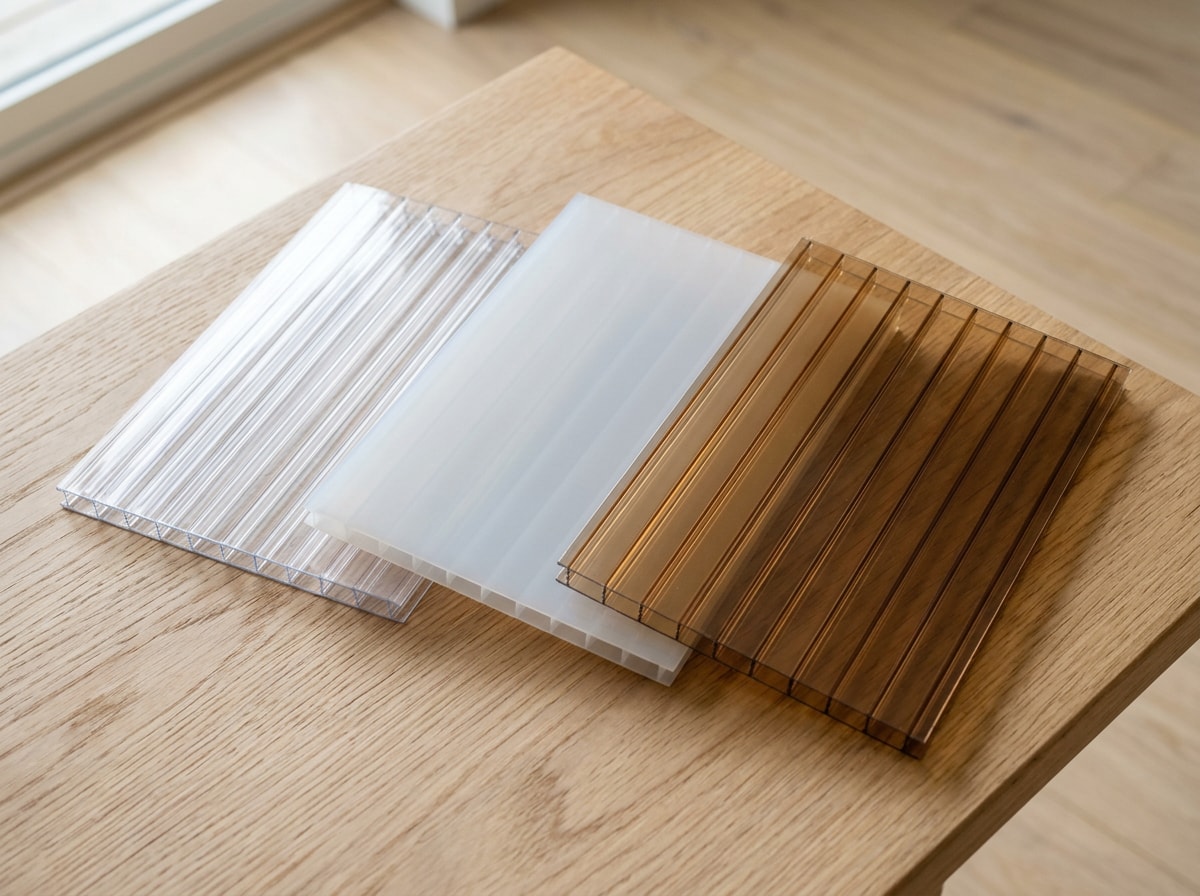
- Finish or tint.
Clear gives maximum brightness, opal softens light and helps manage heat in enclosed areas, and bronze cuts glare on bright aspects.
- UV warranty. Compare warranted years of light transmission and yellowing resistance, not just the sticker price.
- Climate and load. Snow load, wind uplift, and hail frequency all push toward thicker panels and closer supports.
Quick mapping for common projects:
- Greenhouses: 8 to 16 mm opal or clear twinwall.
- Patios and carports: corrugated around 0.8 to 1.2 mm, or 10 mm multiwall if shade and insulation matter.
- Warehouse skylights: solid or thick multiwall sized to the structural opening.
If the panels are going over a deck, the frame below needs to be rated for the added load and fastening pattern. That is worth confirming during deck installation rather than after the fact.
Installation: Fastening, Sealing, and Thermal Expansion
Most polycarbonate failures are installation failures, not material failures.
The sequence nearly every manufacturer converges on:
- Confirm purlin or rafter spacing against the panel's span table.
- Orient the UV-protected face up.
- Set enough pitch for positive drainage.
- Fasten with compatible screws fitted with rubber or EPDM washers.
- Seal multiwall ends with the specified breathable and solid tapes.
- Add foam closure strips at the eave and ridge on corrugated profiles.
- Work from the low edge upward.
The expansion number nobody puts on the box
Here is the part that gets skipped. Polycarbonate has a coefficient of linear thermal expansion of roughly 0.0000375 inches per inch per degree Fahrenheit. Run the arithmetic on a real panel.
A 12-foot sheet is 144 inches. A 100 degree surface-temperature swing between a January morning and a July afternoon on a dark-framed patio is ordinary in Virginia. That works out to about 0.54 inches of movement in a single panel, roughly half an inch of travel that has to go somewhere.
On our own patio-cover callbacks around Fredericksburg, the pattern is boringly consistent: the leaks are almost never in the middle of a sheet. They are at fastener holes drilled to the exact screw diameter, where the panel could not move, so it cracked around the screw instead. Oversize the holes a few millimetres past the shank, or use expansion clips and slotted profiles, and that failure mode disappears.
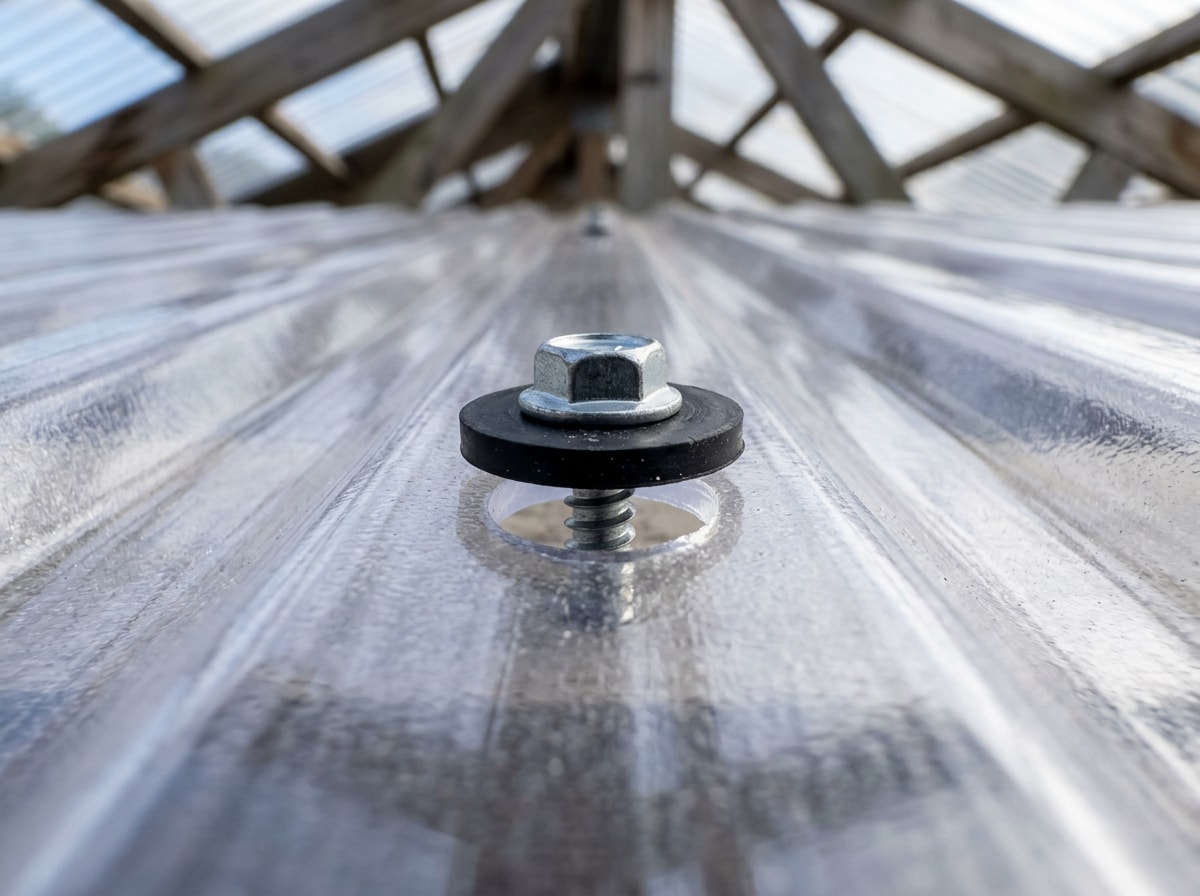
Three mistakes account for most callbacks: overtightened or wrong-spec fasteners, no expansion gap, and insufficient slope.
Also confirm local code and permit requirements before you buy. Jurisdictions adopting the International Building Code provisions for light-transmitting plastics regulate panel area, separation, and flame classification. Note one useful exception: roof coverings over terraces and patios in Group R-3 occupancies are exempt from the panel area limitations , which is why residential patio covers are usually straightforward.
Not sure how a new panel roof ties into your existing shingle or metal roofline? A roof inspection before you order sheets is cheaper than a flashing rebuild after.
Lifespan, Durability, and Maintenance
Expect roughly 10 to 25 years from quality panels. Premium UV-warranted multiwall reaches the upper end. Cheap unprotected sheet fails well below it. Solid polycarbonate with a UV coating layer is generally rated at more than 10 years of service life.
That spread tracks four variables:
- Resin grade
- Presence and thickness of the UV coating
- Total sun exposure
- Installation quality
Panels fastened too tightly or installed UV-side down fail early regardless of grade.
Maintenance is light. Rinse with mild soap and clean water once or twice a year. Skip abrasive and solvent cleaners entirely. Clear leaves out of valleys and gutters. Inspect gaskets, washers, and tapes each season.
Manufacturer yellowing-resistance claims are typically validated through accelerated weathering, using methods such as ASTM G154, which reproduces the weathering effects that occur when materials are exposed to sunlight and to moisture as rain or dew . If a supplier cannot tell you which standard backs their warranty, that tells you something.
One safety note: these panels are not walking surfaces. Use crawl boards or staging that spans the rafters.
Polycarbonate vs. Glass, Acrylic, PVC, and Metal
Figures below assume 10 mm multiwall polycarbonate, 6 mm annealed glass, 4 mm acrylic, a standard FRP/PVC panel, and 26-gauge steel. Change the thickness or glazing build-up and the numbers move, so treat these as comparative rather than absolute.
| Material | Relative impact strength | Light transmission | Insulation (U-value) | Expected lifespan | Installed cost/sq ft | Best use |
|---|---|---|---|---|---|---|
| Polycarbonate (10 mm multiwall) | Very high | ~60 to 80% | ~0.55 to 0.60 | 10 to 25 yrs | $6 to $14 | Patios, greenhouses, skylights |
| Glass (6 mm) | Low | ~85 to 90% | ~1.0 (single) | 30+ yrs | $20 to $45 | Premium sunrooms, conservatories |
| Acrylic (4 mm) | Moderate | ~90% | ~1.0 | 10 to 20 yrs | $8 to $18 | Canopies, display glazing |
| PVC / FRP panel | Low to moderate | ~50 to 70% | ~1.1 | 7 to 15 yrs | $3 to $8 | Budget sheds, agricultural |
| Metal (26-ga steel) | High | 0% | Varies with insulation | 30 to 50 yrs | $8 to $16 | Primary roofs, no daylight |
Polycarbonate wins where you need daylight plus impact safety at moderate cost: hail zones, patios that catch stray basketballs, greenhouses.
Glass wins on optical clarity, scratch resistance, and long-term appearance in a premium conservatory.
Metal wins anywhere daylight is not the point and maximum lifespan is. For the main roof over living space, that is still the comparison that matters, and it is the one our roof installation team walks homeowners through most often.
FAQ
How long does polycarbonate roofing last?
Most polycarbonate roofing lasts about 10 to 25 years. The biggest single variable is UV grade combined with sun exposure. A warranted, UV-coated panel on a partly shaded patio far outlasts budget sheet in full southern sun.
Is polycarbonate roofing waterproof?
Yes. The sheet itself is completely impermeable to water. Leaks start elsewhere: unsealed multiwall end caps, overtightened or missing washers, skipped sealing tape, poor flashing at walls, or too little slope.
Can you walk on a polycarbonate roof?
No. Polycarbonate panels are glazing, not a structural deck. Concentrated foot load makes them flex until they crack or pull off the fasteners. Use crawl boards or staging that spans rafter to rafter.
What are the main disadvantages of polycarbonate roofing?
Scratching, significant thermal expansion, rain noise on thin single-skin panels, possible yellowing on low-grade sheet, and a higher upfront cost than PVC or fiberglass.
Can polycarbonate roofing be used on a house?
Not as the primary roof over living space. It is a glazing product for patio covers, carports, sunrooms, canopies, and skylights. A house roof needs shingles, metal, tile, or a membrane system.
Does polycarbonate roofing keep heat out?
Partly, and it depends entirely on the panel. Clear single-skin lets solar heat straight through. Multiwall slows heat transfer through its sealed air chambers, and opal or bronze tints cut solar gain further. For a hot south-facing exposure, specify tinted multiwall rather than clear corrugated.
How thick should polycarbonate roofing be?
Match thickness to span, not to instinct. Corrugated patio and carport sheets typically run 0.8 to 1.2 mm; greenhouse twinwall commonly runs 8 to 16 mm. For outdoor skylight use the practical range is generally 3 mm to 10 mm, since thinner than 3 mm is too vulnerable to the elements.
Is polycarbonate better than PVC roofing panels?
Usually, yes, if you plan to keep the structure. Polycarbonate has far higher impact strength and a longer realistic service life. PVC and fiberglass panels cost less upfront and make sense for short-term agricultural or shed use.
Is polycarbonate roofing better than glass?
It depends on your priority. Choose polycarbonate for shatter resistance, low weight, and lower cost. Choose glass for optical clarity, scratch resistance, and long-term appearance.
Get a Second Opinion Before You Order Sheets
Panel roofs are unforgiving of small spec mistakes, and most of them get locked in at the purchase stage, not the install stage. If you are planning a patio cover, carport, or sunroom in Fredericksburg or the surrounding counties, we will look at your span, slope, and framing before you buy anything.
Get a free estimate or browse recent work on our projects page to see how these covers tie into existing rooflines.
About the author: This guide was written and reviewed by the field team at Shark Construction LLC, a licensed and insured roofing, siding, window, and deck contractor serving Fredericksburg, Stafford, Spotsylvania, Culpeper, Manassas, King George, Dale City, and Bowling Green, Virginia. Questions about a specific panel spec or span table? Reach us through our contact page and we will answer directly.