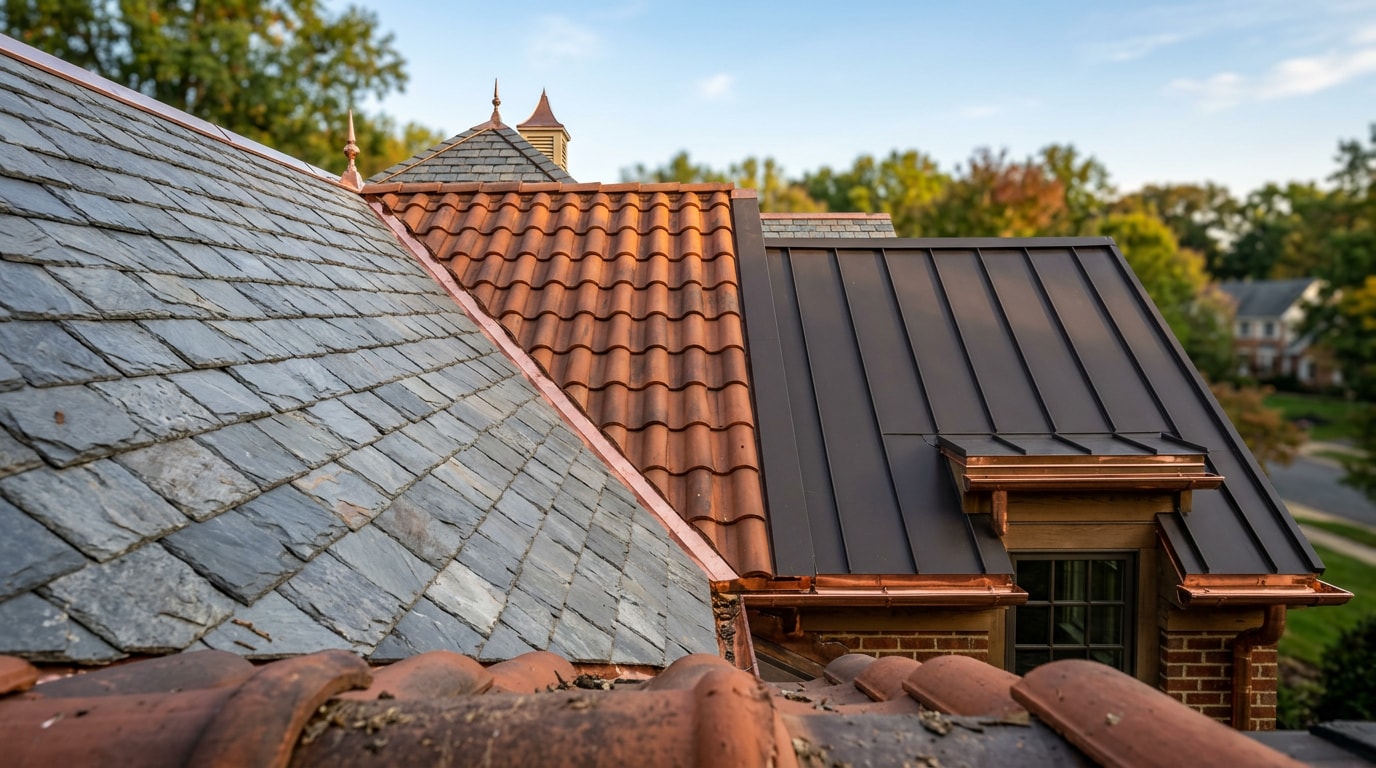
Slate lasts the longest of any roofing material, commonly 75 to 150 years or more, followed by clay and concrete tile, then metal. That is the short answer to what roofing material lasts the longest. The harder question is which of those your framing can actually carry, and whether you will own the house long enough to collect on the extra lifespan you paid for.
What Roofing Material Lasts the Longest? The Short Answer
Ranked by typical service life: slate (75 to 150+ years), clay and concrete tile (50 to 100), metal (40 to 100), composite or synthetic shingles (40 to 50), wood shakes (20 to 40), architectural asphalt (25 to 30), and 3-tab asphalt (15 to 20).
Published ranges disagree, so treat every figure as a band and not a promise. InterNACHI's Standard Estimated Life Expectancy Chart, used by home inspectors nationwide, rates 3-tab asphalt at 20 years, architectural asphalt at 30, and clay or concrete at 100+ , while the National Association of Home Builders puts slate at 150+ years . The baseline below leans on that published life expectancy research rather than manufacturer marketing.
| Material | Typical Lifespan | Maintenance | Installed Cost (per sq ft) | Cost per Year of Service |
|---|---|---|---|---|
| Slate | 75 to 150+ yrs | Low | $15 to $30 | ~$0.20 |
| Clay / concrete tile | 50 to 100 yrs | Low to moderate | $10 to $20 | ~$0.20 |
| Standing seam steel | 40 to 70 yrs | Low | $10 to $18 | ~$0.25 |
| Composite / synthetic | 40 to 50 yrs | Low | $9 to $15 | ~$0.27 |
| Wood shakes | 20 to 40 yrs | High | $8 to $14 | ~$0.37 |
| Architectural asphalt | 25 to 30 yrs | Moderate | $4.50 to $8 | ~$0.23 |
| 3-tab asphalt | 15 to 20 yrs | Moderate | $3.50 to $5.50 | ~$0.26 |
Installed costs are typical 2026 ranges and move with market, pitch, access and tear-off scope.
The last column is what most comparison charts leave out. Slate at a $22.50 midpoint cost divided by a 112-year midpoint lifespan works out to roughly $0.20 per square foot per year. Architectural asphalt at $6.25 divided by 27.5 years is about $0.23.
The "expensive" roof is usually the cheaper roof per year, if the house can hold it. For a full breakdown of what you pay on day one, see our guide to roofing cost in 2026.
The Number Nobody Publishes: Climate Cuts These Lifespans
Here is the data point the top-ranking lists skip. The same organization publishes two charts, one national and one for Florida, and the gap between them shows how much climate controls the answer.
| Material | Standard chart | Florida chart |
|---|---|---|
| Asphalt, 3-tab | 20 yrs | 10 to 12 yrs |
| Asphalt, architectural | 30 yrs | 15 to 20 yrs |
| Clay / concrete | 100+ yrs | 80+ yrs |
| Copper | 70+ yrs | 50+ yrs |
The Florida chart rates 3-tab asphalt at 10 to 12 years, architectural asphalt at 15 to 20, clay and concrete at 80+, and copper at 50+ , against 20, 30, 100+ and 70+ on the standard chart .
Read that as a rule, not a Florida fact. Heat, UV load and salt air cut asphalt roughly in half and still shave decades off stone and metal. Virginia is milder than the Gulf Coast, but hail, ice damming and heavy summer UV on south-facing slopes all pull real roofs toward the bottom of the published band.
Comparing Roof Lifespans by Material
Each material below covers four things: how long it lasts, what actually limits that lifespan in the field, what it weighs, and roughly what it costs installed.
Slate Tile
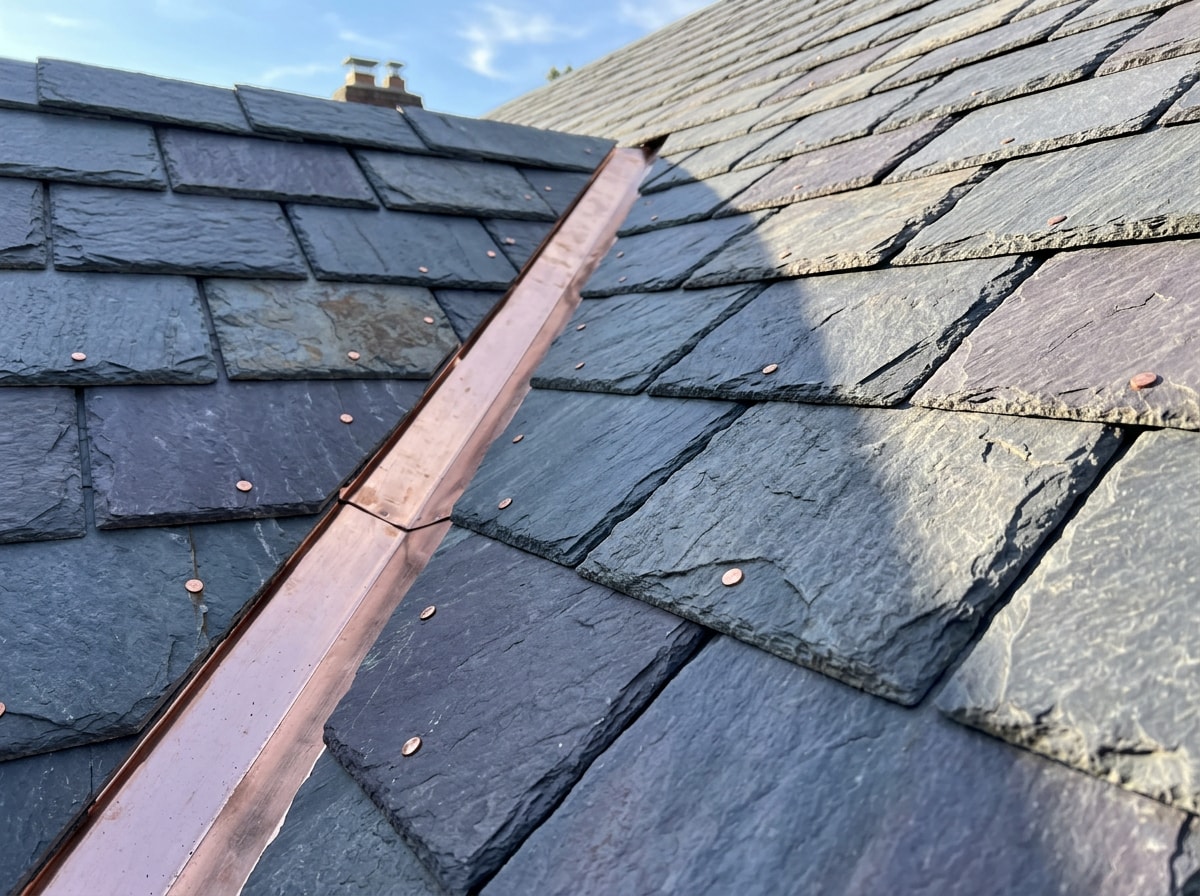
Natural slate runs about 75 to 150+ years, and better grades go further. Slate resists fire, mold and extreme weather because the stone is dense and close to non-porous , so it absorbs almost no water and shrugs off the freeze-thaw cycling that destroys other products.
Two things disqualify it:
- Weight. Slate runs roughly 800 to 1,500 pounds per square.
Not every home can support that load , and most framing needs an engineer's review before a tear-off.
- Cost. It is the most expensive residential option on the market, by a wide margin.
A detail most guides skip: natural slate usually carries no material warranty, because it is a quarried product rather than a manufactured one. You are buying the stone's track record, not a piece of paper.
Plan around the accessories too. Fasteners, flashings and underlayment almost always fail before the slate does, so a 100-year roof still means flashing work somewhere near the midpoint.
Clay and Concrete Tile
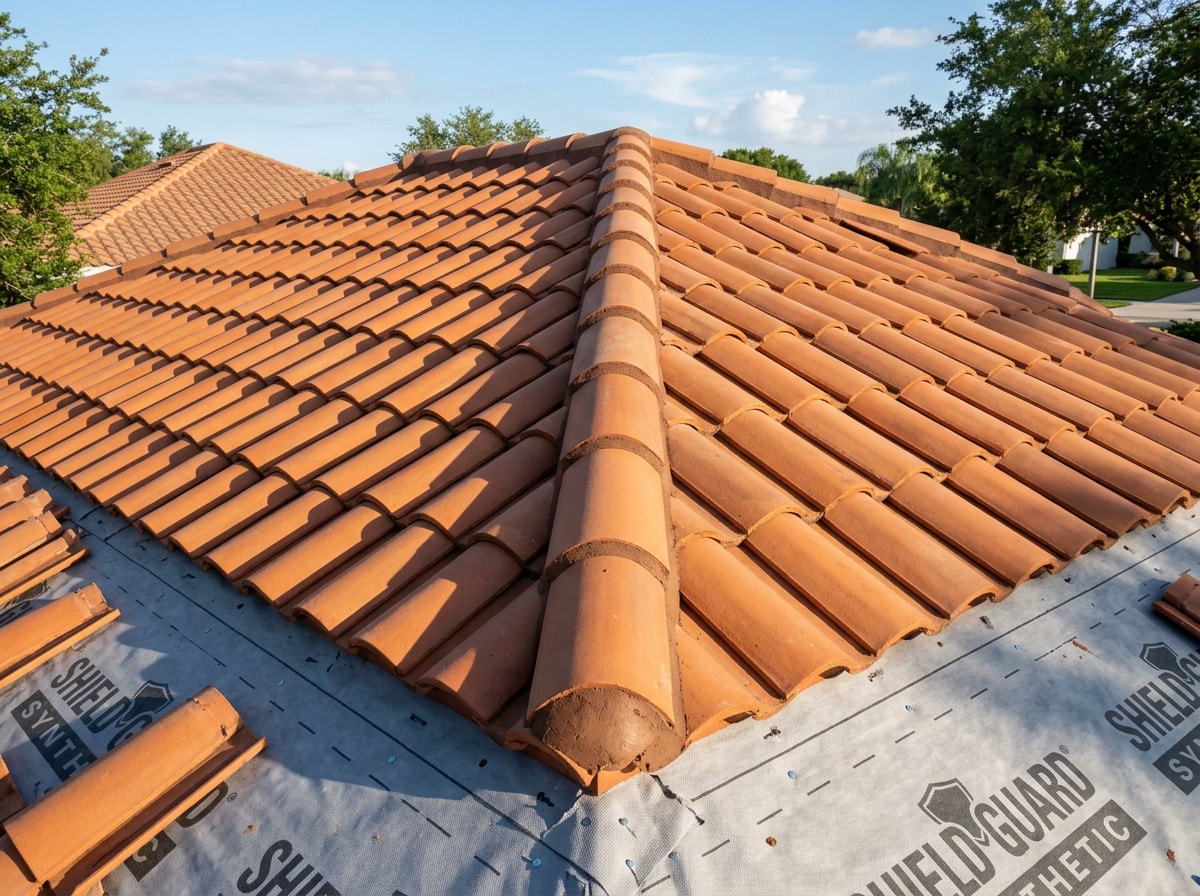
Both land in the 50 to 100 year range. Clay and concrete tile stand up well to heat and moisture but need proper structural support because of their weight.
The differences show up on two axes. Concrete costs less up front but weighs more and tends to fade over a few decades. Clay holds color far better and performs more consistently under sustained heat, which is why it dominates in the Southwest and Gulf Coast.
One honest caveat: in most regions the underlayment under the tile is the real service-life limiter. It often needs replacement two or three decades before the tile does, with the tiles lifted, stacked and reset.
Standing Seam Metal
Separate the two metal categories or the numbers will not make sense.
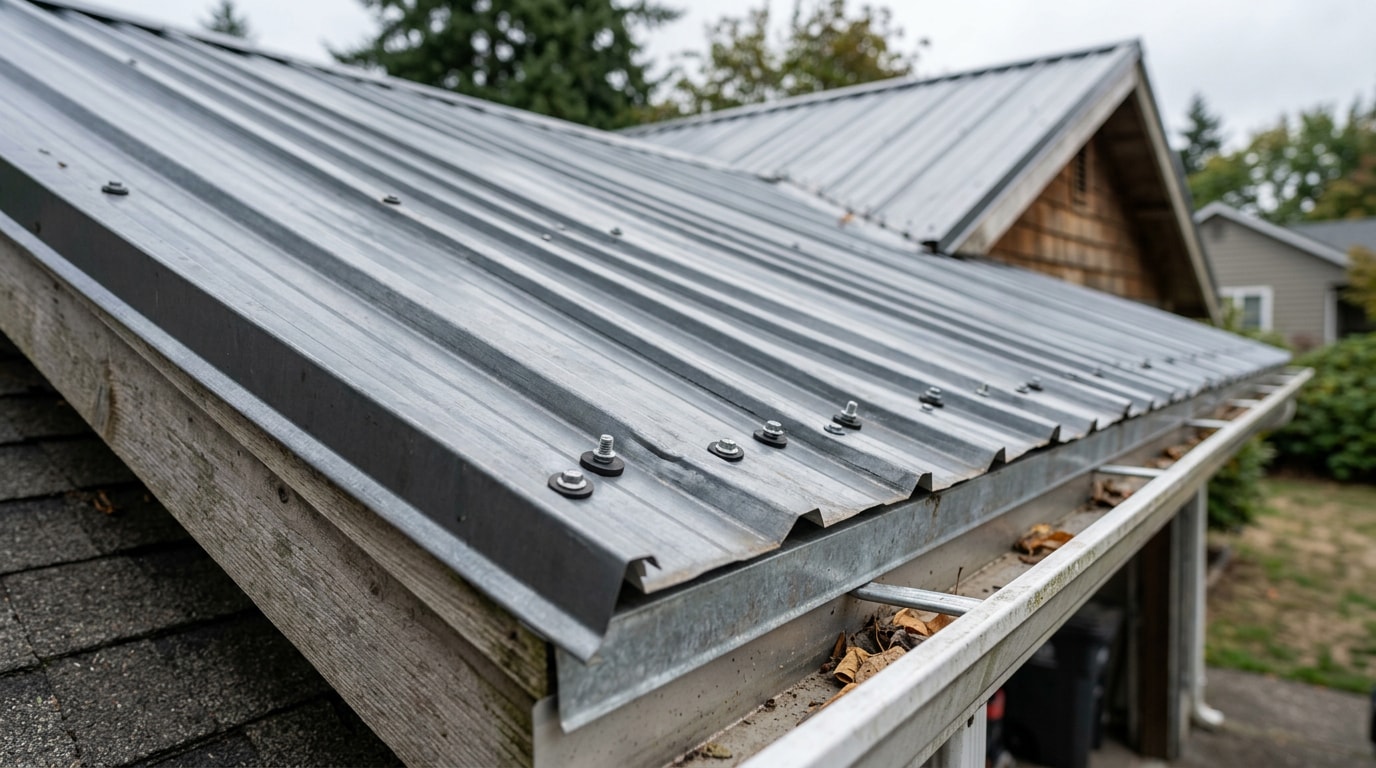
- Exposed fastener panels rely on hundreds of gasketed screws that back out and dry-rot. Typical life is 25 to 40 years.
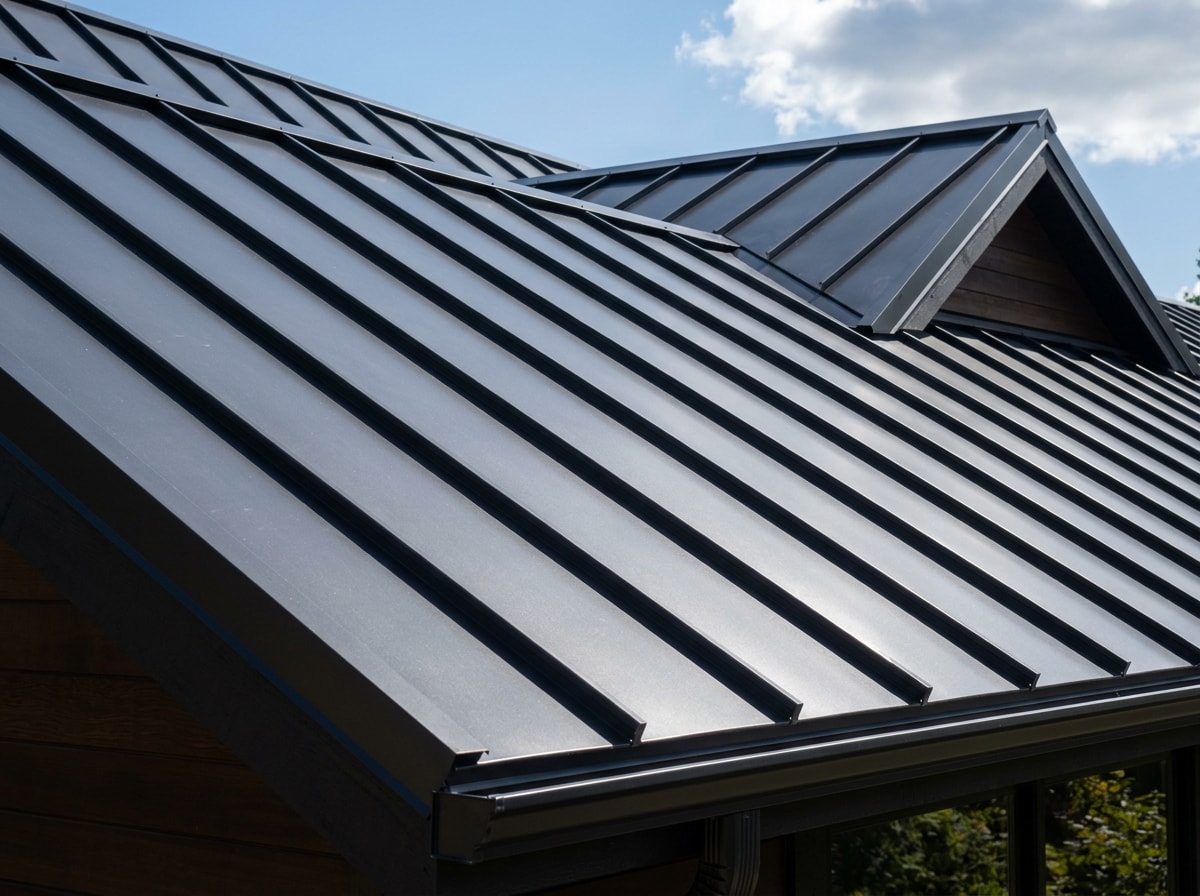
- Standing seam hides fasteners under concealed clips and lasts far longer.
Steel standing seam commonly reaches 40 to 70 years. Copper and zinc routinely hit 70 to 100+. The clip system is the reason standing seam is the residential recommendation: panels expand and contract with temperature swings, and concealed clips let them move without tearing out fasteners.
Metal also reflects more solar energy than dark asphalt. The Department of Energy's consumer guide to cool roofs covers how reflectance and emittance affect cooling load, and cool roof surfaces can stay up to 60°F cooler than traditional black roofs in summer .
Watch the paperwork. The paint finish warranty on PVDF/Kynar coatings is a separate warranty from the panel substrate, and homeowners conflate the two constantly. If you are pricing panels, our breakdown of metal roofing cost per square foot shows where the money goes.
Wood Shakes and Shingles
Cedar typically lasts 20 to 40 years, the widest real-world variance on this list. Climate and maintenance drive the outcome more than the product does, because cedar's natural oils only protect the wood while it can dry out.
Grade matters enormously. Common grades sit at the bottom of that range, selects do better, and 100% straight-grain shakes outlast both. Fire ratings and insurance rules for untreated wood vary by jurisdiction and some areas restrict them outright, so confirm local code before you plan on 40 years.
Composite or Synthetic Shingles
Synthetic is the practical answer for a homeowner who wants slate or shake looks without the dead load. Expect roughly 40 to 50 years at a fraction of the weight, usually on standard framing with no reinforcement.
Because composite is manufactured, it also carries genuine long-term manufacturer warranties, which natural slate and cedar generally do not.
One caveat: this is a young category. The oldest documented field installations are shorter than the warranty terms being sold, so treat the top of that range as projected, not proven.
Luxury Asphalt Shingles
Asphalt comes in three tiers. 3-tab sits at 15 to 20 years, architectural at 25 to 30, and luxury or designer shingles at 25 to 30+ with heavier mats and a dimensional, slate-like profile.
Read the warranty closely. Standard coverage is usually full for an initial period and prorated after that, dropping in value each year. Non-prorated enhanced coverage generally requires a complete manufacturer-certified system, meaning matching underlayment, ventilation and accessories installed by a credentialed contractor.
Key Factors That Affect Roofing Material Lifespan
Every range above is a ceiling. Grade, pitch, attic ventilation and maintenance all push a roof toward the top or bottom of its band, but two factors decide most of it.
Climate and Weather
Break it down by stressor:
- UV and heat break down asphalt binders and fade concrete tile. Slate, clay and metal barely notice.
- Moisture and freeze-thaw split porous materials, where non-porous slate pulls ahead and low-grade tile struggles.
- Wind attacks edges and ridges first, so sealant quality and nailing pattern matter more than material choice.
- Hail favors impact-rated products.
UL 2218 is a steel ball drop test, with the Class 4 projectile measuring 2.00 inches in diameter , and the Insurance Institute for Business and Home Safety's summary of UL 2218 impact testing is worth reading before you assume a rating guarantees hail survival.
One exception to the "metal lasts everywhere" line: within a mile or two of salt water, steel panels and steel fasteners corrode noticeably faster. Coastal homes usually need aluminum, copper or zinc.
Installation Quality
A poorly installed premium roof will not outlast a well-installed mid-tier one.
Nail placement is the clearest example. Nails driven too high, too low, overdriven or at an angle let shingles slide or blow off decades early. Bad flashing at walls, valleys and penetrations causes most leaks regardless of what covers the field of the roof.
Non-conforming installation also voids or reduces most manufacturer warranties. Picking your roof replacement contractor is a lifespan decision, not just a price decision, and a documented roof inspection before you buy tells you whether the deck and framing can carry what you want.
Pros and Cons of Long-Lasting Roofing Materials
Upside: fewer disruptive tear-offs, low maintenance, better insurance positioning, and strong value per year of service.
Downside:
- Upfront cost can run three to five times an asphalt roof.
- Slate and tile may require structural reinforcement.
- The pool of installers qualified to work on them is small in most markets.
- Sourcing matching replacement pieces for a repair in year 40 can be genuinely difficult.
There are cases where the longest-lasting option is the wrong call: a short ownership horizon, framing that cannot carry the load, or a neighborhood where resale will not recover the spend.
Before you commit, confirm that crews experienced with your material actually work in your area. We install and service roofs across Fredericksburg, Stafford and Culpeper, and you can see completed work on our projects page.
Ready to compare materials on your actual roof? Get a free estimate and we will measure, check the deck, and price two or three options side by side.
FAQ
What is the longest-lasting roofing material?
Natural slate, at 75 to 150+ years. Clay tile, copper and zinc follow at 50 to 100 years. The qualifier rankings usually omit: slate and clay only reach those numbers on framing engineered to carry the weight.
What roof lasts 100 years?
Slate, clay tile and copper are the three residential materials with documented century-plus service. Slate, concrete and clay tiles are each rated for 100 years or more by both the NAHB and InterNACHI. Expect to replace flashings and underlayment at least once in that span.
Does metal or asphalt shingle last longer?
Metal, by roughly two to three times. Standing seam steel runs 40 to 70 years against 25 to 30 for architectural asphalt. Exposed fastener metal panels are closer to asphalt at 25 to 40 years, because the gasketed screws fail first.
What is the longest-lasting flat roof material?
Flat roofs play by different rules. Metal and PVC lead at roughly 25 to 35 years, EPDM runs 20 to 30, and TPO lands near 15 to 25. Drainage and seam quality matter more than the membrane brand.
Which roofing material is most cost-effective?
Measured as cost per year of service, slate and clay tile tie near $0.20 per square foot annually, with architectural asphalt close behind at about $0.23. If upfront budget is the binding constraint, architectural asphalt wins, because the long-life materials only pay off if you keep the house or sell it to someone who values the roof.
Are 50-year shingles really 50 years?
No. A 50-year label describes warranty length, not expected service life, and most of that coverage is prorated. Asphalt products in that tier realistically perform like 25 to 30 year roofs under normal weather.
How long does a roof last in Virginia?
Most asphalt roofs here land between 18 and 28 years depending on ventilation, slope orientation and hail history. Metal, tile and slate reach their published ranges more reliably because they do not depend on an asphalt binder holding together.
Does a longer-lasting roof help with insurance?
Often, yes. Impact-rated and fire-resistant coverings can qualify for premium credits with many carriers, though the discount varies by insurer and state. Ask your agent for the specific rating they credit before you pay to upgrade.
About the Author
This guide was written by the roofing team at Shark Construction LLC, a licensed and insured roofing, siding, window and deck contractor serving Fredericksburg, Stafford, Culpeper, Spotsylvania, Manassas and surrounding Virginia communities.
Most of the numbers above come from tear-offs rather than brochures. The pattern we see most on local homes: architectural shingle roofs sold as 30-year systems that fail at 20 because the attic was under-ventilated and the south slope cooked. That is also why we check ventilation on every roof installation estimate before quoting a material.
Questions about your roof, or want a second opinion on a quote? Visit our homepage or contact us.